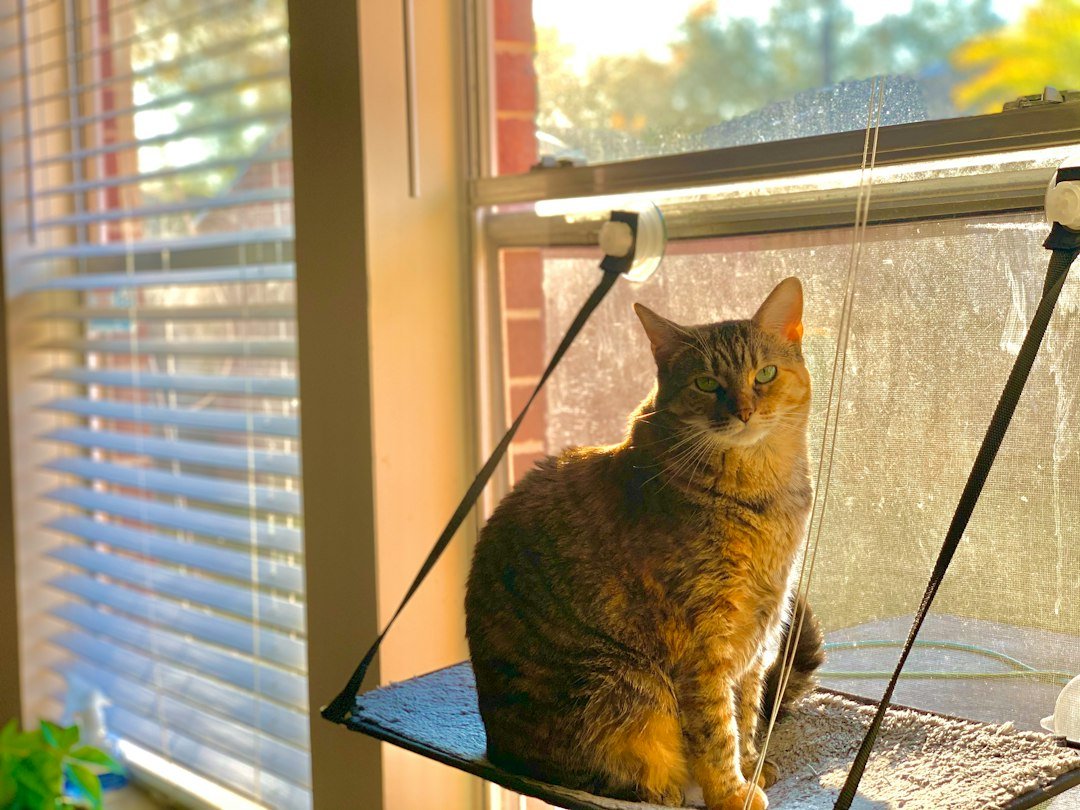
On a sunny afternoon, the best cat window hammock is one that stays put when your cat jumps up, fits the pane, and gives them enough room to settle. This best cat window hammock review focuses on secure no-tools installation, useful sizing details, and the compromises behind popular hammock designs. A good perch should feel boringly stable.
Window hammocks can give indoor cats a higher resting spot and a view of outdoor activity without taking up floor space. That is the appeal. The right choice is rarely the cheapest listing or the one with the highest stated weight limit, because glass condition, suction cup quality, frame design, and your cat’s jumping habits all affect how well a perch works in a real home.
Best cat window hammock review criteria
Start with the attachment method, because it determines both safety and where the hammock can go. Most no-tools cat window hammocks use heavy-duty suction cups attached directly to smooth glass, while some use hooks that rest over a window ledge or connect to an existing window track. Check your window first. A hammock designed for a broad, flat pane may not sit correctly on a divided window, heavily textured glass, or a window with deep trim.
Suction-cup models are the most common option for no-tools installation. They leave no screw holes. They also need clean, smooth glass and regular checks, especially in homes with large cats, energetic jumpers, or dramatic temperature changes near the window. A loose cup can sometimes be pressed back into place, but a cup that repeatedly releases is a reason to stop using that perch and replace the attachment parts or choose another design.
Look closely at the support structure under the fabric. Some hammocks have a simple wire frame with two or four suction cups. Others use tension cords or support cables that spread the load farther down the glass. More attachment points may give a steadier feel, but they also create more cups to clean and inspect, so every design benefits from routine maintenance.
| Hammock style | No-tools setup | Best fit | Main trade-off |
|---|---|---|---|
| Suction-cup fabric bed | Cups press onto clean glass | Most standard flat window panes | Needs frequent attachment checks |
| Suction-cup frame with cables | Cups plus lower support cords | Cats that prefer a firmer platform | More parts are visible on the window |
| Window-sill perch | Hooks, brackets, or tension fitting | Windows with a usable interior sill | May not work with every trim shape |
| Heated window perch | Usually suction cups or sill fitting | Cool rooms where a cat seeks warmth | Requires safe cable placement and power access |
Four cat window hammock models to compare
Prices and stated capacity can change by size, seller, and product revision, so use these as typical current ranges and confirm the manufacturer’s listing before ordering. Capacity claims are useful for comparison, but they do not replace proper installation and regular inspection.
| Model | Typical price and listed capacity | Advantages | Limitations |
|---|---|---|---|
| K&H Pet Products EZ Mount Kitty Sill | About $40–$60; commonly listed for up to 100 pounds | Wide, firm sleeping platform; four suction cups; replacement covers are commonly available | Costs more than basic fabric hammocks, and the larger frame is conspicuous on the pane |
| AMOSIJOY Cordless Cat Window Perch | About $25–$40; commonly listed for up to 40 pounds | Cordless frame avoids lower support cables and usually includes a removable, washable cover | Requires enough clear glass for multiple cups, and the listed limit is lower than the K&H model |
| PEFUNY Cat Window Perch | About $20–$35; commonly listed for up to 40 pounds | Budget-friendly mesh-and-cable design with a relatively open view beneath the bed | Support cables remain visible, and cats that prefer a plush bed may need an added pad |
| Zakkart Cat Window Perch | About $35–$55; commonly listed for up to 40 pounds | Metal-frame sill design avoids suction cups and can feel steadier for cats that dislike a flexible sling | Needs a compatible interior window sill or ledge, so it is not suitable for every trim shape |
The K&H model is the higher-capacity option among these common choices, while AMOSIJOY and PEFUNY are more typical suction-cup alternatives for one average-size cat. Zakkart is worth considering when your window has a suitable sill and you would rather avoid glass-mounted cups. Measure the usable surface and read the current installation requirements before choosing among them.
What no-tools installation really means
No-tools installation usually means you will not need a drill, screws, or wall anchors. It does not mean zero preparation. For a suction-cup hammock, clean the inside of the glass with a residue-free cleaner, dry it fully, and wipe the cups clean before pressing each one firmly into place. Even a light greasy film can weaken the seal.
Follow the manufacturer’s current instructions for warming, moistening, or positioning the cups, since designs differ. Some brands advise soaking cups in warm water before use, while others provide different steps. Verify the product manual. Do not improvise with glue, tape, or household adhesives, since those can damage the window or make it harder to notice when the original attachment is failing.
After installation, test the frame with your hand before inviting your cat onto it. Use steady downward pressure. You are checking whether the cups hold, the frame stays level, and no cable or hook shifts against the glass. A cautious cat may still ignore a new hammock for days, particularly if it moves slightly when they first touch it.
Window position matters as much as the product. Avoid placing a hammock where an open window could create a fall risk, where blind cords hang within reach, or where a door swings into the perch. Keep curtains from tangling around the frame, and choose a location with a calmer view when possible.
Capacity ratings need context
Weight ratings are helpful, but treat them as one part of the decision rather than proof that every setup is equally safe. Listings do not always explain how a manufacturer tested the rating, what type of glass was used, or whether the stated number includes the sudden force of a cat jumping onto the bed. A 12-pound cat can land with more force than 12 pounds.
Use your cat’s current weight, then add the weight of a cushion or blanket if you plan to use one. For example, an 11-pound cat plus a one-pound fleece pad puts about 12 pounds of static weight on the hammock before any jumping. Choose a product whose published limit clearly accommodates that use, then inspect the setup often. If two cats may climb in together, assume they will.
Large cats often need more than a high capacity claim. They need a broad sleeping surface and a frame that does not press into their sides when they curl up. Measure your cat while resting if possible, then compare that length with the usable bed area rather than the product’s overall outer dimensions, because usable interior space determines whether your cat can settle comfortably.
Comfort details that change daily use
A bare mesh sling is easy to wipe down and may stay cooler near a sunny window. It can feel sparse. A removable fleece or padded cover is usually more inviting for cats that like soft sleeping spots, although it will collect fur and need washing more often.
Check whether replacement covers or suction cups are sold separately before buying. This can extend the useful life of a well-made frame when fabric wears out or cups lose their grip. Because replacement-part availability changes, check the brand’s official product page or current retailer listing before treating those parts as a given.
Consider the sun exposure too. A south- or west-facing window may become uncomfortably warm during part of the day, depending on your climate and glazing. Give your cat another resting option away from direct sun, and do not assume a window bed stays cool because the room does.
How to read product reviews realistically
Product reviews are most useful when you look for repeated details instead of relying on the average star score. Read recent reviews with photos, especially comments from owners whose cats are similar in size to yours or who describe the same window arrangement. Details such as “the cups released after cleaning” tell you more than a general “bad product” comment.
Pay attention to whether a complaint appears tied to installation, a damaged item, or a consistent design weakness. A few reports of shipping damage are different from many reports that the same seam tears or the same cup loses suction. Reviews can also be outdated when a manufacturer changes materials, so recent feedback deserves more weight than old praise.
Well-known options such as the K&H Pet Products EZ Mount Kitty Sill are often included in comparison searches because they use a suction-cup-supported window design. Generic versions may look similar in photos. Compare the current listed dimensions, attachment count, fabric type, stated capacity, and replacement-part options rather than assuming similar-looking products are built alike.
A simple buying checklist
- Measure the clear, flat glass area where the hammock will sit.
- Confirm that blinds, latches, handles, and trim will not interfere with the frame.
- Check your cat’s weight and resting length before comparing dimensions.
- Choose a washable sleeping surface if your cat sheds heavily or tracks litter.
- Read the installation instructions before ordering, not after delivery.
- Inspect cups, seams, cables, and frame joints regularly after setup.
This process takes a few minutes. It can prevent buying a hammock that technically fits the window but blocks the latch, crowds the blinds, or leaves too little space for your cat to lie down comfortably.
When a window hammock is not the best choice
A window hammock may be a poor match for a cat that dislikes movement underfoot, has trouble jumping, or becomes frustrated by outdoor animals they can see but cannot reach. Watch how your cat reacts over several days. Some cats nap peacefully at a window, while others become tense, vocal, or overly focused on activity outside.
A freestanding cat tree or a low window bench can be easier to access for a cat that no longer jumps confidently. These options take floor space, but they do not depend on glass-mounted attachments. If your cat has new mobility changes or seems painful when jumping, speak with a veterinarian before encouraging higher perches.
Frequently asked questions
Are suction-cup cat window hammocks safe?
They can be a practical option when installed on clean, smooth glass and checked regularly. Regular inspection is essential. Follow the specific product instructions, keep the cups clean, and stop using the hammock if attachments repeatedly release, the frame bends, or seams begin to fail.
How often should I check a cat window hammock?
Check it before regular use during the first week, then make it part of your normal cleaning routine. Look for lifting cup edges, worn fabric, loose cords, and a frame that no longer sits level. This only takes a moment and can reveal a problem before your cat uses the perch.
Can two cats use one window hammock?
Only if the manufacturer clearly states that the capacity and bed size suit their combined use. Cats do not always take turns. Even a hammock rated for the combined weight may feel cramped or become unstable when two cats jump onto it at once.
Do no-tools hammocks damage windows?
A correctly installed suction-cup hammock should not require holes in the glass or frame. Residue, scratches from dirty cups, or pressure against trim are still possible if the area is not kept clean. Remove the hammock carefully and clean the pane after use.
Should I buy a heated window hammock?
A heated model may appeal to cats that seek warm resting spots, but it adds an electrical cord and a need for careful placement. Keep the cable protected from chewing and follow the manufacturer’s safety instructions. A non-heated hammock with a washable fleece pad is often the simpler choice.
Related posts
This post is for general informational purposes only and is not veterinary advice. Every cat is different — if you have concerns about your cat’s health or behavior, please consult a qualified veterinarian.