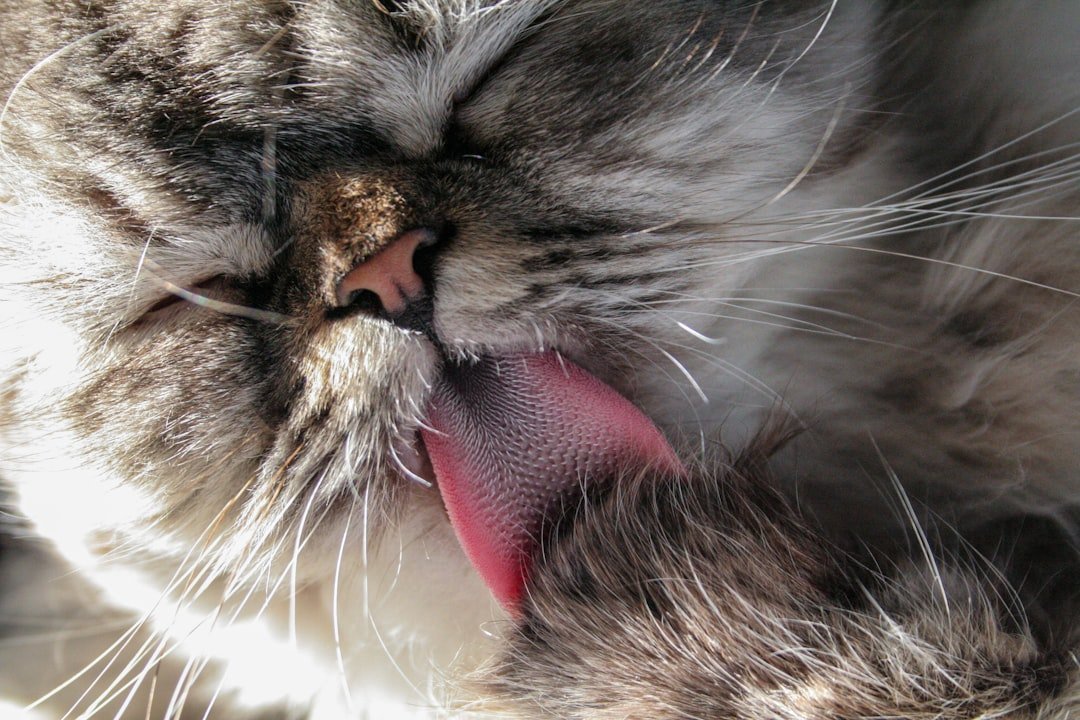
Put a properly fitted recovery cone on your cat now, then arrange a veterinary appointment as soon as possible. When a cat keeps licking same spot until raw, the skin can become increasingly sore and damaged with every lick. Act today. The cone gives the area a chance to rest while you work out why your cat is focused on that particular patch of skin.
When a cat keeps licking same spot until raw
Raw skin is a reason to call your veterinarian promptly, preferably the same day if the area is open, wet, swollen, smelly, or painful. Skin breaks easily. Licking may begin as grooming, but a sore spot can feel irritating enough that the cat returns to it repeatedly, which creates a cycle of more inflammation and more licking.
Do not try to scrub the area, pull off stuck fur, or apply human creams, antiseptics, essential oils, or pain medicine. Many common household products are unsafe if swallowed, and cats usually lick anything placed on their coat. Keep the area dry and protected instead. A veterinarian can tell you whether gentle cleaning is appropriate for the specific wound.
If your cat has active bleeding that does not stop with light pressure, a deep wound, marked swelling, pus, trouble breathing, sudden weakness, or seems unable to settle because of pain, seek urgent veterinary care. Do not wait. Cats often hide discomfort, so a noticeable behavior change can matter even when the wound looks small.
How to stop the licking safely
A rigid plastic recovery cone is often the most reliable short-term barrier because it keeps the tongue away from many body areas. Fit matters. You should be able to slide two fingers under the neck portion, but the cone should not be loose enough for your cat to pull it off or reach around it.
Watch your cat for a few minutes after fitting the cone. Check that they can walk, reach food and water, and use the litter box without getting stuck. Raise bowls slightly if the cone catches on the floor, and use a roomy litter tray with low sides if possible. Some cats need a brief adjustment period.
Soft cones, inflatable collars, and recovery suits can help in certain situations, but they do not block every cat from every location. A determined cat may still reach a leg, flank, belly, or tail base. Test the barrier while you are watching. If your cat can lick the spot, it is not providing enough protection.
Keep the cone on between checks unless your veterinarian gives different instructions. Even a few unsupervised minutes can be enough for a cat to reopen fragile skin. This feels strict. It is usually easier on the cat than allowing the wound to worsen over several days.
Common causes of repeated licking
The cause is not always visible at home, and several problems can look similar once the skin is irritated. Location gives clues. A veterinarian may examine the skin, look for parasites, ask about recent changes, and check whether discomfort elsewhere in the body could be behind the grooming.
Fleas and other skin parasites
Flea bites often cause intense itchiness, especially around the tail base, lower back, belly, or inner thighs. One bite can bother a sensitive cat for quite a while. You may see flea dirt that looks like tiny black specks, although not seeing it does not rule fleas out.
Use a fine flea comb over a white paper towel, especially near the rump and neck. If dark debris turns reddish brown when wet, it may be flea dirt because it contains digested blood. Avoid guessing with random flea products. Some dog flea treatments are dangerous for cats, and treatment often needs to include other pets and the home environment.
Allergies and contact irritation
Some cats react to flea saliva, food ingredients, pollen, dust, cleaning products, or materials that touch their skin. The visible result may be scabs, redness, thinning fur, or a raw patch from persistent grooming. The trigger is not always obvious. A veterinarian can help decide whether the pattern fits an allergy or another skin problem.
Think about recent changes, such as a new litter, detergent, floor cleaner, bedding, or topical product. Write them down. Do not start a restrictive homemade diet to test for food sensitivity without guidance, since a diet trial needs a controlled plan and adequate nutrition.
Pain or discomfort under the skin
Cats sometimes lick over a painful area even when the skin itself was normal at first. A cat may focus on a joint, abdomen, paw, or urinary area because something there feels uncomfortable. This is easy to miss. Limping, reluctance to jump, hiding, changes in appetite, or litter box changes are useful details to report.
Do not give human painkillers. Products such as acetaminophen and ibuprofen can be highly toxic to cats, even at doses that seem small to people. Your veterinarian can assess the broader picture and discuss cat-safe options if pain appears to be part of the problem.
Infection, wounds, or skin conditions
A scratch, bite, abscess, ring-shaped lesion, bacterial skin problem, or other skin condition can make a cat lick one place constantly. Some problems spread through contact. Keep other pets from grooming the area and wash your hands after handling it until you know more.
Take a clear photo before the appointment if you can do so without stressing your cat. Include a photo from farther away to show the body location, then one closer photo in good light. Photos help document changes when the appearance shifts between the time you book and the time you arrive.
Stress-related overgrooming
Stress can contribute to repetitive grooming, often on the belly, sides, or legs, particularly after a move, conflict between pets, a disrupted routine, or less access to preferred resting spaces. The skin may become raw if the habit continues. Still, do not assume stress is the whole answer before physical causes have been checked.
Make the home easier to navigate while you wait for care. Provide quiet resting spots, separate food and water stations if pets compete, and keep the daily routine predictable. These changes may lower tension, but they do not replace treatment for itch, pain, parasites, or a wound.
What your veterinarian may need to know
Bring a brief timeline of when the licking started, whether it happens at particular times, and how quickly the skin changed. Details help. Mention flea prevention products, diet changes, new household items, outdoor access, recent boarding, and any changes in drinking, eating, movement, or litter box habits.
If you have more than one pet, say whether any of them are scratching or have skin changes. This can affect the next steps. Your veterinarian may recommend tests or a treatment plan based on the exam, the lesion location, and your cat’s history rather than the raw patch alone.
Follow the plan for the full period your veterinarian recommends, even if the area looks better quickly. Healing skin can itch as fur returns, and stopping protection too early may restart the cycle. Check the spot at least once daily. Contact the clinic if it spreads, becomes wetter, smells bad, or your cat starts licking a new area.
FAQ
Can I cover the raw spot with a bandage?
Usually, do not bandage a cat at home unless your veterinarian has shown you exactly how. Improper bandages can trap moisture, slip, tighten, or become another target for chewing. A cone is generally the safer temporary option. The location of the wound also changes whether any covering is suitable.
Will the raw skin heal if I stop the licking?
Stopping access is a key first step because it prevents continued trauma. It may not be enough. The skin still needs assessment when it is raw, since the original itch, discomfort, infection, or parasite issue can continue underneath the surface.
How long should my cat wear a cone?
Keep it on until your veterinarian advises that the skin has healed enough and the underlying cause is under control. There is no universal number of days. Removing it based only on a better-looking patch can lead to rapid licking and another setback.
Can boredom make a cat lick one spot raw?
Boredom or stress may play a part in some cats, especially when routines or territory have changed. Physical causes still need consideration first. Add calm play sessions and predictable rest areas after you have protected the skin and arranged veterinary advice.
Related posts
This post is for general informational purposes only and is not veterinary advice. Every cat is different — if you have concerns about your cat’s health or behavior, please consult a qualified veterinarian.