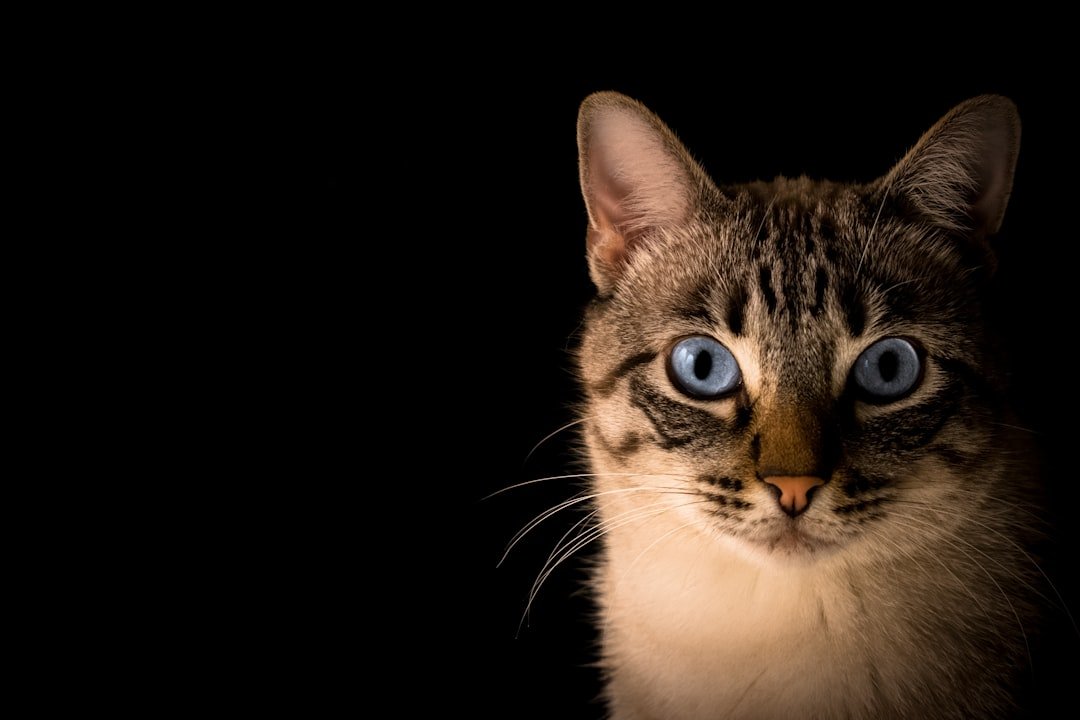
You are sitting on the sofa, your cat looks across the room, slowly closes both eyes, then opens them again. Why do cats slow blink? Most often, they do it because they feel safe enough to relax around you. Why do cats slow blink back at people? A calm blink can also be a gentle social signal, a way of saying they are comfortable and do not see you as a threat.
A slow blink is not a magic phrase with one fixed translation. Cats use their whole body when they communicate. Their ears, tail, posture, distance, and the situation all matter. Still, a soft gaze followed by a slow close and reopen of the eyes is usually a friendly sign when the rest of the cat looks loose and calm.
Why do cats slow blink at people?
Cats are alert animals. A direct, unbroken stare can feel tense or challenging, especially between cats that do not know each other well. Looking away, softening the eyes, or blinking slowly reduces that tension. It tells the other cat, person, or animal that they are not being confronted.
When your cat slow blinks at you, they may be acknowledging you while keeping the interaction peaceful. They are often relaxed enough to briefly shut their eyes, which leaves them less watchful for a moment. That is why the gesture tends to happen during quiet moments: while your cat is resting nearby, watching you prepare dinner, or settling into a favorite chair.
It can also be a learned social habit. Cats notice how people respond to them. If you often answer a slow blink with a soft voice, a calm blink, or gentle affection your cat enjoys, they may use it more often around you. That does not mean every blink is deliberate in the human sense. It means the interaction has become part of a familiar, comfortable routine.
Slow blinking in cat communication explained
Think of slow blinking as one small piece of cat communication rather than a stand-alone message. A cat with half-closed eyes can be content, sleepy, wary, or uncomfortable depending on everything else happening. The distinction comes from the full picture.
| What you see | What it often suggests | A sensible response |
|---|---|---|
| Slow blink, loose body, ears neutral, tail resting | Comfort and social ease | Slow blink back or quietly share the space |
| Slow blink while curled up for a nap | Drowsiness and relaxation | Let your cat rest |
| Narrow eyes, tense body, ears turned back | Unease, irritation, or a wish for distance | Stop reaching toward the cat and give space |
| One eye held closed, tearing, redness, or pawing at the face | Possible eye discomfort rather than social signaling | Arrange veterinary guidance promptly |
A relaxed cat usually has a body that looks soft rather than braced. They may be lying on one side, sitting with paws tucked, or resting with their weight evenly settled. Their ears tend to face forward or slightly to the side. Their whiskers are not pushed tightly forward, and their tail is still or moving gently.
By contrast, a cat who feels pressured may make the eyes narrow while keeping their body ready to move. You may see a low crouch, a tucked tail, ears flattened or rotated sharply sideways, or very wide pupils. In that moment, a slow blink from you is unlikely to fix the situation. The helpful move is to reduce pressure. Turn your body slightly sideways, avoid reaching over the cat, and let them choose whether to come closer.
How to slow blink back
You can answer your cat with a slow blink, but keep it low-key. Sit or stand at a comfortable distance. Look in your cat’s general direction without staring hard. Let your eyelids lower slowly, pause for a second, then open them. Afterward, look slightly away instead of waiting for a response.
Do not lean toward your cat to perform the blink. Do not hold their gaze until they blink back. Some cats will return the gesture quickly. Some will look away, walk over, or carry on with what they were doing. Others may not respond at all. A lack of response does not mean your cat dislikes you. They may be focused on something else, sleepy, or simply less expressive with eye contact.
If your cat approaches after a slow blink, allow them to set the pace. Offer a finger or relaxed hand at nose level rather than reaching over their head. Pet only if they rub against you, lean in, or otherwise show they want contact. Many cats enjoy a brief cheek or chin rub, while others prefer company without touching.
When a slow blink is not about affection
Cats blink for ordinary physical reasons too. Bright light, sleepiness, dust, and a passing irritation can all make a cat close their eyes. A cat may also squint when they are trying to avoid an interaction. That is why it is better not to label every half-closed eye as affection.
Pay closer attention if the eye behavior is new, persistent, or clearly uneven. One eye that stays shut, frequent squinting, discharge, redness, swelling, cloudiness, rubbing at the eye, or sensitivity to light deserves prompt veterinary advice. Eye problems can worsen quickly, and it is safer to have a veterinarian assess a noticeable change than to assume your cat is merely giving you a friendly blink.
A cat who blinks slowly while sitting in a tense household situation may also be trying to settle themselves. For example, a visitor may be standing close by, another pet may be blocking a doorway, or a child may be moving quickly around the room. Look at what is happening around your cat. Giving them an easy exit, a high resting spot, or a quiet room can be more useful than trying to encourage interaction.
Building trust without pushing contact
Slow blinking works best as part of respectful everyday handling. Let your cat approach when possible. Keep greetings calm. Avoid prolonged staring, sudden grabs, and following them when they walk away. Cats often become more socially open when they know they can end an interaction without being chased or picked up.
Routine also helps. Predictable feeding, play, and rest times can make a home feel easier to navigate. Use play that lets your cat stalk, chase, and pause, then let them cool down afterward. A cat who feels secure in their space is more likely to show relaxed body language, including those soft, sleepy-looking blinks.
Remember that friendly communication varies. Some cats are frequent slow blinkers. Others show affection by sitting nearby, following you from room to room, chirping at you, or sleeping with their back turned toward you. Watch for your own cat’s usual patterns instead of measuring closeness by one gesture.
FAQ
Does a slow blink mean my cat loves me?
It often suggests trust, comfort, or a peaceful social mood, which are all positive signs. It cannot measure affection on its own. Look for a broader pattern, such as choosing to be near you, greeting you calmly, rubbing against you, or relaxing in your presence.
Should I slow blink at a new cat?
Yes, as long as you keep your distance and do not stare. A soft glance, slow blink, and look away is a low-pressure way to show that you are not trying to challenge the cat. Let the cat decide whether they want to approach.
Why does my cat look away after I slow blink?
Looking away can be a polite response. Cats often break eye contact to keep an interaction calm. Your cat may also be distracted or ready for a nap. Do not try to regain their attention by moving closer.
Can cats understand a human slow blink?
Many cats appear to respond well to calm, softened eye contact, particularly when it is paired with quiet body language. Individual cats differ. The safest approach is to offer the gesture once, then respect whatever response your cat gives.
Why is my cat blinking one eye?
A brief one-eye blink can happen normally. Repeated one-sided squinting or blinking, especially with discharge, redness, swelling, or rubbing, is different. Contact a veterinarian promptly if you notice those signs.
Related posts
This post is for general informational purposes only and is not veterinary advice. Every cat is different — if you have concerns about your cat’s health or behavior, please consult a qualified veterinarian.