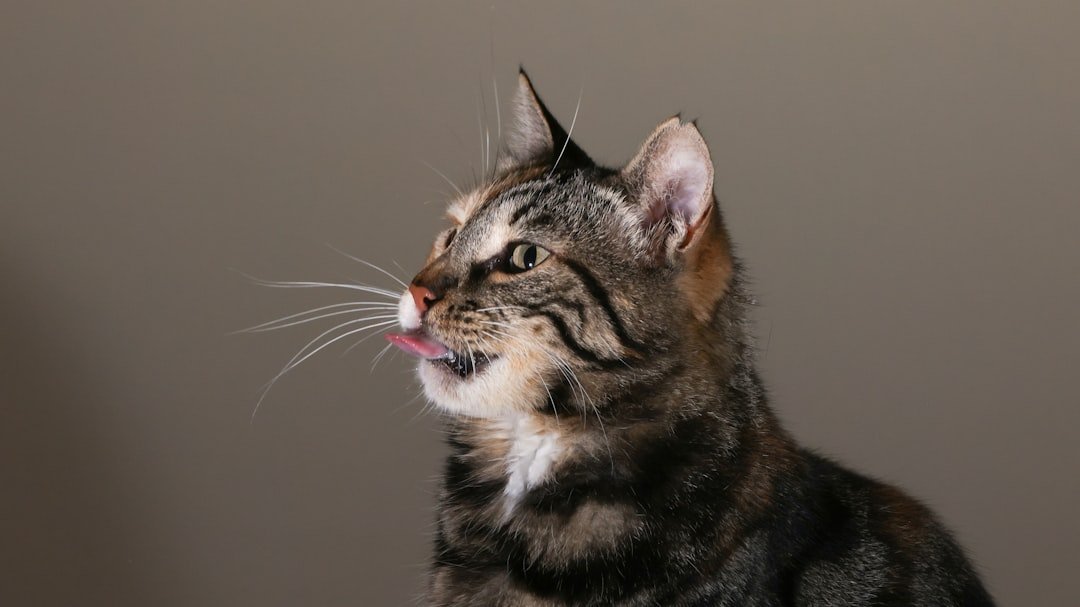
High protein cat food for indoor cats can support muscle maintenance when it is complete and balanced, provides enough calories, and agrees with the individual cat. The right food is rarely the one with the biggest protein number alone. Indoor cats still need animal-based protein, but they also often need careful portion control because reduced activity can make extra calories add up quickly.
Protein helps maintain lean body tissue, including the muscles cats use for ordinary movement, jumping, grooming, and play. Cats are obligate carnivores. Their bodies are adapted to use nutrients found in animal tissue, although a finished commercial food can also contain plant ingredients and still meet nutritional standards. For a healthy adult indoor cat, a higher-protein diet can be practical if the formula is complete, the calorie level suits the cat, and the transition is handled gradually.
There is no single percentage that fits every cat. A food with a high crude-protein percentage may look impressive on the bag, yet its value depends on moisture, calorie density, ingredient quality, and whether your cat actually eats and digests it comfortably. A wet food naturally has much more water than kibble. Comparing the printed protein percentages without adjusting for moisture can give a misleading result.
What high protein cat food for indoor cats should provide
Start with a nutritional adequacy statement, not marketing words on the front panel. Look for language saying the food is complete and balanced for adult maintenance, all life stages, or the particular life stage your cat needs. In the United States, labels often reference AAFCO nutrient profiles or feeding trials. Other countries use different labeling systems, so check the local package information.
Adult maintenance matters. A kitten, pregnant cat, or nursing cat has different nutritional needs, and many foods for all life stages are more calorie-dense than a sedentary adult requires. If your cat has been given a veterinary diet or has an ongoing health concern, changing foods is a conversation to have with the prescribing veterinarian.
Look at the guaranteed analysis, then compare foods on a dry-matter basis when wet and dry options are in the running. The basic calculation is simple: subtract moisture percentage from 100, divide the protein percentage by that result, then multiply by 100. For example, a canned food with 10% protein and 78% moisture has about 45% protein on a dry-matter basis. This adjustment makes comparisons between canned food and kibble more meaningful.
Crude protein is a starting point, not a full quality score. The label does not tell you the exact amino acid digestibility for your individual cat, nor does it show how much protein comes from each ingredient. A named animal protein near the beginning of the ingredient list can be reassuring, but ingredient lists are not a nutrient analysis. Use both pieces of information.
Calories deserve equal attention. A high-protein kibble may still be rich in fat and energy, so a small scoop can contain more calories than an owner expects. Check the calories per cup for dry food or per can, pouch, and tray for wet food. Measure meals. Free-feeding makes it hard to tell whether a food is working for your cat’s body condition.
Protein levels and muscle maintenance options
For context, AAFCO adult-maintenance nutrient profiles set a minimum crude protein level on a dry-matter basis, but a minimum is not a target for every purchase. Many dry foods marketed as protein-focused sit well above that baseline, while many canned foods look modest on the label because their water content is high. Dry-matter comparison gives you a clearer view.
Wet food is one muscle maintenance option worth considering, especially for cats that drink little voluntarily. It often provides a high animal-protein proportion once moisture is removed, and its water content can make meals feel substantial. The trade-off is cost per day. Opened cans also need refrigeration, and some cats dislike leftovers served cold.
High-protein dry food can be convenient for multi-cat homes, puzzle feeders, and measured meal plans. It is usually less expensive per calorie than canned food. Dry food has very little moisture, though, and calorie density can make portions surprisingly small. A kitchen scale is useful when the label gives feeding guidance in grams.
A mixed feeding plan is another reasonable route. A measured dry portion can provide convenience while a wet meal adds moisture and variety, provided the combined daily calories remain appropriate. Keep the arithmetic honest: adding wet food on top of an unchanged bowl of kibble often increases total intake more than intended.
Some indoor formulas add fiber for hairball management or stool quality, while others lower calories with extra fiber. That can help certain cats feel satisfied between meals. Too much fiber can be a poor fit for others, particularly if it crowds out calories a lean cat needs. Watch the whole formula, not one claim.
How to compare common product types
Research current labels rather than relying on an old review, because recipes, package sizes, and feeding directions can change. Brands such as Tiki Cat, Wellness CORE, Instinct, Purina Pro Plan, and Nulo sell recipes marketed around higher protein or animal ingredients in some regions, although local availability and product ranges differ. A brand name alone does not tell you whether a specific recipe is right for an indoor adult cat.
Tiki Cat dry recipes such as Born Carnivore have commonly been positioned as high-protein options, while the brand’s canned range gives buyers many moisture-rich alternatives. This makes the line relevant for owners deciding between a protein-focused kibble and a wet-food-centered routine rather than simply choosing the highest printed protein value. Check the life-stage statement and calories carefully, because a protein-focused dry recipe may be too energy-dense for an inactive cat unless portions are adjusted.
Wellness CORE and Instinct have offered grain-free, protein-forward dry and wet formulas in many markets, including recipes that may differ substantially in texture, fiber, and calorie density. Rather than treating grain-free as a benefit by itself, compare the particular canned or dry formula your cat will actually eat. The absence of grains does not prove better protein quality or improved body composition.
Purina Pro Plan has indoor and weight-management formulas alongside higher-protein lines, depending on the local product range. For an owner comparing products at a large retailer, the useful distinction may be whether the selected recipe is designed around indoor living, weight control, or higher protein, since these goals do not always appear in the same bag. Read the exact feeding directions and calorie information rather than assuming an indoor formula is also a high-protein formula.
Nulo has sold several recipes with animal proteins high in the ingredient list and relatively high stated protein levels. Within the same product family, however, one recipe may be intended for a different life stage or have a noticeably different calorie count or fiber level. Comparing the individual recipe is more useful than treating the entire line as uniform.
Budget foods can also meet complete-and-balanced standards, and an affordable food your cat eats consistently is often more useful than a premium one that strains the household budget or goes untouched. Price is not a nutrient guarantee. Compare cost per day based on the actual feeding amount, rather than the price of one bag or one case.
Ingredients that matter more than buzzwords
Named animal ingredients, such as chicken, turkey, salmon, or rabbit, make it easier to understand the recipe than vague wording does. Meat meals can also be legitimate concentrated protein ingredients in dry food. “Meal” does not automatically mean low quality. Water has been removed before processing, so the ingredient weighs less by the time it reaches the kibble.
Animal by-products make some owners uneasy, but the term can include nutrient-rich organs. The label alone cannot tell you whether a cat will thrive on a particular formula. A complete nutritional profile, responsible manufacturing information, and your cat’s appetite and stool quality matter more than a single ingredient that sounds appealing or unappealing.
Carbohydrate content is not required on most pet food labels, so buyers often try to estimate it from the guaranteed analysis. That estimate has limits because ash, fiber, and moisture information are minimums or maximums rather than exact laboratory values. Keep perspective: a lower-carbohydrate formula may suit your priorities, but protein and calories remain the more direct purchase comparisons for muscle maintenance.
Avoid treating exotic proteins as automatically superior. Duck, venison, and rabbit can add variety, but they are often expensive and may be harder to find reliably. Chicken-based food is a perfectly ordinary option for many cats. Choose a novel protein only for a clear reason, such as your veterinarian’s guidance or your cat’s established preference.
Portions, transitions, and practical monitoring
Use package feeding directions as a starting estimate, then adjust based on your cat’s body condition, activity, and veterinary guidance. The amounts printed on food packages are often broad because cats vary greatly in size and energy needs. Check the body, not only the bowl. You should generally be able to feel the ribs with light pressure, while a pronounced belly or visible bones warrant a closer look with a veterinarian.
Weighing your cat periodically can make small changes easier to spot than visual impressions alone. Use the same scale and a similar time of day when possible. A gradual trend is more useful than one isolated number. Sudden appetite changes, vomiting, diarrhea, unusual thirst, or noticeable weight change deserve veterinary attention rather than an assumption that the new food is the cause.
Switch foods over roughly a week when your cat allows it, starting with a small amount of the new food mixed into the old and increasing it step by step. Go slower if stools soften or your cat is hesitant. Some cats are particular, and abrupt changes can lead to food refusal or digestive upset even when the new recipe is nutritionally sound.
For cats that gobble dry food, try splitting the daily ration into several small meals or using a food puzzle. This can slow eating and gives indoor cats a little more activity around meals. Do not add treats without counting them, since treat calories can quietly undo a carefully measured feeding plan.
When higher protein needs extra caution
Higher protein is not automatically appropriate for every cat. Cats with known kidney concerns, urinary issues, digestive disease, food sensitivities, or other ongoing conditions may need a specific nutritional plan. Do not make a major food change based only on a product claim. Ask your veterinarian what nutrient priorities apply to your cat.
Senior cats are especially individual. Some older cats benefit from palatable, protein-rich food that helps them maintain lean tissue, while others need diets chosen around medical findings or changing appetite. Because age alone does not settle the question, regular veterinary checks and an accurate weight history offer better guidance than a generic “senior” label.
A high-protein formula also cannot replace play and daily movement. Short interactive play sessions encourage normal movement and can help you notice changes in stamina or interest. A wand toy, a tossed soft toy, or a food puzzle can be enough for many indoor cats.
FAQ
How much protein should indoor cat food have?
There is no universal ideal percentage for every indoor cat. Compare adult-maintenance foods on a dry-matter basis, confirm that the food is complete and balanced, and consider calories alongside protein. The highest number is not always the best buy. Your cat’s age, body condition, appetite, and health history all affect the decision.
Is wet food better than dry food for muscle maintenance?
Wet food can be a useful option because it adds moisture and may provide substantial protein on a dry-matter basis. Dry food can also support muscle maintenance when it is nutritionally complete and portioned appropriately. Both can work. The better choice is the one that meets your cat’s nutritional needs, fits your budget, and can be fed consistently.
Will high protein cat food make my indoor cat gain weight?
Protein itself does not determine weight gain as neatly as total calorie intake does. A protein-focused food can be calorie-dense, especially in dry form, so follow measured portions rather than filling the bowl. Read calories per cup or container. If your cat’s weight is changing unexpectedly, discuss it with a veterinarian.
Are grain-free high-protein foods necessary?
No. Some high-protein foods are grain-free, but grains are not automatically a problem for cats that tolerate the recipe well. Focus on the complete-and-balanced statement, protein and calorie information, ingredient transparency, and your cat’s response. Marketing terms are secondary.
How quickly should I change to a new cat food?
A gradual change over about seven days is a practical starting point for many cats. Start small. If your cat has a sensitive stomach, refuses the mixture, or develops ongoing digestive signs, slow down and contact a veterinarian for advice rather than forcing the switch.
Related posts
This post is for general informational purposes only and is not veterinary advice. Every cat is different — if you have concerns about your cat’s health or behavior, please consult a qualified veterinarian.