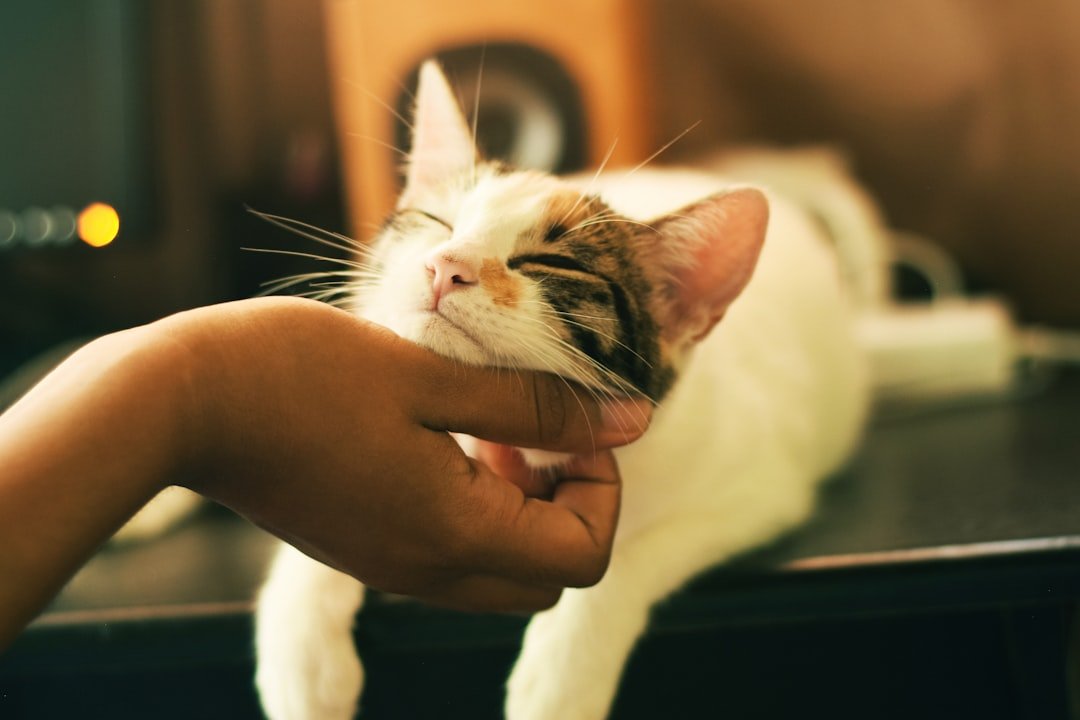
Stop moving your hand as soon as your cat looks tense, then calmly give them space. If you are wondering why does my cat bite during petting, the most common answer is that petting has become too intense, too long, or uncomfortable for that particular cat. Pause early. A bite can seem sudden to us, but many cats give quiet signals before they reach that point, and learning those signals lets you end the interaction before your cat feels they need to use their teeth.
Why does my cat bite during petting
Many cats enjoy a few strokes but become sensitive when touch continues past their comfort limit, especially over areas such as the lower back, belly, tail base, or sides. Their limit varies. This is often called petting-induced overstimulation, although the cat may also be frustrated, startled, trying to play, protecting a sore area, or simply asking for distance. A cat does not need to be angry to bite. They may have enjoyed the first few seconds and still be done now.
Petting can create a buildup of sensation on the skin and nerves, particularly when a hand repeatedly passes over the same spot. Some cats tolerate only brief contact. Others like long sessions if you stay around the cheeks, chin, or shoulders. There is no universal number of strokes that works for every cat, so your cat’s body language matters more than a fixed rule.
Watch for overstimulation signs
The earliest signs are often easy to miss. Look closely. A relaxed cat usually leans into touch, has a soft body, and may blink slowly or knead. A cat nearing their limit tends to become still or twitchy instead, and their tail often gives away the change before their mouth does.
| What you may see | What it can mean | What to do |
|---|---|---|
| Tail tip twitching or tail thumping | Rising irritation or arousal | Stop after one last gentle stroke |
| Skin rippling along the back | Touch is becoming unpleasant | Lift your hand away |
| Ears turning sideways or back | Your cat is less comfortable | Give them room |
| Head turning toward your hand | A warning or interest in play | Pause and do not test them |
| Sudden stiff body or large pupils | High arousal, fear, or discomfort | End the interaction quietly |
A quick head turn is especially useful to notice. Your cat may look at your hand, flatten their whiskers slightly, or stop purring before they swat or nip. Purring is not always a green light. Cats can purr while relaxed, but they can also purr when unsettled, so read the whole body rather than relying on one sound.
Change how you pet your cat
Try shorter petting sessions and let your cat choose whether they continue. Start with two or three gentle strokes around the cheeks, forehead, or under the chin, then take your hand away. Wait. If your cat leans toward you, bumps your hand, or stays relaxed, offer a little more; if they turn away or walk off, let that be the end.
Use an open, light hand rather than brisk rubbing or repeated scratching. Many cats prefer predictable strokes in one direction. Avoid the belly unless your cat has clearly shown that they enjoy belly contact, because exposing the belly often means trust or a comfortable resting position, not necessarily an invitation to touch it.
- Pet when your cat approaches calmly.
- Keep your hand away from the tail base if that area causes twitching.
- Let sleeping, eating, or hiding cats rest.
- Use a wand toy for high-energy interaction instead of your hands.
Do not punish a petting bite. No yelling. Pulling your hand away sharply, tapping your cat, or spraying water can make your cat more fearful of hands and may make future warnings less clear. If the bite has not broken skin, quietly end the attention and move on. If skin is broken, wash the area thoroughly with soap and running water and seek medical advice promptly, since cat bites can become infected.
Tell overstimulation apart from play
A cat who bites during petting may be switching into play rather than saying touch hurts. Play bites are more likely when the cat grabs your hand with front paws, kicks with back feet, or becomes excited after fast hand movements. It still hurts. The practical response is the same at first: stop using your hands as toys, become still, and redirect future play to a wand toy or another safe toy that keeps teeth away from skin.
Context helps you sort it out. If bites happen after a predictable number of strokes, with tail flicking or skin twitching beforehand, overstimulation is a likely explanation. If they happen when hands move beneath a blanket or wiggle near the cat’s face, play is more likely. Some cats have both patterns, especially if they become excited easily.
Attention-seeking can look similar. A cat may nip because they want breakfast, a door opened, or a play session to begin, and people sometimes accidentally teach this pattern by immediately giving the cat what they want after a bite. Keep the response calm. Meet normal needs on a routine, offer attention before your cat gets wound up, and reward gentle approaches with petting, play, or a small part of their regular food allowance.
Consider discomfort and sudden changes
Do not assume every bite is a behavior problem. Pain or irritation can make a previously tolerant cat object to touch, particularly when the biting begins suddenly, happens around one body area, or comes with a change in movement, grooming, appetite, litter box habits, or willingness to jump. Cats hide discomfort well. A veterinarian can assess changes that you cannot safely sort out at home.
Arrange a veterinary visit soon if your cat suddenly starts biting during ordinary petting, cries when touched, avoids being picked up, has a wound or swollen area, or seems generally unlike themselves. Seek urgent veterinary guidance if your cat appears severely painful, cannot walk normally, has trouble breathing, or has had a serious injury. Keep handling minimal. Trying to inspect a painful cat closely can lead to another bite and more stress.
Build safer, calmer petting habits
Think of petting as a conversation rather than something you continue until your cat leaves. Your cat gives consent by approaching, leaning in, and staying loose. They withdraw consent by moving away, becoming tense, or offering the early overstimulation signs. Respecting those small choices usually makes interactions clearer and less tense for both of you.
It can help to keep a simple mental note of what happened before each bite. Note the location of touch, how long petting lasted, your cat’s posture, and what was happening nearby. Patterns emerge. You may find that your cat enjoys chin scratches in the evening but dislikes back strokes when visitors are present, or that they want brief contact followed by a play session.
Frequently asked questions
Why does my cat purr and then bite me?
Purring can occur during contentment, but it does not guarantee that a cat wants more touch. Watch their body. If purring is followed by a twitching tail, tense muscles, ears rotating back, or a fast head turn, stop petting before the bite. Your cat may enjoy the attention at first and then reach their sensory limit.
Should I keep petting after a gentle nip?
No. Treat even a gentle nip as useful feedback and end the session without drama. Continuing can teach your cat that small warnings do not work, which may lead them to bite harder next time. Give them a break, then try a shorter session later when they approach you.
Why does my cat bite only one person during petting?
Cats can react differently to each person’s touch, movement, scent, and timing. One person may pet longer, use more pressure, approach when the cat is resting, or miss early signals. Keep it simple. Have everyone use short sessions, allow the cat to initiate contact, and stop at the first sign of tension.
Can I train my cat to enjoy more petting?
You can help your cat feel safer by keeping touch pleasant and ending before they get irritated, but some cats will always prefer brief affection. That is normal. Reward calm, voluntary contact with a soft voice, a favorite cheek scratch, or a tiny food treat if it fits their usual diet, and avoid trying to push past their preference.
Related posts
This post is for general informational purposes only and is not veterinary advice. Every cat is different — if you have concerns about your cat’s health or behavior, please consult a qualified veterinarian.