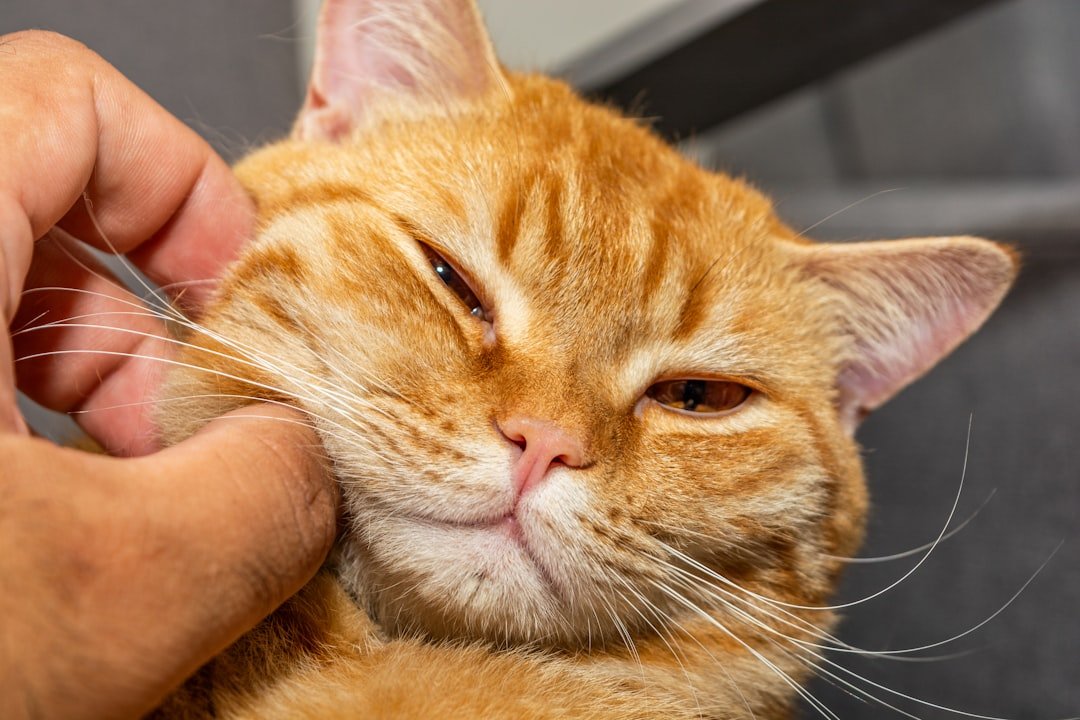
Watch your cat’s whole body before continuing to pet them. Why do cats purr when being petted? Often, the touch feels pleasant, familiar, or reassuring, but the purr only makes sense when you pair it with body language such as relaxed muscles, soft eyes, ear position, tail movement, and whether your cat chooses to remain close. Start there. A cat who leans into your hand and stays loose is giving a very different message from one who purrs while holding still, turning their head away, or flicking their tail.
Purring is a sound cats use in more than one situation. It can happen during calm social contact, while resting near a trusted person, when a mother cat is with kittens, or when a cat is unsettled. Context matters. Petting may bring out a contented purr, but it can also prompt a self-soothing purr in a cat that feels uncertain or uncomfortable.
Why do cats purr when being petted?
Many cats purr because gentle contact feels good and reinforces a social bond. Cats often enjoy petting around the cheeks, under the chin, at the base of the ears, and sometimes along the upper back, because these are areas they commonly rub against people, furniture, and other familiar animals. That is normal. When a cat nudges your hand, presses their cheek against you, or adjusts their body to keep the contact going, the purr is more likely to be part of a relaxed interaction.
A purr begins with rhythmic activity in the cat’s voice box area as they breathe in and out. You may feel it as a low vibration in the chest or throat. The mechanics are interesting, but they do not translate into one fixed emotion. A cat can purr while comfortable, while asking for something, while settling themselves, or during a tense moment, so the sound alone cannot tell you exactly how they feel.
Meaning and body language around a purr
Look for clusters of signals instead of treating purring as a yes to more petting. A comfortable cat usually has a loose body, neutral or forward ears, slow blinks, relaxed paws, and a tail that rests quietly or moves in an easy way. Small signs count. Some cats knead with their front paws, drool a little, or settle their weight against you when they are especially comfortable.
Body language can change fast, particularly when a cat becomes overstimulated. A purring cat may still be nearing their limit if their tail begins to twitch sharply, the skin along their back ripples, their ears angle sideways, or their head repeatedly turns toward your hand. Pause early. Giving the cat a break before they swat, bite, or leave helps them learn that they do not need to escalate to make contact stop.
| What you notice | What it often suggests | What to do |
|---|---|---|
| Purr, loose body, slow blinks, leaning in | Comfort or enjoyment | Keep strokes gentle and brief, then pause. |
| Purr, kneading, resting beside you | Security or social comfort | Let your cat set the pace. |
| Purr, tail flicking, tense shoulders, ears turning out | Possible overstimulation or mixed feelings | Stop petting and give space. |
| Purr while hiding, crouching, or seeming unusually quiet | Possible self-soothing or discomfort | Observe closely and consider veterinary advice if it persists. |
Why petting can become too much
Cats have individual limits for touch. One cat may welcome a long lap session, while another likes three cheek rubs and then prefers to sit nearby without a hand on them. Both are fine. Sensitivity can also differ by body area, with many cats disliking belly touches, tail handling, rough strokes over the lower back, or repeated petting in one spot.
Overstimulation is common during petting because repeated sensation can stop feeling pleasant after a while. The shift may be subtle at first, and a cat can continue purring even as their tolerance drops. Use a short consent check. Pet for several seconds, remove your hand, and see what happens. If your cat leans closer, head-butts your fingers, or presents a cheek, they may want more. If they remain still or move away, let the interaction end.
When a purr deserves closer attention
A purr by itself is rarely a reason to panic. Still, contact a veterinarian if purring comes with a clear change in normal behavior, such as reduced appetite, hiding, limping, trouble using the litter box, labored breathing, unusual vocalizing, or avoiding touch in places your cat usually enjoys. Changes matter. Cats can be quiet about discomfort, so a sudden difference in habits is more useful information than the purr alone.
Do not repeatedly press or manipulate an area to test whether it hurts. That can make a worried cat more distressed and may lead to a defensive scratch or bite. Instead, note what you see, when it began, whether eating and litter box habits have changed, and which areas seem sensitive. Those details can help a veterinarian assess the situation.
How to pet a purring cat well
Begin with your hand held nearby and let your cat approach. Offer a finger or knuckles near the cheek rather than reaching over the head, then use light strokes where the cat has shown they enjoy contact. Go slowly. Short sessions are often better than continuing until the cat has had enough.
Let your cat control the interaction whenever possible. Stop before the tail starts snapping or the ears rotate back, and avoid waking a sleeping cat for affection. Respecting those small boundaries usually makes petting calmer and more predictable for both of you.
Frequently asked questions
Can a cat purr and still be unhappy?
Yes. Cats can purr when they are relaxed, but they may also purr when they are nervous, recovering from a stressful event, or dealing with discomfort. Look beyond the sound. A tense posture, hiding, flattened ears, reduced appetite, or a sudden change in usual behavior gives more reason for concern than purring alone.
Why does my cat purr and then bite me?
This often happens when petting becomes overstimulating or when the cat has reached their personal limit. The bite may seem sudden, yet many cats give earlier signals such as tail flicks, skin twitching, ears turning sideways, or looking back at your hand. Stop sooner. Keep sessions shorter and pause regularly to see whether your cat asks for more contact.
Does louder purring mean a cat is happier?
Not necessarily. Some cats naturally have a strong, rumbling purr, while others purr so quietly that you can only feel the vibration. Volume varies. A loud purr with relaxed body language may reflect enjoyment, but the same volume does not prove a particular emotional state.
Why does my cat purr when I stop petting them?
Your cat may be asking you to continue, enjoying the closeness, or simply remaining settled after the interaction. Watch what they do next. If they rub against you, paw gently at your hand, or position their head under your fingers, they likely want more. If they walk away, let them go.
Related posts
This post is for general informational purposes only and is not veterinary advice. Every cat is different — if you have concerns about your cat’s health or behavior, please consult a qualified veterinarian.