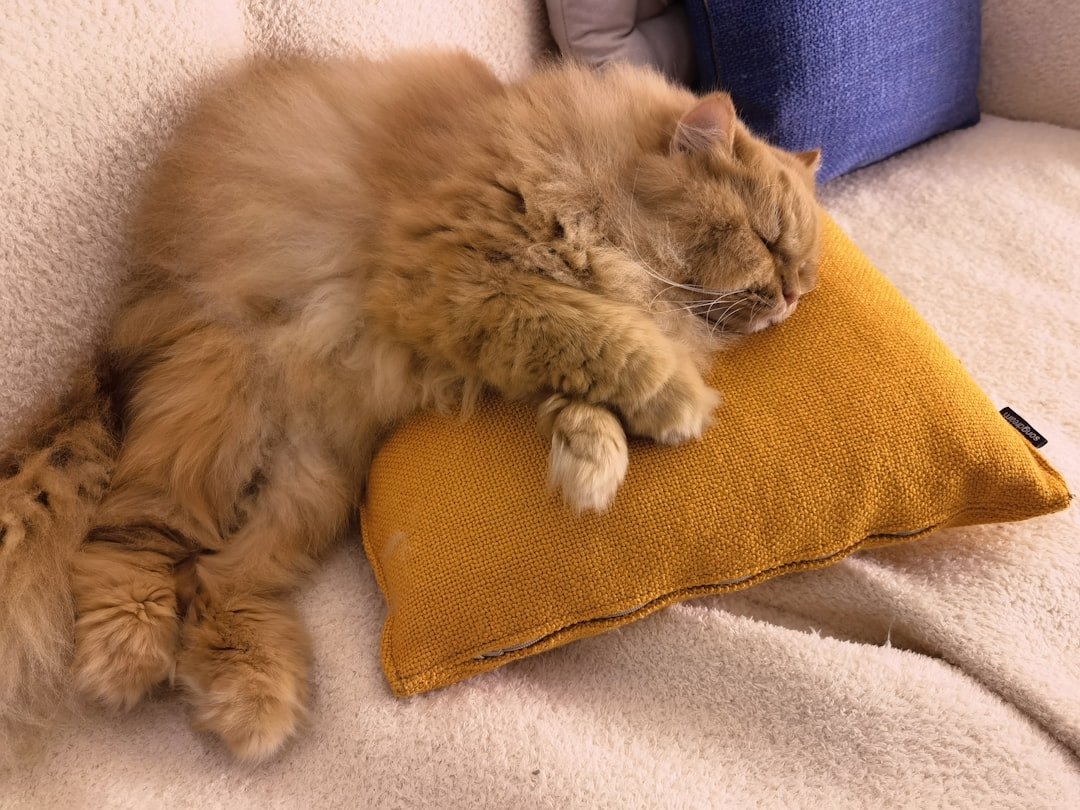
Why does my cat sleep on my head? Usually, your cat is choosing warmth, familiar scent, and close contact with someone they trust. It is often affectionate. Why does my cat sleep on my head instead of beside me? Your head stays relatively still, gives off heat, and carries a strong, recognizable scent through your hair and pillowcase.
Why does my cat sleep on my head at night?
Cats are selective about sleep spots because sleep leaves them vulnerable. Your bed is already a safe place, and the area around your head may feel especially dependable because it moves less than your arms or legs during the night. That matters. A cat that has been startled by a shifting foot under the covers may decide the pillow is the better option.
Body heat is a big draw. Cats generally seek warm resting places, which is why many will choose a sunny patch, a radiator-adjacent bed, a laptop, or the top of a sleeping person’s pillow. Your head and upper body release steady warmth, while the pillow holds some of that heat after you lie down. It feels cozy.
Your scent also carries weight in a cat’s daily life. Cats use scent to identify familiar people, spaces, and objects, and your pillow often has a concentrated version of your normal smell from your hair, skin, and laundry. A cat may press against that scent when settling down because it is predictable and reassuring. This is common behavior.
Some cats seem drawn to breathing sounds and the gentle rhythm of a person at rest. The sound is not necessarily the reason they chose you, but a quiet, regular sleeping environment can help a cat relax. Cats also notice routines closely. If you go to bed at roughly the same time each night and your cat joins you, the pillow may have become part of their expected bedtime pattern.
Bonding behavior explained
Sleeping close to you can be a sign that your cat feels secure around you. Cats do not need to sleep directly on a person to be bonded, though. One cat may curl behind your knees, another may sleep at the foot of the bed, and another may wait nearby in a chair. Distance varies.
When a cat chooses your head, they may be seeking closeness without the risk of being jostled. Your hands can reach down and pet them, your legs may turn unexpectedly, but the space above your shoulders often stays quiet for longer stretches. That makes practical sense for a light sleeper with whiskers and quick reflexes.
Head sleeping can also be part of social resting behavior. Cats that feel comfortable with one another may rest close together, share warmth, or sleep in contact, although friendly cats do not always cuddle. Personality matters. A confident, people-oriented cat may claim the pillow quickly, while a more reserved cat may show attachment by sleeping several feet away.
Do not read every pillow nap as a major emotional statement. Sometimes the explanation is simply that your pillow is soft, warm, and located in the best part of the room. Cats can be very practical. If the spot also smells like their favorite person, it becomes even more appealing.
Other reasons your cat picks your pillow
The pillow may offer a better view of the room than the lower part of the bed. Many cats prefer a position where they can hear a door open, watch movement, and leave quickly if something disturbs them. A raised spot helps. Even a relaxed indoor cat often keeps those instincts during sleep.
Your cat may also be responding to competition for space. If another pet takes the middle of the bed, or if your feet are under heavy blankets, the pillow can be the least crowded route to comfortable contact. This can change night to night. Cats often rotate among favorite spots depending on temperature, noise, household activity, and who is already in bed.
Young cats may be especially enthusiastic about climbing onto faces, hair, and pillows because they are still learning household boundaries and are drawn to movement. Older cats may choose the head area because it is easy to access and less likely to be bumped. Age influences habits. It is still wise to look at the whole pattern rather than assume one reason applies to every cat.
When head sleeping becomes a problem
A cat on your head can interrupt sleep, trigger allergies, or leave you waking with hair in your mouth. Some cats knead the pillow, purr loudly near an ear, or step on a person’s face before settling. Those habits are frustrating. You can set a bedtime boundary without making your cat feel rejected.
If your cat suddenly starts sleeping on your head after never doing so before, look for simple changes first. The weather may be colder, a favorite cat bed may have been moved, a new pet may be using another sleeping area, or your schedule may have changed. Sudden clinginess alongside changes in appetite, litter box use, energy, vocalizing, or comfort is worth discussing with a qualified veterinarian. Keep notes.
Also take nighttime safety seriously if your cat blocks your nose or mouth, startles easily near your face, or becomes upset when moved. You need uninterrupted breathing and rest. A cat can sleep close by without sleeping directly on you.
How to move your cat off your head kindly
The easiest approach is to make an equally attractive alternative beside your pillow or near the top of the bed. Choose a soft cat bed with raised sides, a folded blanket, or a thick towel that carries a familiar household scent. Keep it close. Moving the alternative to the foot of the bed immediately may be too large a change for a cat who wants proximity.
- Place the new bed beside your pillow before bedtime. Add a blanket your cat already uses.
- Warm the spot briefly with a pet-safe warming pad made for animals, following its instructions exactly, or use a room-warm blanket. Avoid hot water bottles that could leak or become too hot.
- When your cat climbs onto your head, calmly lift or guide them onto the new spot. Be quiet.
- Repeat the same response every night. Consistency teaches the location faster than scolding.
- Give gentle praise or a small bedtime treat after your cat settles in the alternative bed, if treats fit their usual diet. Keep portions modest.
Avoid pushing your cat away abruptly, spraying water, or shutting them out without warning if they normally sleep with you. Those reactions can make bedtime tense and do not explain what you want instead. Redirect them. If you need the bedroom cat-free for sleep or allergies, build a comfortable nighttime area outside the room with water, litter access, a bed, and familiar items, then make the change as consistently as possible.
A simple setup can work well: put a small bed on a chair next to the bed, add a washable fleece blanket, and place one or two pieces of kibble there at bedtime if your cat eats dry food. The goal is proximity. Your cat still gets your scent and company without occupying your pillow.
How to make bed sharing more comfortable
If you enjoy having your cat nearby, you may not need to change anything. Wash pillowcases regularly, brush loose fur when your cat tolerates it, and keep up with routine parasite prevention recommended for your household and region. Clean bedding helps. These basics are particularly useful for people with mild allergy symptoms.
Consider your cat’s overnight needs as well. Make sure they can reach water, their litter tray, and a comfortable resting spot without being trapped behind a closed door. A cat that wakes and cannot access the litter box may scratch or vocalize to get your attention. Easy access reduces avoidable disruption.
Watch what your cat chooses when given options. If they abandon your head for a warm bed at shoulder height, warmth was likely the main factor. If they keep returning to the pillow even when another bed is equally warm, your scent and closeness may matter more. You do not need a perfect answer. You only need a setup that works for both of you.
Frequently asked questions
Does sleeping on my head mean my cat loves me?
It often suggests your cat feels safe and comfortable with you. That is a positive sign. Still, cats show attachment in many ways, including following you around, slow blinking, greeting you, sitting nearby, or asking for play at predictable times.
Why does my cat sleep on my head but not my partner’s?
Your cat may prefer your scent, body heat, bedtime schedule, pillow texture, or how still you sleep. Small differences count. It does not mean your cat dislikes your partner.
Why does my cat put a paw on my face while sleeping?
A paw on your face may help your cat maintain contact, balance on the pillow, or settle into a comfortable position. It can also be accidental. If claws are a problem, redirect your cat to a nearby bed and keep nail trims manageable.
Should I let my cat sleep on my pillow?
That is a personal comfort and hygiene decision. It is fine for many households if everyone sleeps well and bedding is kept clean. Choose a nearby cat bed instead if you have allergies, poor sleep, or do not want paws near your face.
Why did my cat stop sleeping on my head?
Cats often change sleeping spots with the season, room temperature, furniture changes, or household routines. Give them choices. If the change comes with other noticeable shifts in behavior or wellbeing, contact a qualified veterinarian for guidance.
Related posts
This post is for general informational purposes only and is not veterinary advice. Every cat is different — if you have concerns about your cat’s health or behavior, please consult a qualified veterinarian.