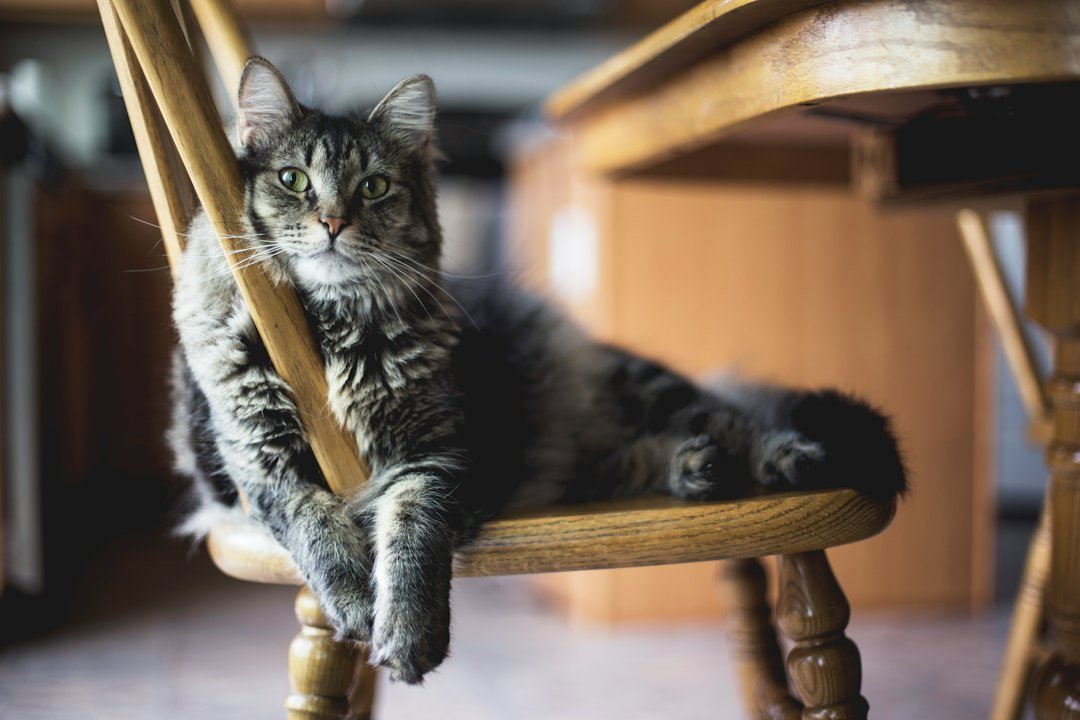
Why does my cat hiss at new furniture after you set a new chair, sofa, or shelving unit in the room they use every day? Usually, the unfamiliar object has made part of their territory feel uncertain. That can feel alarming. A hiss is your cat’s way of asking for more distance, not a sign that they are being spiteful or that they will always hate the furniture.
Why does my cat hiss at new furniture?
Cats rely heavily on familiarity in their home. They know where furniture belongs, how it smells, where they can jump, and which routes let them leave a room comfortably. A large new item can suddenly block a usual pathway or change the shape of a familiar space, and your cat may react before they have had time to inspect it safely. It is normal cat communication.
Smell matters. Furniture can carry odors from a warehouse, delivery vehicle, shop floor, cleaning product, another home, or even other animals. Humans may barely notice these scents, but a cat can find them intense or confusing. A newly upholstered sofa, rug, or flat-packed cabinet can also release unfamiliar material smells for several days. Your cat may hiss at the item because it smells wrong in a place that is supposed to smell like home.
The appearance and movement of furniture can also be unsettling. A tall coat rack may resemble a strange figure at first glance, while a rocking chair or recliner can move unexpectedly after your cat approaches it. Large reflective surfaces, such as glass cabinet doors, sometimes add another surprise when a cat sees a reflection. That response is protective.
Placement can be the biggest issue. If new furniture sits near the litter box, food bowls, favorite bed, window perch, or a narrow exit route, your cat may feel crowded or trapped. Even a friendly, confident cat can object when their usual setup changes too quickly. Some cats inspect the item in an hour. Others need several days or longer.
How to help them adjust
The goal is not to make your cat like the furniture immediately. The goal is to let them learn that it is harmless while they still have control over their distance and choices. Slow is better. For most cats, calm exposure works better than carrying them over to the item or trying to make them sniff it.
- Put the furniture in place before inviting your cat close. If possible, avoid repeatedly shifting it around for the first few days. A stable object is easier to assess. Let your cat watch from across the room.
- Keep normal resources accessible. Make sure your cat can reach food, water, litter, resting spots, and exits without passing right beside the new item. Give them room. If the furniture blocks a route, move it or create another clear path.
- Add a familiar scent. Place a blanket your cat already sleeps on near the furniture, or gently rub a soft cloth along your cat’s cheek area and then wipe the lower legs or side of the item. Do not rub the cloth on a surface that could be damaged. Familiar facial scent can make the object feel less foreign.
- Pair the furniture with something pleasant at a safe distance. Offer a favorite treat, a small meal, or a quiet play session several feet away while your cat can see the item. Keep it low-pressure. If your cat will not eat, stares hard, crouches, or hisses, increase the distance and try again later.
- Let your cat investigate on their own terms. Curiosity often returns once nobody is asking anything of them. Do not place your cat on the sofa, push them toward it, or hold them beside it for a photo. A cat that chooses to approach is more likely to stay relaxed.
- Make the item less startling if needed. Remove loose packaging, dangling tags, plastic wrap, or strong-smelling protective covers. If a chair rocks, keep it still while your cat is nearby. A throw blanket can soften the look and scent of a new sofa while your cat gets used to it.
Keep sessions brief. A few calm minutes near the furniture are more useful than a long attempt that ends with your cat hiding. If they choose to sniff a leg, walk past it, or sit nearby without hissing, quietly let that be a success. You do not need to praise every step out loud. Many cats prefer a calm room and no extra attention while they work things out.
Read your cat’s comfort level
Hissing is one signal, but their whole body tells you more. A cat who glances at the furniture, sniffs it, and then walks away is usually gathering information. A cat with flattened ears, a low crouch, a puffed tail, wide pupils, or repeated growling needs more space. Watch the body. Back away from the item yourself, avoid reaching toward your cat, and give them a clear route out of the room.
Do not punish hissing. Scolding, spraying water, or forcing contact can make the furniture seem even more threatening because your cat now links it with an unpleasant experience. Hissing is useful information. It tells you that the current distance, scent, movement, or room arrangement is too much for that moment.
If your cat has always been sensitive to household changes, plan future purchases with that in mind. Bring one large item home at a time when you can. Leave packaging out of their main room, set up a quiet retreat before delivery day, and avoid moving their litter box or food station at the same time. Small changes are easier to process.
When to get extra help
A short adjustment period is common, especially with large furniture or a major room rearrangement. Contact a veterinarian if the hissing comes with a sudden major behavior change, such as refusing food, avoiding the litter box, hiding much more than usual, seeming painful when moving, or reacting aggressively to people who are not near the furniture. Call sooner if your cat has hurt themselves or another pet. Those signs do not tell you the cause, but they are worth discussing with a qualified professional.
If the issue continues after the furniture has been in place for a couple of weeks, take a closer look at the room layout. Check whether the item has blocked a favored perch, made a narrow passage tighter, or placed an unfamiliar smell beside an important resource. One simple move may help. If your cat remains distressed, a veterinarian can help you decide whether a behavior-focused referral is appropriate.
Frequently asked questions
Will my cat eventually stop hissing at the new furniture?
Many cats settle once the object becomes part of the normal room, but the timeline varies. Give your cat space. Keep the furniture still, preserve their usual routine, and avoid forcing interaction. If their reaction is gradually becoming less intense, that is generally a more encouraging pattern than repeated escalation.
Should I use treats to get my cat closer?
You can use treats, but only at a distance where your cat is comfortable enough to eat. Start farther away than you think. Toss or place the treat where your cat can enjoy it without feeling cornered, then let them decide whether to move closer over later sessions. Never use food to lure them into a spot they are clearly afraid to enter.
Why is my cat hissing at one piece of furniture but not another?
One item may have a stronger odor, an unusual shape, a shiny surface, or a moving part. Its location may matter too. A new bookcase near a cat’s favorite window can feel more disruptive than a small side table placed in an unused corner. Look at what changed around your cat’s routes and resting areas.
Can I cover new furniture with a blanket?
A clean blanket can help reduce visual novelty and add a familiar texture, especially on a sofa or chair. Make sure it is secure. Avoid loose fabric that could slip, snag claws, or cover a recliner mechanism. Once your cat is relaxed around the item, you can remove the blanket gradually if you want to.
Related posts
This post is for general informational purposes only and is not veterinary advice. Every cat is different — if you have concerns about your cat’s health or behavior, please consult a qualified veterinarian.