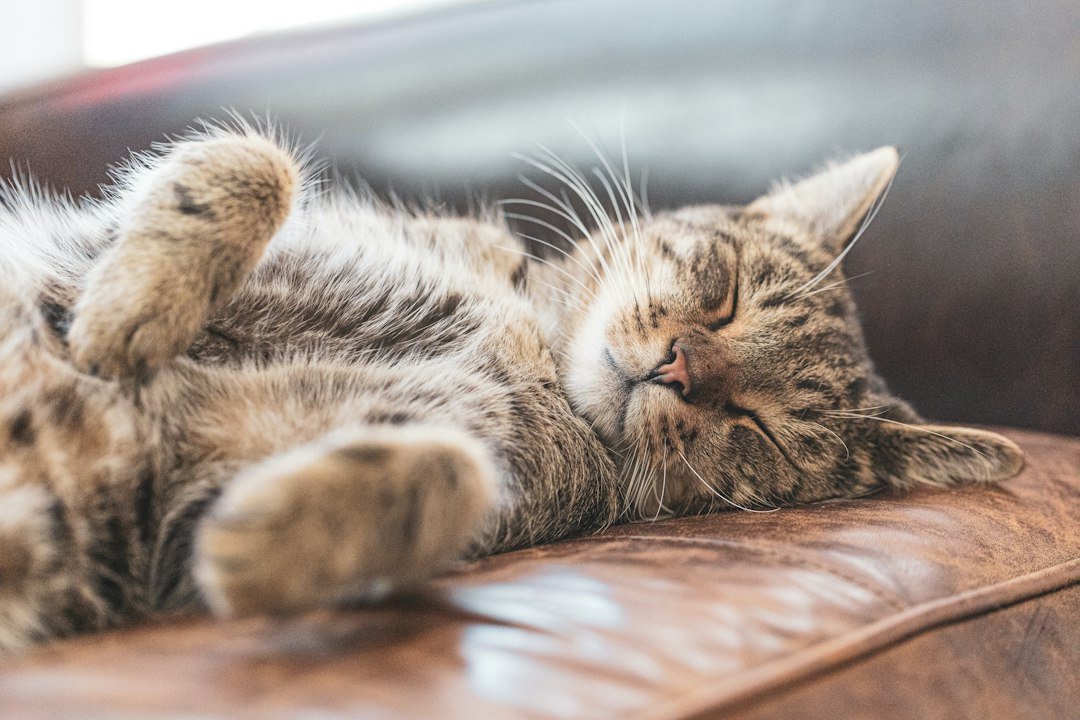
Cat breathing fast while sleeping causes may be as simple as dreaming or a warm room, but a rate that stays high during quiet sleep needs veterinary attention; you may notice it while your cat is curled up on the sofa. It can feel alarming. Watch the whole cat, not only the moving chest: relaxed posture and a closed mouth are reassuring signs, while effortful breathing or a sudden behavior change are not.
Sleeping cats do not always breathe at one perfectly even pace. A brief faster spell can happen during active sleep, especially when you see whiskers twitch, paws paddle, ears flick, or the tail move. Dreams are common. Breathing should usually settle again once that active phase passes or the cat wakes and relaxes.
Cat breathing fast while sleeping causes
Warmth is a common everyday reason for a temporary increase. Cats may breathe faster after playing, climbing stairs, being stressed, or lying in a sunny patch, and it can take time for their body to cool down and return to its usual resting rhythm. Give them a calm, cooler space. Avoid covering them with blankets if they seem warm.
Active dreaming can also make breathing look unusually quick or irregular for a minute or two. During this lighter sleep stage, the chest may flutter rather than rise in deep, steady breaths. This is often brief. If your cat wakes easily, acts normal, and soon returns to a slower rate, note it and keep an eye on future episodes.
A stuffed nose, pain, fever, anemia, heart disease, lung conditions, fluid around the lungs, or other illnesses can also be linked with fast breathing. You cannot sort those causes out at home by watching alone. The useful question is whether the breathing is consistently fast or looks difficult when your cat is truly resting.
Some cats naturally have a slightly different rhythm than others. What matters most is a clear change from your own cat’s normal pattern, especially if it happens repeatedly over several sleep periods. Trust that change. A phone video can give a veterinarian a much clearer picture than a description made after the moment has passed.
How to count resting breaths
Count only when your cat is asleep or calmly resting, not purring, grooming, kneading, eating, or recovering from play. Wait for a quiet moment. One rise and fall of the chest counts as one breath.
- Set a timer for 30 seconds while watching the chest or side.
- Count each complete rise and fall during those 30 seconds.
- Multiply the number by two to get breaths per minute.
- Repeat once later when your cat is settled, then write both results down.
Many relaxed sleeping cats breathe roughly 15 to 30 times per minute. A single reading can be misleading. For example, 12 breaths in 30 seconds equals 24 breaths per minute, while 19 breaths in 30 seconds equals 38 breaths per minute.
If the rate is repeatedly over about 30 breaths per minute while your cat is deeply asleep or fully relaxed, contact your regular veterinarian for guidance, particularly if this is new. A reading over 40 at rest is more concerning and merits prompt veterinary advice. Do not wait for a routine appointment if the cat also seems unwell.
Signs that need urgent help
Fast breathing is more serious when the cat appears to work for each breath. Look for obvious belly movement, the sides pulling in sharply, a stretched-out neck, flared nostrils, or an inability to settle comfortably. These are not normal sleep movements.
Open-mouth breathing in a cat who is not actively playing or highly stressed should be treated as urgent. So should pale, blue, gray, or very dark gums; collapse; marked weakness; coughing with distress; or sudden reluctance to move. Seek emergency veterinary care. Keep the cat quiet and use a carrier for transport.
Do not try to force water, give human medicine, or press on the chest. Stress can make breathing harder. If possible, call the clinic while someone else prepares the carrier, and tell them the resting breath count, how long it has been happening, and whether the mouth was open.
What to do when you notice it
First, remove obvious heat and excitement, then give your cat several minutes in a quiet room. Check whether the breathing slows once they are in a deeper, calmer sleep. Keep things calm. Chasing them around to inspect them will not help.
Record a short video from the side if you can do so without disturbing your cat. Include the chest and abdomen, and capture at least 30 seconds. Also make a simple note of the date, breathing count, activity before sleep, room warmth, appetite, litter box changes, and any coughing or hiding.
Call your veterinarian if rapid sleeping breaths recur, even if your cat seems comfortable between episodes. They may advise monitoring, a same-day visit, or another plan based on your cat’s age, history, and current signs. Prices and availability vary by region. An urgent clinic can advise you if your regular practice is closed.
Frequently asked questions
Is it normal for a cat to breathe fast while dreaming?
It can be normal for breathing to speed up briefly during a dream, especially with twitching paws or whiskers. It should not look strained. Once the dream phase ends, the rate should settle rather than remain fast through deep sleep.
Should I wake my cat to check their breathing?
Usually, no. Counting while asleep gives the most useful resting number, and waking a cat can raise the rate right away. Observe quietly first. Wake them only if you think they are in distress or need to move them to safety.
Can purring make the breathing count inaccurate?
Yes. Purring makes chest movement harder to read and can change the rhythm you see. Wait until the purring stops. Count again during a quieter sleep period for a better baseline.
What if my cat breathes fast after playing?
A faster rate after vigorous activity can be expected for a short time. Let your cat rest in a cool, quiet place and recheck once they are fully calm. Fast breathing that does not ease, or comes with open-mouth breathing or weakness, needs urgent veterinary advice.
Related posts
This post is for general informational purposes only and is not veterinary advice. Every cat is different — if you have concerns about your cat’s health or behavior, please consult a qualified veterinarian.