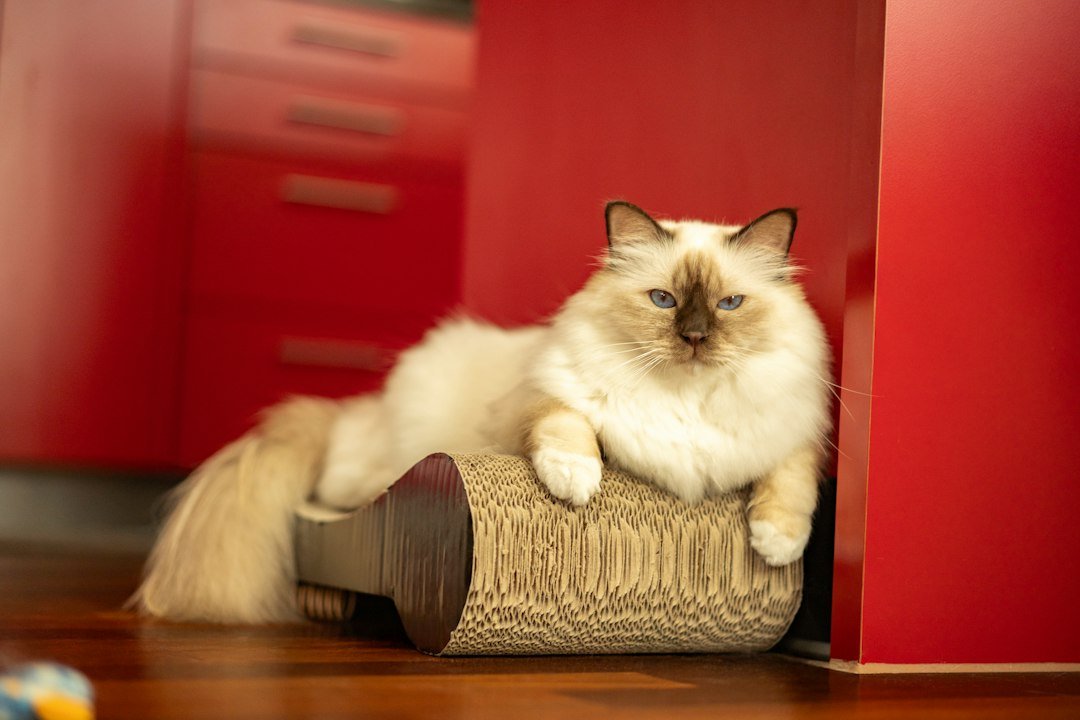
Scratching post vs scratching pad is the question that comes up when your cat ignores the new scratcher and heads straight for the sofa corner after dinner. For most homes, buy a tall, stable scratching post first. It is the safer all-purpose choice because many cats like to stand up, stretch their back and shoulder muscles, and pull their claws down a vertical surface.
A scratching pad is the better pick when your cat clearly prefers the floor, rugs, flat cardboard, or the side of a low piece of furniture. Watch what your cat already does. Their existing scratching habit tells you more than the packaging ever will.
Scratching post vs scratching pad at a glance
If you can buy only one scratcher, choose a post that is tall enough for your cat to fully extend and heavy enough that it does not wobble. Stability matters most. A post that tips, slides, or rattles can put a cat off after one unpleasant experience, even if the material itself feels good under their claws.
Choose a pad first if your cat repeatedly scratches horizontal surfaces with their body low to the ground. That preference is common. Some cats also enjoy a flat pad as a second scratching spot near a sleeping area, while others use it more for lying down and casual claw maintenance than for a big full-body stretch.
- Best choice for most cats: a tall, heavy scratching post with a vertical scratching surface.
- Best for floor scratchers: a firm horizontal cardboard or sisal scratching pad.
- Best household setup: one vertical post plus one pad in a different high-use area.
You do not need to fill every room with scratchers on day one. Start with one good post. Add a pad when you see your cat using floor-level surfaces or when one scratching station is not enough for the areas your cat actually uses.
Why most cats prefer a scratching post
A good scratching post gives a cat room to reach upward, hook their claws into the surface, and draw them down while putting weight through their front legs. That long stretch is satisfying. It also matches the way many cats scratch tree trunks, furniture arms, door frames, and other upright objects around the home.
Height makes a major difference. A post should generally let your cat stretch without having to crouch or stop halfway through the motion, so a taller adult cat often needs a post around 30 inches or more, while a smaller cat may be comfortable with less. Measure your cat during a relaxed upward stretch if you are unsure.
The base matters just as much. A post can have excellent sisal and still fail if it rocks when your cat pulls hard, because cats tend to return to surfaces that feel secure under their paws. A broad, weighted base is usually more useful than a lightweight post with extra dangling toys attached.
Sisal rope and sisal fabric are common post coverings because they offer a coarse texture that many cats can grip. Carpet-covered posts can work too. Avoid a carpet post if your cat has been damaging your carpet, though, because the similar feel may make it harder for them to understand why one carpet surface is allowed and another is not.
Wood is another option, especially for cats that scratch rough furniture or exposed timber. Texture is personal. Some cats love cardboard and ignore sisal, while another cat in the same home may make the opposite choice, so the goal is to offer a legal surface that resembles the one your cat already seeks out.
When a scratching pad wins
A scratching pad wins when your cat is a committed horizontal scratcher. Look at the clues. If they rake at rugs, claw a cardboard box lying flat, work over a doormat, or scratch the top of a low ottoman, a pad is likely to get used faster than an upright post.
Flat cardboard pads are affordable and easy to test, which makes them useful when you are still learning your cat’s preference. They can be messy. Small cardboard pieces and dust often collect around heavily used pads, so place one on a mat or sweep nearby as part of your usual cleaning routine.
Sisal pads are often firmer and longer-lasting than cardboard, although prices vary by region and by size. They usually cost more. A heavier pad with a non-slip underside is easier for an energetic cat to use than a thin one that skates across a hard floor.
Angled pads sit between the two choices. They give a cat a sloped surface rather than a fully flat or fully upright one, which can suit cats that scratch the lower edge of a sofa or lean into a scratching motion without standing fully tall. They are a useful compromise. Still, they are not the first choice for a cat that loves a true vertical stretch.
Older cats may sometimes choose a lower scratching surface if standing high or balancing on a narrow base seems uncomfortable. Keep the option easy to reach. A low pad does not explain why a cat changed habits, though, especially if the change is sudden or comes with limping, reduced jumping, hiding, appetite changes, or obvious discomfort.
Which cats prefer each option
Many cats prefer more than one scratching style. That is normal. Cats may use a post after waking up, a cardboard pad near a window, and a sofa arm when they want to leave a stronger visual or scent mark in a busy part of the home.
Vertical posts often suit cats that scratch chair legs, door trim, wallpaper, sofa arms, or curtains. Location matters. Put the first post within a few feet of the item your cat has chosen, rather than hiding it in a quiet spare room where it is less likely to meet the same need.
Horizontal pads often suit cats that scratch carpet, runners, floor mats, cardboard boxes, or the floor beside a bed. Place the pad right there at first. Once your cat uses it reliably, you can move it a small distance every few days if you need the station elsewhere.
Large cats need more room and more stability. Choose a post with a substantial base and enough height for a complete stretch, because a small lightweight unit may feel cramped or unstable when a heavier cat puts full force through it. Bigger is usually better here. Check the maker’s dimensions rather than relying on product photos.
Kittens are still developing habits, so they may happily use whichever surface is nearby, especially if it moves slightly or has an interesting texture. Offer both directions early. You are not trying to force a preference, only making good choices easy before furniture becomes their default scratching target.
How to choose the right scratcher
Use your cat’s current target as your starting point. This is simple. Match the direction first, then match the texture, then make sure the new scratcher stays put when your cat uses it.
- Watch your cat for several days and note whether they scratch up and down, across the floor, or on a slope.
- Measure the space beside the scratched item so the replacement can sit close to the original target.
- For a post, check that your cat can stretch fully and that the base will not wobble.
- For a pad, choose one large enough for both front paws and firm enough not to slide away.
- Put the scratcher in place before blocking access to the furniture your cat has been using.
Do not place a new scratcher beside the litter box unless that is genuinely where your cat already scratches. Most cats prefer a more social or visible spot. Near a sleeping area, a window, an entry point, or the end of the sofa often makes more sense because those are common places for waking stretches and territory marking.
If the post is ignored, try changing its location before deciding that your cat hates posts. Placement can make or break it. A post tucked behind a plant or pushed into a low-traffic corner may be perfectly good but irrelevant to the moment when your cat feels like scratching.
You can encourage interest by gently dragging a wand toy along the scratching surface or placing a familiar toy nearby. Never force your cat’s paws onto it. That can make the object unpleasant, and it does not teach your cat why the scratcher is a better choice than the furniture.
How many scratching options do you need?
One cat often does well with at least two scratching choices in separate areas, especially if they spend time on more than one floor or have a favorite room at each end of the home. Spread them out. A cluster of three scratchers in one corner does not help much when the sofa they target is across the room.
For a two-cat home, add enough options that one cat cannot casually control access to the only good scratching spot. Watch quietly. A cat does not need to fight for a resource to avoid it, since staring, blocking a pathway, or claiming a favorite perch can be enough to change where the other cat feels comfortable.
Replace cardboard pads once they are flattened, soggy, heavily shredded, or no longer inviting to your cat. Replace worn rope when loose strands create a snagging risk or when the underlying structure becomes unstable. Safety first. A scratched-up surface is fine; a collapsing one is not.
FAQ
Should I buy a scratching post or scratching pad first?
Buy a scratching post first for the average cat, provided it is tall and stable. That is the clear default. Buy a scratching pad first only when your cat already scratches mainly on the floor, rugs, or other horizontal surfaces, because copying their established direction gives you the best chance of quick use.
Why does my cat scratch the sofa instead of the new post?
The sofa may be in a more meaningful location, have a preferred texture, or feel more stable than the post. Move the post directly beside the damaged area for now. Once your cat uses it consistently, shift it gradually if you need to protect a walkway or change the room layout.
Can a scratching pad stop furniture scratching?
A pad can help if it matches what your cat wants to scratch and sits close to the furniture they chose. It is not magic. If your cat scratches vertically on the sofa arm, a flat pad on the other side of the room is unlikely to meet the same need.
Do cats need both a post and a pad?
Many cats benefit from both because different situations can bring out different scratching behavior. Start with the style that matches your cat’s current habit. Add the other style later if your cat uses it, if they keep targeting a different surface, or if you want another acceptable option in a busy room.
Is cardboard safe for cats to scratch?
Plain cat scratching cardboard is generally made for this purpose, but supervise a cat that chews or eats large pieces of it. Remove a pad that is falling apart. If your cat regularly eats non-food items, contact a veterinarian for guidance rather than assuming it is ordinary scratching behavior.
The practical answer is straightforward: choose a tall, sturdy scratching post for most cats, then add a horizontal pad if your cat scratches the floor or needs another station near a favorite room. Start where the problem is. A scratcher only works when it is the right shape, texture, and location for the cat in front of you.
Related posts
This post is for general informational purposes only and is not veterinary advice. Every cat is different — if you have concerns about your cat’s health or behavior, please consult a qualified veterinarian.