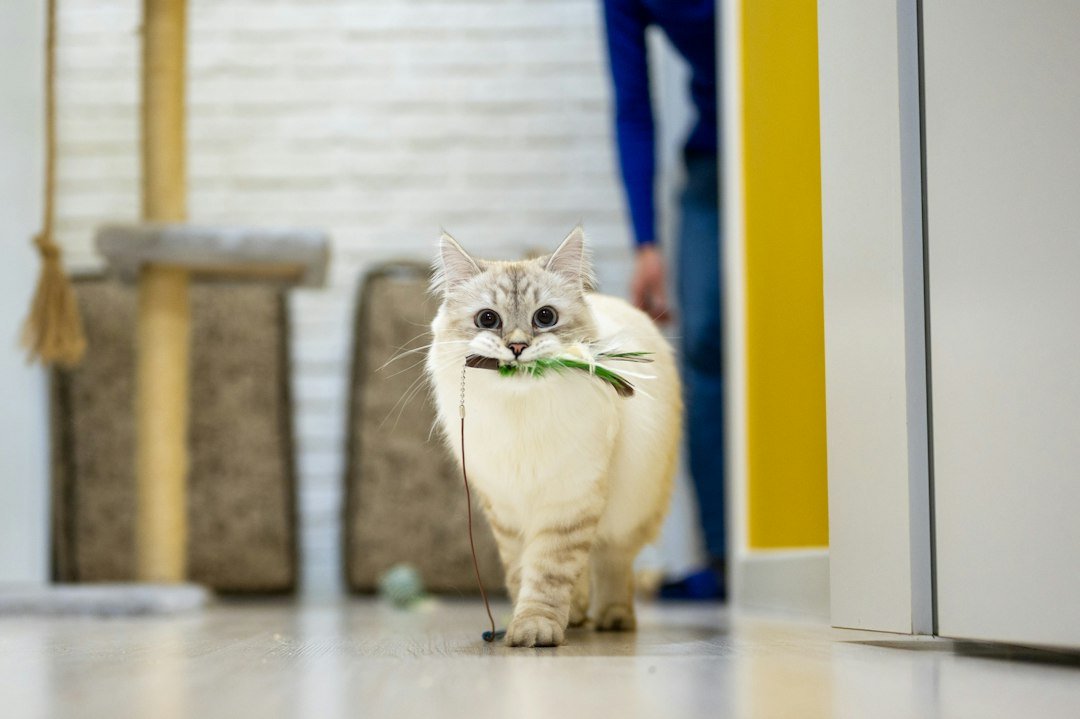
A common misconception is that a cat who runs away from being picked up is unfriendly or does not trust you. Usually, the answer to why does my cat run away when picked up is simpler: being lifted removes their control, and many cats find that unsettling even when they are deeply attached to their people. The same answer applies if you have wondered, why does my cat run away when picked up after happily sitting beside me? Affection and enjoying restraint are different things. Cats notice that difference.
For a cat, the floor is security. It is where they can leave, hide, investigate, or choose contact on their own terms. Being carried changes all of that in seconds, especially if the cat feels unsupported, has had rough handling before, or simply has a personality that prefers four paws on a solid surface. Some cats love a brief cuddle. Others prefer company without confinement.
Why does my cat run away when picked up?
Most cats run because they have learned that hands reaching toward them often lead to an experience they dislike. They may anticipate being squeezed, held too long, moved away from something interesting, or placed somewhere they do not want to go. This is learned association. A cat does not need to be frightened every time for avoidance to become a habit.
Body shape matters too. Cats are agile animals built to move independently, and being suspended can feel unstable unless their chest and hindquarters are both supported. A person may mean to cuddle, while the cat experiences dangling legs, pressure around the ribs, or an awkward grip. It can feel insecure. Even gentle handling can be uncomfortable when it lasts longer than the cat wants.
Timing also changes the answer. A cat may run when you approach during play, before a meal, while watching birds, or when they are headed toward the litter box or a preferred resting spot. They are not necessarily rejecting you. They may simply have another plan.
Watch what happens before the escape
Your cat usually gives information before they flee, wriggle, or swat. Learn the early signals so you can stop before the interaction turns into a struggle. A cat that tolerates pickup is not always enjoying it.
- Turning the head away or leaning back when your hand reaches in
- Tail thumping, twitching, or held low
- Ears angled sideways or flattened
- Wide pupils when the room is not dim
- A tense body, crouched posture, or feet tucked under ready to push away
- Sudden grooming, lip licking, or a quick walk away after petting
- Growling, meowing sharply, biting, or using claws
One signal alone does not always mean distress. A twitching tail can happen during focused play, for example. Look at the whole cat and the moment around it. If they stiffen when your arms close around them, that is a clear request for space.
Some cats dislike restraint more than touch
A cat can enjoy chin scratches, sleep near you, greet you at the door, and still dislike being held. This catches many people off guard. Social affection does not automatically mean a cat wants their body controlled.
Think about the difference between petting a cat who can walk away and holding one who cannot. Choice changes the interaction. When cats know they can leave, they often stay longer because they do not need to protect their freedom so quickly.
Age and past experience can shape this preference. Kittens that were handled calmly and briefly may grow more comfortable with being lifted, but there is no rule that every well-socialized cat will enjoy it. Adult cats adopted from unknown backgrounds may need more time to accept close handling. Some will always prefer floor-level affection. That is normal.
Make sure discomfort is not part of the picture
A sudden change deserves attention. If your cat used to accept being picked up but now cries, bites, hides, limps, seems stiff, or reacts strongly when a particular area is touched, avoid testing the issue by repeatedly lifting them. Pain can make normal handling feel unsafe.
Older cats may become less comfortable with being carried because jumping, bending, or pressure around the body feels different than it once did. Cats also hide discomfort well. A behavior change does not tell you the cause, but it is a good reason to contact a veterinarian for guidance, particularly if you notice changes in appetite, litter box habits, activity, grooming, or mobility as well.
How to build trust without forcing cuddles
Trust grows when your cat learns that your hands predict pleasant, predictable things and that their signals work. Start smaller than pickup. The goal is not to convince every cat to enjoy being carried. The goal is for your cat to feel safer around your handling.
- Choose a calm moment. Approach when your cat is resting nearby or seeking attention, not while they are eating, playing, or trying to leave. Keep the session brief.
- Offer a hand first. Let your cat sniff, then give a few gentle strokes where they usually enjoy touch, such as the cheeks or chin. Stop after several seconds. Pause.
- Let the cat answer. If they lean in, head-butt your hand, or stay relaxed, offer a little more petting. If they turn away or tense up, end the interaction without following them.
- Practice touch near the lifting points. On separate short sessions, briefly place one hand under the chest and then remove it before lifting. Later, touch the hindquarters gently with your other hand. Reward calm behavior with a small treat your cat already likes.
- Lift for only a second. When your cat is relaxed with the hand placement, support the chest and rear at the same time, lift only an inch or two, then place them down immediately. Keep their body close to yours.
- Build slowly. Add a second or two only if your cat remains loose and calm over several sessions. Put them down before they struggle. This matters.
This process may take days or longer, depending on the cat. Do not move ahead because a cat tolerated one session. Calm repetition teaches more than a single long cuddle ever will.
Use a safer pickup technique
When you do need to pick up your cat, move slowly and avoid reaching down from directly above their head. A hand coming from overhead can resemble a threatening approach, especially for a cautious cat. Speak normally if your cat finds your voice reassuring. Then use both hands.
Place one hand beneath the chest, just behind the front legs, and use the other to support the hindquarters and back legs. Keep the cat close against your body so they do not feel as if they are hanging in open space. Their feet should have support. Never lift by the scruff, legs, tail, or belly alone.
Keep the hold short. Put your cat down on a stable surface before they start twisting or panicking, and lower them all the way rather than dropping them from arm height. If they want to leave, let them. Releasing them calmly is part of how to build trust.
Give your cat better ways to choose contact
Many cats become more affectionate when people stop making pickup the main form of attention. Sit on the floor or couch nearby and let your cat approach. Offer a blanket beside you, a heated bed used safely according to its instructions, or a perch near where the family spends time. Quiet proximity counts.
Try a simple routine: invite your cat over, offer ten to fifteen seconds of petting, pause, and see whether they ask for more. If they remain, lean in, or rub against you, continue briefly. If they leave, do not call them back for another attempt. This gives the cat useful control.
You can also pair your presence with calm activities your cat enjoys. A short wand-toy session followed by a meal can create a positive routine, while tossing a treat near you can make approaching feel worthwhile without demanding touch. Keep treats small. Food should support the relationship, not replace regular meals.
When pickup is necessary
There will be times when you need to move your cat for safety, transport, grooming, or care. In those moments, efficiency is kinder than repeated chasing. Close doors if possible, use a calm approach, support the body properly, and place the cat into a carrier or safe room without turning it into a long holding session.
Carrier training helps a great deal. Leave the carrier out with comfortable bedding and occasional treats so it is not only associated with trips away from home. A cat who walks into a carrier voluntarily may need less handling when the time comes. Small changes can reduce stress.
If your cat reacts with intense fear or aggression whenever handling is necessary, do not punish them or try to hold them tighter. Create distance, prevent anyone from getting scratched or bitten, and ask a veterinarian for practical advice on safer transport and handling. Your cat is communicating discomfort. Listening usually gets you farther than insisting.
In the end, a cat running away when picked up is often asking for more choice, better support, or shorter contact. Respecting that request does not weaken your bond. It often makes affection feel safer, and a safer cat is more likely to seek you out on their own terms.
Related posts
This post is for general informational purposes only and is not veterinary advice. Every cat is different — if you have concerns about your cat’s health or behavior, please consult a qualified veterinarian.