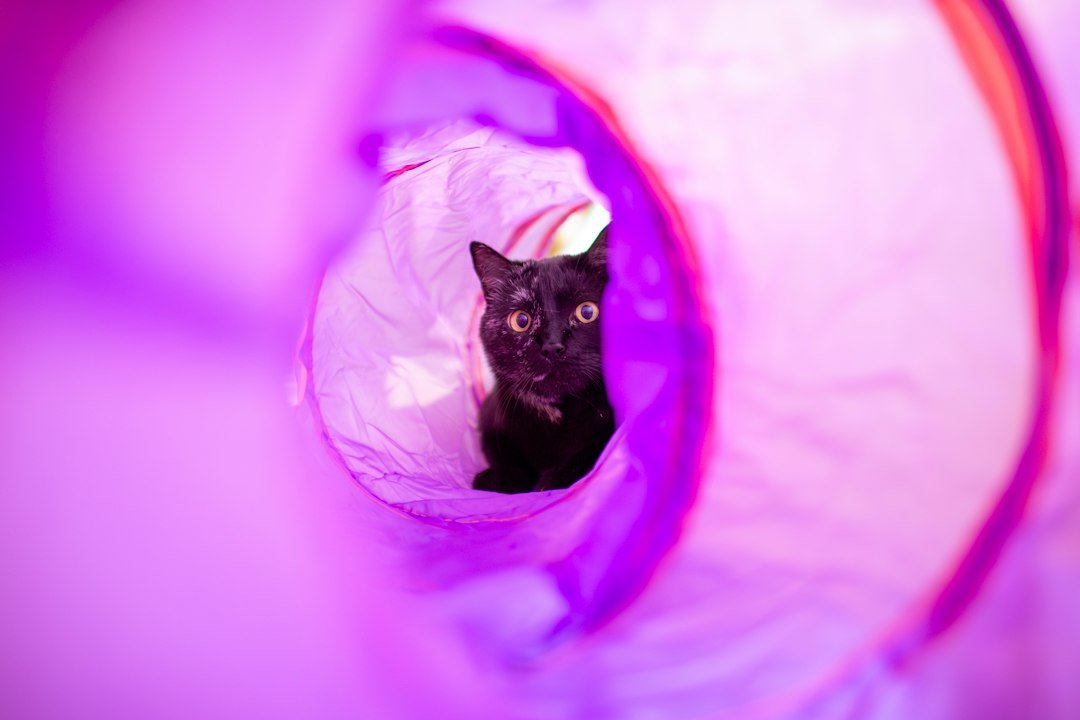
The best cat play tunnel for indoor cats is usually a wide, springy tunnel with a non-slip feel, enough room for your cat to turn around, and a shape that fits your home without becoming permanent floor clutter. Your cat darts under the coffee table, waits silently, then launches at a passing sock. A best cat play tunnel gives that ambush game a safer, more repeatable place to happen, especially when indoor space and daily play options are limited.
There is no single perfect model. Cats differ in size, confidence, noise tolerance, and how roughly they play, so the useful choice is the one that matches your cat’s habits and your room. Start with the tunnel’s width and material. Those details matter.
What makes the best cat play tunnel
A good tunnel gives a cat cover, a route to run through, and an opening from which to watch a toy or another cat. That combination can make ordinary wand play more interesting because the cat can stalk, hide, retreat, and reappear rather than chase in the open every time. Cats like choices.
Look first at diameter. Many standard pop-up tunnels are around 10 to 12 inches wide, which may suit kittens and average-sized adult cats, while larger cats often need a wider option so they do not have to flatten their shoulders or back out awkwardly. Measure your cat at the widest part of the chest, then leave several inches of clearance. Room to turn matters.
Length affects the kind of play you will see. A short straight tunnel is easy to place near a wall or sofa and tends to work well for quick ambush games. A longer tube, curved shape, or connected set creates more hiding space, but it also takes more floor area and can be harder to retrieve toys from. Check your room first.
The internal support is equally relevant. Most foldable tunnels use a coiled wire frame under fabric, which creates the familiar springy tube shape and allows compact storage, but a very light tunnel can skid across smooth floors when a cat charges through it. A heavier fabric, broad base, or a rug beneath it can reduce sliding. Stability is useful.
Choose a tunnel material that suits your cat
Material changes noise, durability, cleaning, and how inviting the tunnel feels. Crinkle fabric is common because it makes a rustling sound when a cat moves through it, but some cats enjoy that feedback while others avoid it completely. Quiet cats may prefer quieter fabric.
| Tunnel type | Usually suits | Main advantage | Trade-off to expect |
|---|---|---|---|
| Crinkle nylon | Cats drawn to movement and sound | Lightweight and often inexpensive | Rustling may bother noise-sensitive cats |
| Mesh | Cats that like to see out | Airflow and visibility | Claws can snag fine mesh |
| Plush or fleece-lined | Cats that nap in enclosed spots | Softer feel and less noise | Holds fur and takes longer to dry after cleaning |
| Stiff felt or fabric tube | Homes wanting a more permanent play piece | Often holds its shape well | Costs more and needs more storage space |
| Modular connected tunnels | Active cats or multi-cat homes | Several routes and hiding points | Uses substantial floor space |
Nylon and polyester tunnels are often the simplest choice for active play because they are light, fold down quickly, and can usually be wiped with a damp cloth. The downside is sound. Test the fabric by pressing and rubbing it in the shop when possible, or read retailer reviews for comments about crinkling rather than relying only on product photos. Photos hide noise.
Mesh tunnels let a cat see a toy, person, or other cat outside the walls, which can help a cautious cat feel less enclosed. However, inspect mesh carefully for loose threads, openings, or areas where a claw could catch, particularly if your cat kneads, chews fabric, or plays with force. Fine mesh needs inspection.
Plush-lined tunnels can double as a resting spot for cats that seek soft enclosed spaces. They are often quieter and may look more at home in a living room, though thick fabric collects shed fur and may be harder to shake out or wash. A removable cover makes cleaning easier.
Size and layout for indoor cats
For indoor cats, the tunnel needs to work with the routes they already use. Watch where your cat runs after a toy, where they pause to hide, and whether they prefer open floor, wall edges, or space under furniture. Their routine tells you more than packaging language.
Put a straight tunnel with one exit facing a clear path rather than trapping it against a wall. Cats generally like to see an escape route, and an open exit lets you move a wand toy past the opening without reaching into the tunnel. Keep it simple.
A three-way tunnel can be fun in a larger room because it gives the cat more than one route to choose, and it may support chase games between compatible cats without forcing close face-to-face contact at a single opening. It also creates a larger object on the floor. Small flats may find it intrusive.
If you have a senior cat, a cat with limited mobility, or a cat that seems reluctant to step over raised edges, choose a tunnel with wide openings and a low, flexible entrance. Avoid placing it where the cat must jump over cords, climb furniture, or make sharp turns on slippery flooring. Easy access helps.
Kittens often enjoy nearly any tunnel that moves and makes a sound, but they grow fast. Buying a very narrow kitten-sized tube can mean replacing it sooner than expected, while an adult-sized tunnel still lets a young cat explore and play safely under supervision. Size up when unsure.
Safety checks before you buy
A tunnel is simple, but it is still a fabric object with seams, wire, attachments, and sometimes dangling toys. Read the care instructions and inspect the product when it arrives before leaving it out for unsupervised use. Five minutes is enough.
Check the tunnel’s openings for exposed wire ends or damaged binding. The spring frame should remain fully enclosed by fabric at every seam, because a broken or protruding wire can scratch a cat or create a sharp edge. Stop using a damaged tunnel.
Be cautious with attached pom-poms, feathers, elastic cords, bells, and small plastic pieces. These additions may encourage play, but an attachment that comes loose can become a chewing or swallowing risk for some cats, so remove damaged accessories promptly and supervise cats known to chew toys. Loose parts are avoidable.
Also consider the collapse mechanism. Pop-up tunnels can spring open quickly, and some take a little practice to fold back into their storage loop; keep fingers clear of the frame and store it where a curious cat cannot pull it out and get tangled in loose straps. Read the folding label.
For households with more than one cat, avoid assuming a tunnel will solve social tension. It can give a confident cat a place to block another cat’s path, especially in a narrow room, so provide other routes around furniture and watch how the cats use it together. More exits help.
Useful extras and realistic trade-offs
Side holes, peek windows, and central openings can make wand-toy play easier because you can move the lure past different points without pulling it through the whole tube. They also reduce the enclosed feeling for cats that like cover but do not want to disappear fully. Openings add options.
Do not treat extra attachments as automatic value. A dangling toy may hold a kitten’s attention for a few days, but it is usually less durable than the tunnel itself, and many adult cats respond better to a separate wand toy that you control. Replaceable toys are practical.
Collapsible designs are convenient if you need to clear the living room, travel with a cat, or rotate toys to keep them interesting. The trade-off is that lightweight foldable tunnels can wrinkle, slide, and lose their neat shape sooner than more structured fabric tubes. Storage has a cost.
Neutral colors may blend into a room better, while brighter fabric can help you spot shed fur, damage, and small toys that have rolled inside. Neither choice changes whether a cat will use it. Placement changes that more.
Prices vary by region and by construction. Basic single tunnels are often at the lower end of cat toy pricing, while larger modular, padded, or furniture-style tunnels cost more because they use more fabric and structure; compare dimensions, cleaning instructions, return terms, and included accessories rather than choosing by price alone. Cheap is not always poor.
A quick buying checklist
- Measure the space. Mark the tunnel’s listed length and width on the floor with tape. Leave a clear route around it.
- Match the diameter to your cat. Your cat should enter, turn, and exit without squeezing. Bigger cats need more room.
- Choose the noise level. Pick crinkle fabric for cats that like rustling, or quieter plush or fabric for sound-sensitive cats.
- Inspect the construction. Look for covered wire, securely stitched seams, and no small loose attachments.
- Plan for cleaning. If your cat sheds heavily or tracks litter, choose a material you can shake out and wipe down easily.
- Introduce it with play. Put it along a familiar route, toss a favorite toy nearby, and let your cat investigate without being pushed inside.
A simple example helps. If your available floor area beside the sofa is about 36 inches long and 18 inches deep, a 47-inch three-way tunnel is likely to obstruct the walkway, while a roughly 30-inch straight tunnel can sit along the wall with room for your cat to enter and leave. Use the floor plan. Product photos make tunnels look smaller than they are.
How to get more use from a tunnel
Leave a new tunnel open in a quiet area for a day or two before making it part of energetic play. Some cats walk straight in, while others need time to sniff it, rub against the outside, or watch treats placed near the entrance. Let your cat choose.
Once the cat is comfortable, move a wand toy slowly past one opening and pause outside another. Short pauses give the cat a chance to crouch, watch, and decide when to pounce, which is often more engaging than waving a toy continuously. Slow play works well.
Rotate the tunnel occasionally instead of leaving it in the same place all year. Putting it away for a week or two can make it feel new when it returns, especially in small homes where cats see the same furniture and toys every day. Novelty can be simple.
Clean it before odor and fur build up. Shake it outdoors if practical, vacuum with a brush attachment where the manufacturer permits, wipe smooth synthetic fabric with a lightly damp cloth, and air-dry fully before returning it to the floor. Follow the product label.
FAQ about cat play tunnels
What size cat tunnel should I buy?
Choose a diameter that lets your cat walk through and turn around comfortably, then choose a length that fits the room without blocking a regular route. Around 10 to 12 inches may work for many average-sized cats, but large-framed cats often do better with a wider tunnel. Measure first.
Are crinkle tunnels safe for cats?
Crinkle material itself is commonly used in cat toys, but safety depends on the overall condition of the tunnel. Check for torn fabric, exposed wire, loose trim, and detached toys, and remove the tunnel if your cat chews or pulls pieces free. Inspection is the key.
Will an indoor cat actually use a play tunnel?
Many indoor cats enjoy tunnels because they create cover for stalking and surprise play, but interest varies. Placement near an existing favorite route and a calm introduction with a separate toy can encourage use, while forcing a nervous cat into it usually has the opposite effect. Give it time.
Is a two-way or three-way cat tunnel better?
A straight two-way tunnel is easier to store, clean, and fit into a smaller room. A three-way design gives active cats more route choices, but it needs more open floor space and may be too bulky for a narrow living area. Space decides this.
How often should I replace a cat tunnel?
Replace it when seams split, the wire frame becomes exposed or bent, mesh snags badly, or attachments begin coming loose. A tunnel in good condition can stay in rotation, but regular checks matter more than a fixed replacement schedule. Condition comes first.
Related posts
This post is for general informational purposes only and is not veterinary advice. Every cat is different — if you have concerns about your cat’s health or behavior, please consult a qualified veterinarian.