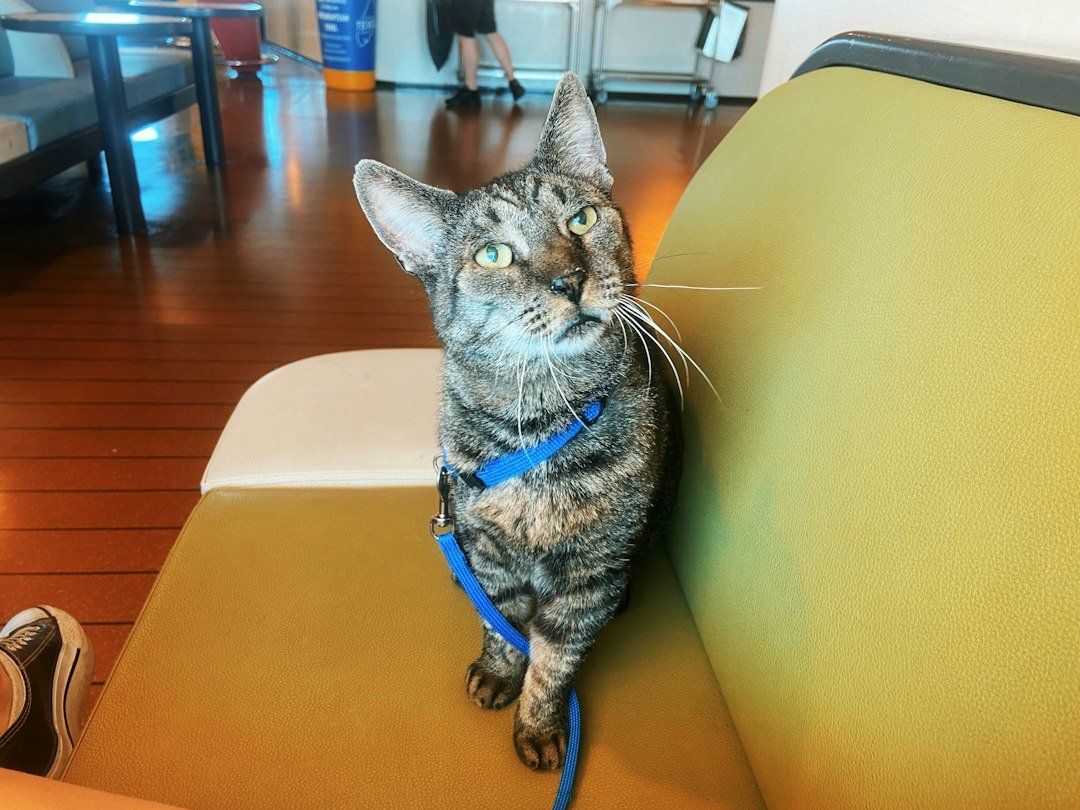
Why does my cat bite the leash during walks when you have barely reached the sidewalk and they suddenly grab the line, chew hard, or pull it toward their mouth? Usually, the leash feels unfamiliar, moves in a prey-like way, or becomes the nearest outlet when your cat is excited, frustrated, worried, or tired of the walk. It is common. A cat may also bite because the harness or leash changes how their body feels, especially if they have not spent enough relaxed time wearing it indoors.
Leash biting is communication. Your cat is not being difficult or trying to ruin the outing. Outdoor walks ask a lot of a cat: unfamiliar smells, traffic noise, people, dogs, movement, and limited control over where they can go. A leash prevents the quick retreat or chase that your cat may want, and that restriction can spill out as chewing. Look at the whole moment.
Why does my cat bite the leash during walks?
The most common reason is that the moving leash triggers play or hunting behavior. A thin line sliding past a cat’s face can resemble a tail, string toy, or small animal, particularly when it flicks across the ground. Cats react fast. If you pull the leash away sharply, it may become even more interesting because it now moves like escaping prey.
Some cats bite when they feel restrained. Your cat may spot a bird, another animal, or an interesting bush and head toward it, only to feel the harness stop their body. That moment can create frustration, and the leash is right there. This is especially likely if the line is tight for much of the walk, or if your cat is still learning what gentle leash pressure means.
Overstimulation is another frequent cause. Outdoor information arrives all at once, and a cat who was curious five minutes ago may become jumpy, crouched, wide-eyed, or suddenly focused on chewing. Small signs matter. Tail flicking, ears turning sideways or back, quick scanning, low posture, and repeated attempts to turn home can all mean your cat needs a quieter break rather than more walking.
Sometimes the equipment is the issue. A harness that rubs behind the front legs, presses at the neck, rides up when the cat pulls, or allows too much twisting can make movement unpleasant. A leash clip that bumps against the harness can also bother some cats. Check the fit calmly. You should usually be able to slide one or two fingers under the harness, but the exact fit depends on the harness design and your cat’s body shape.
A young or highly playful cat may treat the leash as a toy simply because it has learned that biting produces a fun response. If each bite leads to wiggling, tugging, talking, or a chase around your legs, the behavior can become part of the outing. No scolding is needed. The goal is to make calm walking more rewarding than grabbing the line.
Read the moment before correcting it
Notice what happens in the few seconds before your cat bites. Does it happen when you pick up the leash, when you prevent them from going somewhere, after a loud noise, or near the end of the walk? Patterns make training much easier. Keep a simple note on your phone after several outings, including location, walk length, nearby triggers, and body language.
If the biting starts near a busy road, barking dog, construction sound, or unfamiliar person, treat it as a request for distance. Turn toward home or move behind a visual barrier such as a parked car or hedge if that is safely possible. Keep the leash loose. Pulling your cat toward the scary thing can increase stress and make leash biting more likely next time.
If it happens when the leash drags or swings near their paws, manage the line itself. Use a lightweight leash appropriate for a cat, and hold enough of it that it does not snake around the feet or bounce against the ground. Avoid retractable leashes for most cat walks. Their changing tension, noise, and long distance can be harder for a cat to understand and can make it difficult for you to respond quickly.
If your cat bites after being stopped from exploring, give them a legal choice instead. Walk two or three steps toward a safe sniffing spot, then stop and let them investigate for a minute while the leash stays slack. Sniffing is part of the walk. A cat walk is usually better as slow exploration than as a route with a destination.
Training fix tips that work at your cat’s pace
Start the training indoors, where there are fewer competing sights and sounds. Put the harness on for a very brief, pleasant session, then offer a tiny food treat, a favorite toy session, or access to something your cat likes. Keep it easy. Remove the harness before your cat becomes annoyed whenever possible.
Once your cat can walk comfortably in the harness indoors, clip on the leash and let it rest behind them only while you supervise closely. Do not leave a cat alone with a trailing leash, since it can catch on furniture or snag around legs. Let your cat move normally for a minute or two. Reward relaxed steps and a calm body.
Next, hold the leash without applying pressure and follow your cat around one room. Then practice tiny changes of direction by inviting your cat with a treat or familiar sound rather than pulling them. One or two steps is enough. When your cat follows voluntarily, reward that choice right away.
Practice gentle pressure only after your cat is calm with the leash. Apply the lightest steady tension for a second, then release it as soon as your cat takes even one step toward you or softens their body. Release matters. Your cat learns that moving with the leash turns pressure off, while fighting it does not create a tug-of-war.
- Choose a quiet indoor space and fit the harness correctly.
- Reward several calm steps while you hold a loose leash.
- Pause before the leash reaches your cat’s mouth.
- Invite your cat to turn toward you with a treat or gentle cue.
- Reward the turn, then continue only if your cat looks comfortable.
Do not wait for a full bite if you can see it coming. A cat who stares at the line, lowers their head toward it, or starts to paw at it may be telling you they are reaching their limit. Redirect early. Offer a treat near your leg, encourage a short sniffing pause, or simply turn back toward home.
If your cat already has the leash in their mouth, stay still and avoid yanking it away. A sudden pull can hurt the mouth, strain the harness, or turn the moment into a game. Instead, reduce tension by stepping closer, wait for the grip to loosen, and guide your cat’s attention toward a treat held near their nose. Then end or simplify the walk if their body still looks tense.
Make outdoor walks easier
Short sessions are usually more useful than long ones during training. For a beginner, two to five quiet minutes outside the door, in a secure garden, or on a calm patio may be plenty. End early. Returning indoors while your cat is still relaxed creates a better association than waiting until they are overwhelmed.
Choose the quietest time you reasonably can. A peaceful patch of grass or sheltered corner often gives a cat more value than a crowded walking route because they can sniff, listen, and decide where to stand without constant interruptions. Let them set the pace. Many cats prefer stopping often and covering very little ground.
Bring a few small, high-value treats if food works for your cat, but do not use treats to push them toward something they clearly want to avoid. Treats should reward a voluntary check-in, a calm turn, or relaxed movement beside you. They are not a bribe for fear. If your cat refuses a usual treat outdoors, that can be a useful clue that the setting is too intense.
Check the harness after every few walks. Look for flattened fur, rubbed skin, awkward gait, or repeated scratching at the same point. A cat who suddenly begins biting the leash after previously enjoying walks may need an equipment check or a break from outings. Sudden behavior changes deserve attention.
Some cats do not enjoy leash walks, even with patient training and a good harness. That is okay. A secure catio, enclosed garden time, window perch, food puzzle, or indoor play can provide enrichment without the pressure of public outdoor walks. The best activity is one your cat can do with a relaxed body.
When to stop the walk and get advice
End the walk right away if your cat panics, thrashes, freezes for a long time, pants, drools heavily, repeatedly tries to escape the harness, or redirects bites toward you. Get somewhere quiet. Carrying a frightened cat can be risky unless they are already comfortable with being picked up, so plan ahead with a carrier or safe route home when possible.
Arrange a veterinary check if leash biting appears suddenly alongside limping, reluctance to move, sensitivity to touch, appetite changes, or other unusual behavior. Pain or illness can change how a cat tolerates a harness or outdoor activity, but only a qualified veterinarian can assess that. Do not force more practice while you are unsure. A behavior professional with cat experience may also help when fear or handling struggles continue.
FAQ
Should I let my cat chew the leash?
It is best not to make leash chewing part of the walk. A brief accidental mouth grab is not a disaster, but repeated chewing can damage the leash and reinforce the habit. Stay calm. Reduce leash movement, redirect before the bite when you can, and end the session if your cat keeps returning to it.
Why does my cat bite the leash only outside?
Outside has more triggers. The leash may be easy to ignore indoors, then become a target when your cat is excited by birds, unsettled by noise, or frustrated by being unable to reach something. Practice indoors still helps because it builds the basic skill before you add the outdoor environment.
Can I use a toy to distract my cat from the leash?
A toy can help before or after the walk, but waving one during a walk may increase arousal and create another moving target near the leash. Keep the outing simple. Food rewards, a calm turn away, and time to sniff are often easier for a cat to process outdoors.
How long does leash training take?
There is no fixed timeline. Some cats accept a harness quickly, while others need many short sessions over weeks or may never enjoy outdoor walks. Watch your cat’s comfort rather than the calendar. Progress means relaxed movement, loose body posture, and fewer attempts to bite or escape.
Related posts
This post is for general informational purposes only and is not veterinary advice. Every cat is different — if you have concerns about your cat’s health or behavior, please consult a qualified veterinarian.