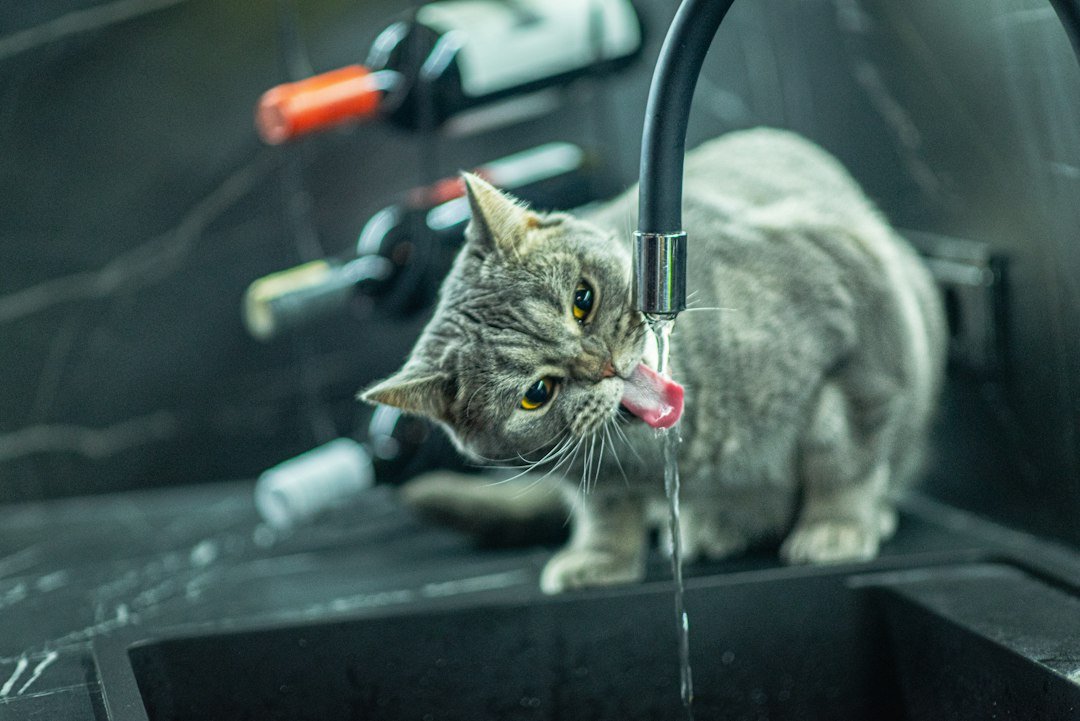
Why does my cat only drink from the faucet? Most often, your cat prefers moving water, a fresher taste, or the faucet’s location over what is available in the bowl. It is common. A faucet also makes a little sound and catches the eye, so it can become part drink station, part daily ritual, especially when someone turns it on and pays attention.
Why does my cat only drink from the faucet?
Flowing water can seem more appealing than still water. Moving water catches attention. Many cats investigate motion readily, and a thin stream may look cleaner or newer than water that has been sitting in a dish for hours. The sound, cool temperature, and changing surface can all add interest, even if the bowl water is perfectly safe to drink.
The faucet may also offer water that tastes or smells different. That matters. Tap water can pick up flavors from plumbing, while water in a bowl may take on traces of detergent, food, dust, or the bowl material itself. Cats have sensitive noses, so a bowl that seems clean to you may still smell less inviting to them.
Routine plays a role as well. Cats learn quickly. If turning on the tap has reliably brought water and your attention, your cat may wait for that familiar event instead of visiting a bowl. This does not mean your cat is being difficult. It simply means the faucet has become the preferred option.
Water preference explained by the bowl setup
Cats notice small details. The bowl itself can matter. Some cats dislike a narrow or deep bowl because their whiskers brush the sides while they drink, while others object to a plastic smell or a bowl that slides across the floor. A wide, shallow ceramic or stainless-steel dish is often an easy option to test.
Location matters too. A water bowl beside food may work for one cat but not another, and a bowl near a litter tray, noisy appliance, busy doorway, or dog can feel unappealing. Keep it calm. Many cats drink more comfortably when water is set away from their food and in a quiet spot with a clear view around them.
| What your cat seems to prefer | What to try at home |
|---|---|
| Running or rippling water | Use a pet water fountain, or refresh the bowl more often. |
| Cool water | Offer fresh cool water twice daily, without making it ice-cold. |
| A particular sink | Place a water station nearby, then move it gradually to a practical spot. |
| A wide drinking surface | Try a broad, shallow ceramic or stainless-steel bowl. |
| A quiet place | Move one bowl away from food, litter, traffic, and loud machines. |
How to encourage safer everyday drinking
You do not need to force a sudden switch away from the faucet. Start small. The aim is to make an easy, reliable bowl or fountain available before you reduce faucet time, since regular access to water matters more than winning a preference contest.
- Wash the current bowl with unscented soap, rinse it very thoroughly, and refill it with fresh water.
- Set out a second water station in another quiet area. Use a wide, stable bowl rather than changing every variable at once.
- Try ceramic or stainless steel if the current bowl is plastic. Avoid strongly scented cleaning products around drinking areas.
- Refresh both bowls at least daily. In warm weather or multi-cat homes, check them more often.
- If your cat continues to seek movement, consider a pet fountain with a quiet pump and a simple design that you can clean fully.
Go slowly. Leave the familiar faucet routine available at first while your cat explores the new setup, then offer the faucet less often as the alternative becomes familiar. A fountain is not required, and some cats ignore them completely, but it can be useful for a cat that consistently chooses moving water. Clean fountains on the schedule in their instructions, because filters do not replace washing the pump and water reservoir.
When a faucet preference needs veterinary attention
A long-standing preference for faucet water is often about comfort and habit. A sudden change deserves attention. Contact a veterinarian promptly if your cat begins drinking much more than usual, seems unable to keep water down, stops eating, becomes unusually quiet, has changes in litter box use, or seems to lose weight. Those signs do not tell you the cause on their own, but they are good reasons to get professional guidance rather than assuming the faucet is the whole explanation.
Do not restrict water. If your cat refuses bowls, keep safe water available through the method they will use while you work on alternatives or arrange a veterinary visit. Never add flavorings, milk, broth, or supplements to water without checking with a veterinarian first, since some products are unsuitable for cats and may make it harder to judge how much plain water they are actually drinking.
The goal is hydration. Offer clean water in more than one form and location, keep the setup easy to clean, and pay attention to changes rather than trying to eliminate a harmless preference overnight. For many cats, a fresh wide bowl in a quiet place, or a clean fountain, makes the faucet much less special.
Related posts
This post is for general informational purposes only and is not veterinary advice. Every cat is different — if you have concerns about your cat’s health or behavior, please consult a qualified veterinarian.