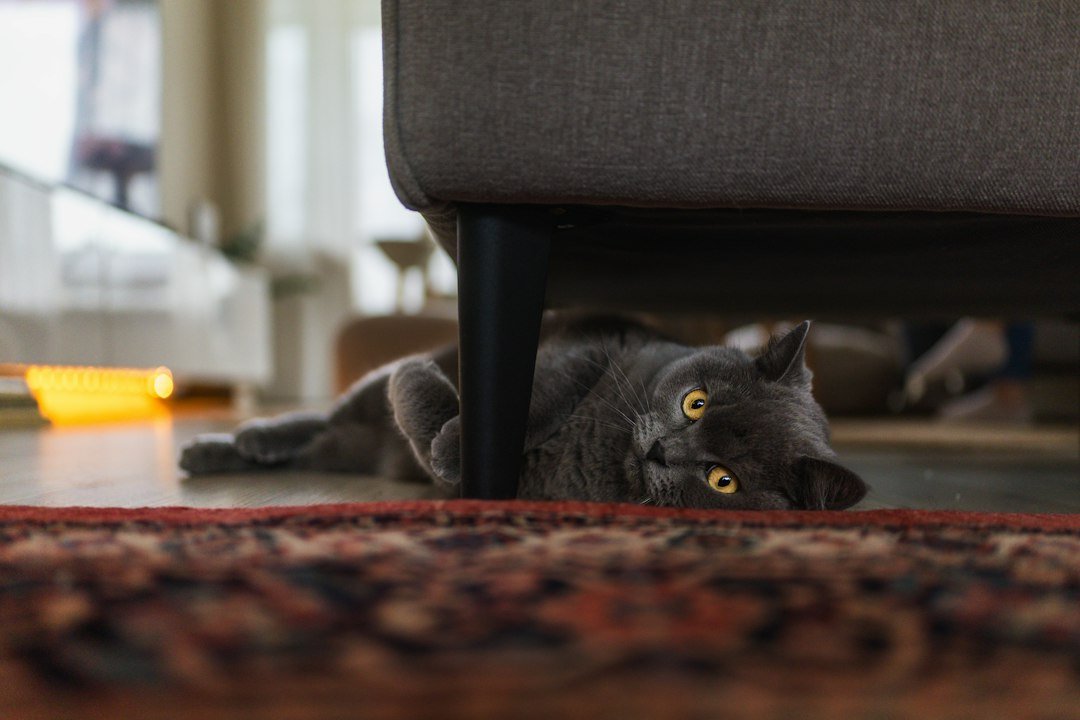
Why does my cat growl at strangers? Usually, it is a clear warning that the person feels too close, too unfamiliar, or too unpredictable to your cat. It is communication. If you are wondering why does my cat growl at strangers, think of the growl as your cat asking for more space before they feel they need to swat, hide, or bite.
Strangers bring unfamiliar footsteps, voices, scents, bags, and movement into territory your cat normally understands. Many cats cope by hiding. Others freeze, stare, hiss, or growl. A growl does not mean your cat is bad or aggressive by nature. It means the situation has crossed that cat’s comfort line.
Why does my cat growl at strangers in the home?
Home is your cat’s core territory. A visitor may walk directly toward the cat, lean over them, make prolonged eye contact, or reach out a hand, all of which can feel threatening when the cat has no relationship with that person. Small changes matter. Even a familiar relative wearing a large coat or carrying noisy luggage can seem like a new and alarming presence.
Some cats are naturally more cautious, while others had limited calm exposure to unfamiliar people when they were young. Early experience can shape comfort around visitors, but adult cats can still learn that guests do not always bring danger. Progress is often slow. The goal is not to make every cat sociable with everyone.
A cat may also growl when they are cornered. This is common when a guest blocks the path to a doorway, sits beside a hiding place, or tries to pull the cat out from under furniture. Give them an exit. Cats tend to feel safer when they can watch an unfamiliar person at a distance and leave whenever they choose.
| What may trigger the growl | Clues you may see | What to do |
|---|---|---|
| Visitor comes too close | Flattened ears, crouching, tail wrapped close | Ask the visitor to step back and ignore the cat |
| Cat feels trapped | Growling near furniture, doorway, or carrier | Clear a path to a quiet room or high perch |
| Sudden movement or noise | Wide pupils, twitching tail, startled retreat | Lower the noise and keep movement slow |
| Visitor tries to touch the cat | Stiff body, head turned away, hissing | Stop all contact attempts and let the cat choose |
| Lower tolerance than usual | Growling at familiar people too | Consider a veterinary check if the change persists |
Read the warning before pushing contact
Growling is often one part of a sequence. Your cat may first stop moving, turn their head away, hold their ears sideways, crouch, flick the tail, or retreat. Those quieter signals are easy to miss. Once the growl starts, the right response is to reduce pressure rather than test whether your cat really means it.
Do not punish growling. A shout, spray bottle, or forced removal may stop the sound in that moment, but it does not make the stranger feel safer to the cat. It can also teach a cat that warning signals are unsafe to give. That leaves less notice before a frightened cat uses claws or teeth.
Guests should avoid staring, reaching, or following the cat around the room. Ask them to sit normally and let the cat observe them. Quiet people are easier. If the cat approaches, the guest can gently toss a treat away from themselves rather than offering it from fingers, which keeps the cat in control of the distance.
Socialization tips for nervous cats
Socialization tips for an adult cat are really about safe, repeatable experiences. You cannot explain to a cat that a visitor is harmless. You can arrange the room so the cat has choices, then pair the visitor’s presence with things the cat already likes, such as a meal, a treat, or a favorite toy.
- Set up a safe room before guests arrive. Include water, litter, bedding, and a hiding spot. Keep the door closed if your cat is most comfortable away from visitors.
- Start at a distance your cat can handle. This may mean the cat stays across the room, behind a baby gate, or partly hidden while they hear the visitor.
- Ask one calm visitor to ignore the cat. No calling, touching, or eye contact at first. Let your cat watch without being watched back.
- Pair the visit with something pleasant. Place a treat several feet away from the guest, or offer a small meal after the guest settles quietly.
- End before your cat gets overwhelmed. A five-minute calm session is more useful than a long visit that ends in growling.
Move forward only when your cat is relaxed at the current step. Relaxed may look like normal grooming, eating, slow blinking, or choosing to rest in the same room. A cat who will take a treat but remains crouched and tense is still worried. Keep the session easier next time.
Do not lure a fearful cat closer with food if the cat cannot freely move away. Food should create a good association, not trap the cat near a person. Tossing treats sideways or behind the cat lets them collect the reward and retreat. That choice matters a great deal.
For some cats, a tall cat tree or shelf near the edge of the room works better than a hidden safe room because they can observe without close contact. For others, privacy is the better option. Watch the cat. The useful setup is the one they actually choose.
Make visitor days easier
Plan ahead when possible. Before someone arrives, put your cat’s carrier away if it normally causes stress, close curtains if outside activity adds to the noise, and provide a quiet retreat well before the doorbell rings. Sudden arrivals are harder. A predictable routine gives a cautious cat fewer surprises to manage.
Tell guests the house rules plainly: please ignore the cat, do not reach into hiding places, and do not pick the cat up. You only need one sentence if that feels awkward: the cat is shy with new people, so please let them come to you. Most visitors understand.
Children need closer supervision around a fearful cat. Their quick movements and high voices can be difficult for some cats, even when the child means well. Keep distance. An adult should step in before a child follows, corners, or tries to cuddle the cat.
If visitors stay overnight, keep the safe room available for the entire visit rather than treating it as a temporary confinement spot. Check that the cat is eating, drinking, and using the litter box normally. Let them set the pace. A cat who appears only at night may still be coping successfully.
When a growl needs extra attention
A growl aimed only at unfamiliar visitors is often a situation-specific response. However, contact a veterinarian if the behavior is sudden, intensifies quickly, occurs with familiar household members, or comes with changes in appetite, litter box habits, movement, sleep, or tolerance of touch. Pain or illness can make a cat less comfortable with handling and surprises.
Seek prompt professional help if a cat has bitten someone, cannot be safely managed during ordinary visits, or remains intensely distressed despite careful distance and gradual practice. Your veterinarian can rule out health concerns and may suggest an appropriately qualified behavior professional. Safety comes first.
Frequently asked questions
Should I make my cat meet visitors?
No. Your cat does not need to greet anyone to be well adjusted. A calm cat resting in a separate room is doing better than a frightened cat forced into the living room. Choice is useful.
Can a stranger give my cat treats?
Yes, if your cat is willing to stay nearby and can leave freely. Tossing a treat away from the visitor is usually less pressuring than hand-feeding. Never use treats to coax a cat out of a hiding place.
How long does socialization take?
There is no fixed timeline. Some cats become calmer after several quiet, predictable visits, while others prefer lifelong distance from unfamiliar people. Small gains count. A cat that watches quietly instead of growling has made progress.
Is growling the same as aggression?
Not necessarily. Growling is a warning signal, often used to prevent a conflict. Respecting it reduces the chance that the cat feels forced to escalate. Give space first.
What should I do if my cat growls at a guest?
Ask the guest to stop approaching, open up an escape route, and let your cat move away. Do not scold or carry the cat toward the visitor. Once the cat is settled, keep the rest of the visit low-key.
Related posts
This post is for general informational purposes only and is not veterinary advice. Every cat is different — if you have concerns about your cat’s health or behavior, please consult a qualified veterinarian.