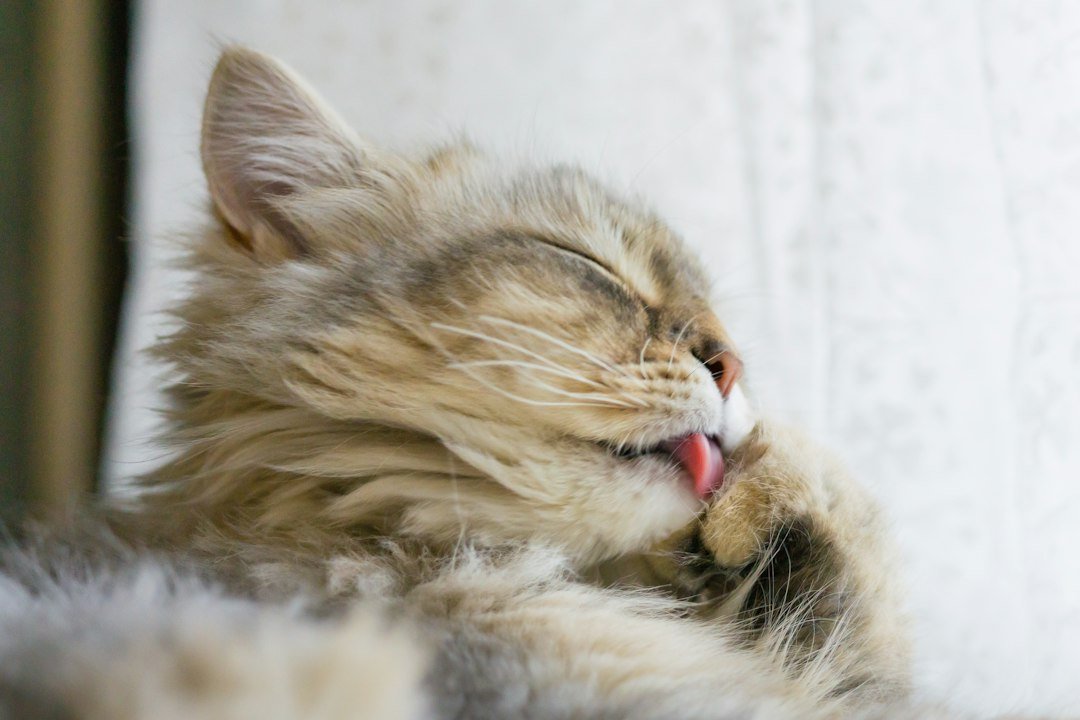
Why does my cat lick my hair? It is usually a form of social grooming, comfort-seeking, or interest in the scent and texture of your hair. Context matters most. A relaxed cat who gives a few licks while cuddling is often treating you like a trusted companion, while persistent licking paired with tension or other behavior changes can be an affection or stress signal.
Why does my cat lick my hair during cuddles?
Cats groom familiar cats that they feel safe around, and some extend that behavior to people. Watch the whole moment. If your cat is purring softly, kneading, slow blinking, or settling beside you before licking your hair, the behavior often fits social grooming, sometimes called allogrooming. Your cat may be responding to your warmth, your familiar smell, and the close contact that happens when you sit or lie down together.
Hair can also be unusually appealing to cats because it carries skin oils, shampoo residue, and the scent of their person. The setting matters. A cat may lick the same spot near your scalp because that area has a stronger natural scent, or because long hair moves in an interesting way when you shift. This does not mean your cat thinks you need cleaning. It is more like a small social ritual.
Some cats begin by sniffing and then give a few gentle licks, perhaps followed by a tiny nibble. That feels social. A gentle grooming nibble can be part of normal cat communication, but teeth should not press hard enough to hurt or break skin. Move away calmly if the interaction becomes uncomfortable. Pulling your head back quickly can make loose hair more tempting to chase.
Hair licking may also be a self-soothing habit. Cats often repeat actions that have produced a pleasant response, such as warmth, petting, attention, or a predictable bedtime routine. Cats learn fast. If you laugh, pet your cat, or remain close each time they lick your hair, they may reasonably expect that licking keeps the pleasant moment going.
Your own products can add another layer. Check your products. Hair spray, dry shampoo, leave-in conditioner, fragrance oils, and topical treatments may smell or taste interesting, but they are not meant to be eaten by cats. It is safest to prevent licking when you have recently used hair products, especially medicated scalp products or products containing essential oils. If your cat has swallowed a product or seems unwell afterward, contact a veterinarian or an animal poison service promptly.
Affection or stress signal
The behavior itself does not give a complete answer. Look for the pattern around it. A cat can lick hair because they are content one day and because they need reassurance during a noisy or unsettled period another day. The key difference is whether the licking is brief and relaxed, or whether it seems driven, difficult to interrupt, and paired with signs that your cat is not comfortable.
| What you notice | What it may suggest | What to do |
|---|---|---|
| A few licks during quiet cuddling, loose body, soft eyes | Social grooming or comfort | Allow it briefly if your hair is product-free and you enjoy it, then redirect if needed. |
| Licking after you return home or before bed | Familiar scent and routine | Offer a short cuddle or gentle petting session at the same time each day. |
| Intense licking, grabbing hair, or chewing strands | Overstimulation, habit, or attraction to hair texture | End contact calmly and give your cat a toy or blanket instead. |
| Sudden increase alongside hiding, appetite changes, litter box changes, or excessive self-grooming | Stress or a possible health concern | Arrange a veterinary conversation, particularly if the change continues. |
Patterns beat single moments. A cat who licks your hair for ten seconds after a calm evening cuddle is very different from a cat who repeatedly searches for hair, chews it, cannot settle, and has started overgrooming their own coat. Because a sudden behavior change can have several causes, including discomfort or changes at home, it is sensible to note when it began and what else changed around the same time.
Stress-related behavior often appears with other clues. Look for a tucked or tense posture, wide pupils in a calm room, frequent hiding, reduced play, conflict with another pet, more vocalizing, or repetitive licking of the cat’s own body. One clue is not enough. Cats also vary widely in how much they groom, seek people, and react to household activity, so a pattern over several days is more useful than one unusual afternoon.
When hair licking needs a boundary
It is reasonable to set limits even when the behavior is affectionate. Your comfort counts. Hair can tangle around a cat’s tongue or teeth, and swallowed strands may cause trouble if enough hair is eaten. Long hair is the bigger concern, particularly when a cat chews, pulls, or swallows it rather than simply giving a few surface licks.
Do not punish the licking. A sharp reaction can make a nervous cat more unsettled, and it does not teach the replacement behavior you want. Instead, make the unwanted option unavailable and offer something safe that meets a similar need for closeness or chewing. A soft blanket, a bed beside you, a cat-safe toy, or a short petting session may be enough.
- Notice the early signs, such as sniffing your hair, pawing at it, or moving toward your head.
- Move your hair out of reach before licking starts, or gently stand up if your cat is already focused on it.
- Offer a calm alternative right away, such as a fleece blanket beside you or a toy your cat likes to mouth.
- Give quiet attention when your cat settles with the alternative, so the new routine becomes familiar.
Keep it low-key. If your cat comes back to your hair, repeat the same response rather than turning it into a game. Consistency matters more than a perfect technique. For example, if bedtime hair licking happens nightly, put your hair up before sitting down, place a preferred blanket beside you, and give your cat a few minutes of gentle attention before lights-out.
Avoid dangling hair in front of your cat as play, even if they seem fascinated by it. Human hair is not a safe teaser toy. Use a wand toy or another appropriate cat toy for chasing, and put string-like toys away after supervised play. This helps separate hair from the idea of something to grab and swallow.
When to call a veterinarian
Contact a veterinarian if your cat is eating hair, vomiting repeatedly, retching, seeming unable to pass stool, losing appetite, or acting unusually quiet. Do not wait on severe signs. Hair ingestion can be more concerning than ordinary licking, particularly if you have long hair or notice missing strands after your cat has been chewing.
A veterinary check is also sensible when the behavior is new and intense, or when it appears alongside excessive self-grooming, bald patches, skin irritation, major changes in appetite, litter box habits, sleep, or sociability. The licking may be only one part of the picture. A veterinarian can help rule out health issues and discuss whether household stress, pain, skin discomfort, or a learned habit might be involved.
For most cats, a few affectionate hair licks are simply a quirky form of closeness. Keep it safe. Pay attention to body language, limit access when products are in your hair, and redirect chewing or persistent licking without drama. That approach protects both your cat and your scalp while keeping the relationship warm.
Related posts
This post is for general informational purposes only and is not veterinary advice. Every cat is different — if you have concerns about your cat’s health or behavior, please consult a qualified veterinarian.