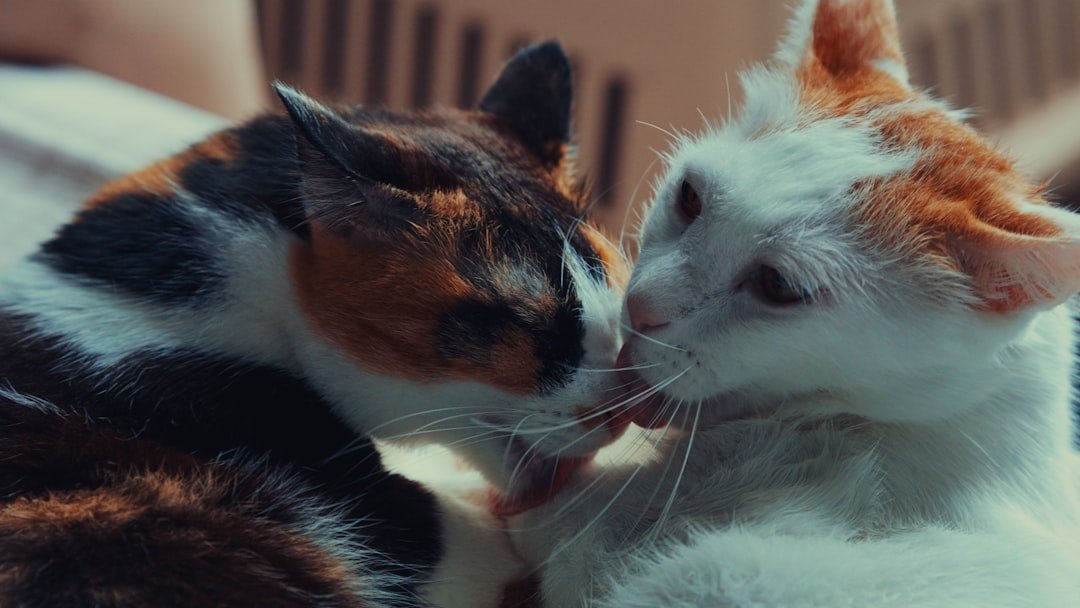
When you wonder why does my cat headbutt me, pause and let your cat set the pace. Most of the time, why does my cat headbutt me has a simple answer: your cat is greeting you, sharing scent, or asking for a familiar kind of attention. It is usually friendly. A relaxed cat may bump your hand, leg, face, or phone, then lean in for more contact because the interaction feels safe and predictable.
Why does my cat headbutt me?
Cat headbutting is often called bunting. Cats have scent glands around their cheeks, forehead, chin, and lips, and a gentle forehead bump leaves a small amount of their individual scent on you. That scent is not usually noticeable to people. For cats, it helps make familiar people and spaces smell socially safe. When your cat bumps you after you return home, they may be renewing that shared scent and greeting you at the same time.
It can also be an affection signal. Cats do not show closeness in exactly the same ways people do, but many seek gentle face-to-face contact with individuals they trust. A headbutt paired with slow blinking, a loose body, upright ears, or a tail held comfortably up is generally a warm social gesture. Look at the whole cat. One action means more when the rest of the body looks calm.
Some cats use headbutts as a request. Your cat may want cheek scratches, breakfast, a door opened, or simply your attention after you have been busy. Context matters. If the bump happens near the food cupboard at the usual meal time, the message may be practical rather than deeply emotional, although a cat can be both affectionate and hungry at once.
What your cat may be telling you
A friendly headbutt is usually gentle and deliberate. Your cat may press their forehead into your hand, rub one cheek along your fingers, then return for another pass. That sequence often means they want social contact in a form they enjoy. Let them lead. Offer a still hand at cheek level rather than reaching over their head, which gives your cat room to choose contact or walk away.
- Greeting: A bump when you wake up or come home often means your cat recognizes you and wants contact. Keep your voice soft.
- Scent sharing: Cheek rubbing after a headbutt is a strong clue that scent marking is part of the behavior. This is normal.
- A request for touch: If your cat leans into your fingers and stays loose, try a few gentle cheek or chin scratches. Stop briefly.
- Attention or routine: A cat that bumps you before meals or play may have learned that this gets a response. Notice the timing.
The pause after you pet them tells you a lot. If your cat returns, nudges again, or presses their cheek into your hand, continue for a few seconds. If they turn away, flick the tip of their tail sharply, flatten their ears, or tense their shoulders, give them space. Cats often communicate a limit before they swat or bite. Respecting those smaller signals helps keep headbutting a pleasant habit.
How to respond to a cat headbutt
You do not have to pet every cat that headbutts you. Some cats want a brief greeting, while others are inviting a longer interaction. A calm response is best. Avoid tapping your forehead against your cat’s because your movement can be too sudden, and avoid holding their head in place even if they seem affectionate.
- Stay still for a moment and let your cat approach. Give them control.
- Offer one or two fingers near the cheek, below eye level. Do not reach down from above.
- Use light strokes along the cheeks, forehead, or under the chin if your cat leans into them. Keep it brief.
- Pause after several strokes. A cat that wants more will usually nudge, rub, or remain close.
- End the interaction when your cat walks away or shows tension. This builds trust.
If your cat headbutts your face, it is fine to gently shift your head back and offer your hand instead. This is especially useful with an enthusiastic cat who gets close to your nose, glasses, or mouth. Keep it simple. You can still return the greeting with a quiet voice and a slow blink.
Affection signals explained through body language
A headbutt alone is not a complete translation of cat language. Look for a cluster of relaxed signals. Soft eyes, slow blinks, forward or neutral ears, whiskers resting loosely to the side, and an easy posture usually support the idea that your cat is comfortable. A tail raised with a gentle curve at the tip often appears during friendly greetings as well.
Be careful with purring as a clue. Many cats purr when they are content and receiving pleasant attention, but purring can also happen when a cat is stressed, uncomfortable, or trying to settle themselves. The body around the purr matters. A cat with a loose spine, quiet tail, and relaxed face likely feels different from one that crouches, hides, or seems unable to get comfortable.
Headbutting may happen more often in multi-cat homes when a cat comes to you after interacting with another pet. Cats can use shared scent to build a familiar group smell, though individual relationships vary widely. Do not force introductions or rub one cat’s scent onto another. Let their own social routines develop at a comfortable pace.
When headbutting is not a friendly headbutt
Normal bunting is a gentle nudge or rub against a person, object, or another animal. It is different from repeated head pressing, where a cat pushes their head firmly against a wall, floor, furniture, or another hard surface and seems unable to settle. That is concerning. Contact a veterinarian promptly if you see head pressing, especially if it appears with disorientation, stumbling, unusual vocalizing, seizures, sudden behavior changes, or changes in eating and drinking.
A sudden increase in head rubbing can also deserve attention if your cat seems uncomfortable, scratches at their ears or face, has discharge, avoids being touched, or changes their usual behavior. Do not try to inspect deeply inside ears or give human medicines. A veterinarian can assess what is going on. Headbutting itself is common, but a change in the surrounding behavior is useful information to share.
Why some cats never headbutt
A cat can love you without bunting. Some cats show trust by sleeping nearby, following you room to room, sitting with their back toward you, giving slow blinks, or choosing to play near you. Personality, early experiences, age, and comfort with handling all affect how a cat expresses social connection. Do not chase a quiet cat for affection. Letting them choose contact is often the quickest way to make them feel secure.
If you want to encourage more friendly interaction, create predictable low-pressure moments instead of trying to teach headbutting. Sit nearby during a calm part of the day, offer a treat only if it fits your cat’s usual diet, and place your hand where they can investigate it. Move slowly. Over time, a cat may choose cheek rubs or head bumps, but the goal is comfort rather than a particular behavior.
FAQ
Is it okay to headbutt my cat back?
It is safer to avoid pressing your forehead into your cat. Cats can be startled by a quick movement toward their face, and an enthusiastic bump can accidentally hurt a nose or eye. Use a slow blink, quiet greeting, or offered hand instead. Your cat will understand the calm response.
Why does my cat headbutt me and then bite?
This can happen when a cat wanted a short greeting but became overstimulated by continued petting, or when the headbutt was a request for something other than touch. Watch for tail flicking, skin twitching, ears turning sideways, or a stiffening body. Stop sooner next time. If biting is new, forceful, or paired with other changes, discuss it with a veterinarian.
Why does my cat headbutt me at night?
Nighttime headbutts often happen because the house is quiet and your cat wants food, play, access to a room, or company. Cats also tend to be active around dawn and dusk. A consistent evening play session followed by a small portion of their regular food may help some cats settle, though routines vary.
Does headbutting mean my cat sees me as another cat?
Not exactly. Your cat knows you are different from a cat, but may use familiar feline social behaviors with you because those behaviors work for closeness and scent sharing. Think of it as your cat using their own social language. A gentle response is enough.
Why does my cat headbutt objects when I am nearby?
Your cat may be scent-marking a chair, wall corner, or your belongings while also feeling social around you. It can be part of settling into a familiar space. If they look relaxed, there is usually no need to interrupt. If the rubbing suddenly becomes intense or seems uncomfortable, note any other changes and seek veterinary guidance.
Related posts
This post is for general informational purposes only and is not veterinary advice. Every cat is different — if you have concerns about your cat’s health or behavior, please consult a qualified veterinarian.