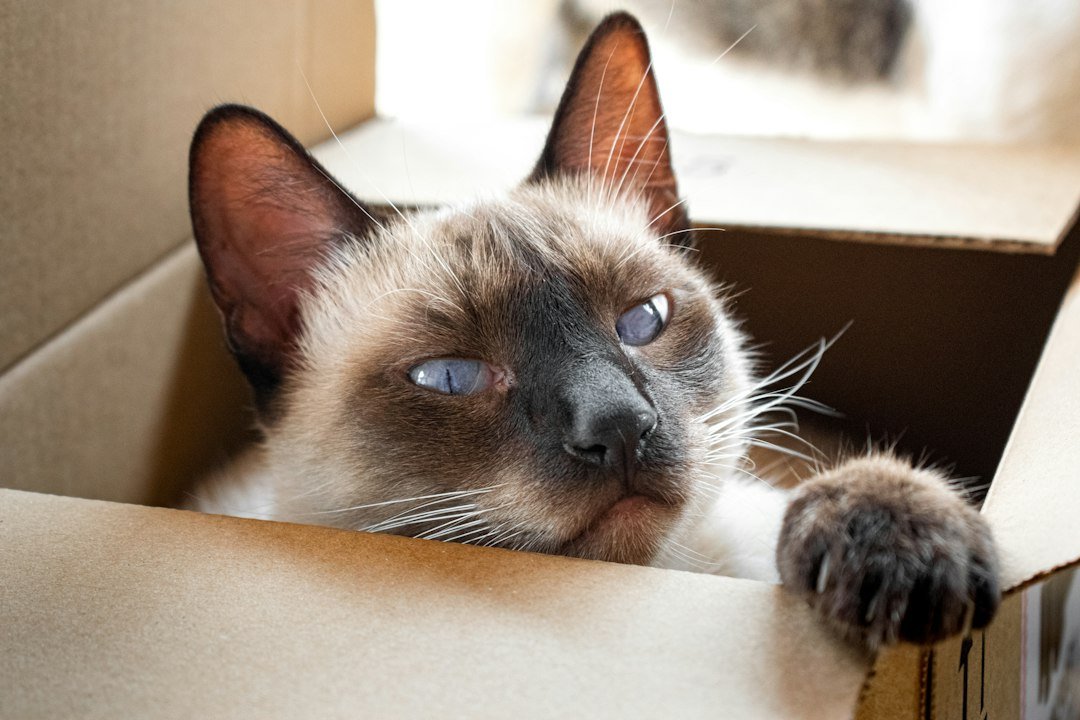
A common misconception is that a cat sitting in a box is bored or being difficult. Usually, it is neither. Why does my cat sit in boxes? A box often feels secure, comfortable, and easy to control, especially when it has solid sides, a familiar scent, and a clear view of the room. Cats can enjoy a soft bed too, but an open bed leaves more of their body exposed. Boxes change that.
The science behind a cat’s box habit
Domestic cats still have many instincts that favor sheltered resting places. That matters. A box creates a small boundary around the cat, which can make a large room feel more manageable when there are footsteps, household noise, visitors, or another pet moving nearby. The cat can settle against the sides, watch the entrance, and decide when to come out. That sense of choice is valuable.
Boxes also reduce sensory input. Cardboard walls block part of the visual activity around a cat and can soften drafts, while the narrow space limits the directions from which something can approach. For a cat that likes predictable surroundings, this can be more relaxing than lying in the middle of the floor. Every cat differs. Some cats choose boxes daily, while others only climb in when the house is busy or unfamiliar.
Temperature can play a part as well. Cardboard holds a little warmth and blocks some air movement, so a snug box may feel cozier than tile or a thin pet bed. Cats also tend to curl up in small spaces, which reduces the amount of body surface exposed to cooler air. Warmth is only one reason. A cat may pick a box in a warm home because the enclosure itself feels good.
Why does my cat sit in boxes even when nothing is wrong?
For many cats, box sitting is ordinary resting behavior rather than a sign of fear. That is normal. A new box may carry fresh smells, offer a novel texture to scratch, and give the cat a spot that is clearly its own without anyone having to move furniture. The appeal can be especially strong after a delivery arrives because the box is new, available, and placed right in the middle of the household activity.
A box can also help a cat take a break from social pressure. This does not mean the cat dislikes you. A cat may want affection one minute and quiet space the next, particularly in a home with children, guests, dogs, or multiple cats. If the cat enters and leaves the box calmly, eats normally, uses the litter box as usual, and still interacts in its usual way, the behavior is generally easy to accommodate.
How to give your cat a useful box
Start with one plain cardboard box in a quiet area where your cat already likes to rest. Keep it simple. You do not need to buy a special product before finding out whether your cat prefers a shallow open box, a deeper box with one entrance, or a box turned on its side.
- Choose a box large enough for your cat to turn around and lie down. Aim snug, not tight.
- Remove packing tape, staples, loose labels, plastic wrap, and shipping debris before offering it. Check it first.
- Place the box away from litter trays, food bowls, busy doorways, and loud appliances. Quiet helps.
- Cut down tall sides for an older cat or any cat that seems reluctant to climb. Make entry easy.
- Replace the box when it becomes damp, heavily shredded, soiled, or coated with adhesive residue. Fresh cardboard is safer.
If you have more than one cat, spread resting spots around the home rather than putting every option in one corner. Space matters. A practical starting point is at least one enclosed resting option for each cat, plus an extra option elsewhere, so one cat cannot easily control every hiding place. Watch how your own cats use the spaces and adjust the locations if one box causes tension.
Choosing safe box setups
Plain, clean cardboard is usually the easiest choice. Plain is fine. Avoid boxes that held household chemicals, strongly scented products, pest-control items, or anything that may have leaked, and do not leave plastic bags, packing foam, string, or small packing pieces inside for a cat to chew. If a box has hand holes, cut them wider or close them securely if your cat tries to push its head through them.
Some cats enjoy a blanket in the bottom, while others prefer bare cardboard. Let the cat decide. Do not force your cat into the box or close the flaps around them, even as a joke, because the point is that the cat can leave whenever it chooses. If chewing cardboard is common for your cat, supervise use and remove the box if your cat swallows pieces rather than simply shredding them.
When box sitting deserves closer attention
A cat that naps in a box now and then usually needs no special response. Do not panic. Pay closer attention if your cat suddenly spends most of the day hidden after previously being outgoing, or if hiding comes with a clear change in appetite, litter-box habits, movement, grooming, or willingness to be touched. Those changes can have many causes, and a veterinarian can help assess them.
Look at the situation around the behavior before assuming the box itself is the issue. A move, renovation noise, a new pet, visitors, or conflict between cats can make a sheltered place more appealing. Give the cat a calm route to food, water, litter, and resting areas. If the hiding is persistent, worsening, or paired with signs that your cat seems unwell, contact a qualified veterinarian rather than trying to solve it with a different box.
Frequently asked questions
Do cats sit in boxes because they are cold?
Sometimes, yes. Cardboard can reduce drafts and hold a little warmth, especially when a cat curls up inside. But many cats choose boxes in comfortable temperatures too. The enclosed shape and feeling of shelter are often part of the appeal.
Why does my cat choose a box over an expensive bed?
A cat does not judge comfort by price. An open bed may be soft but leave the cat feeling visible, while a plain box has raised sides and a smaller interior that can feel more protected. Try placing the bed near the box. Your cat may use both for different moods.
Should I put a lid on my cat’s box?
Only if there is a wide, easy entrance and plenty of ventilation. Never trap your cat inside. A partially covered box can suit cats that like more privacy, but some cats prefer an open top so they can watch the room. Offer a choice.
Can cardboard boxes cause problems for cats?
Most clean boxes are harmless for supervised lounging and scratching. Keep them dry. The main concerns are tape, staples, chemical residue, loose packing materials, and swallowing cardboard or debris. Remove the box if your cat eats pieces or gets caught on damaged edges.
Related posts
This post is for general informational purposes only and is not veterinary advice. Every cat is different — if you have concerns about your cat’s health or behavior, please consult a qualified veterinarian.