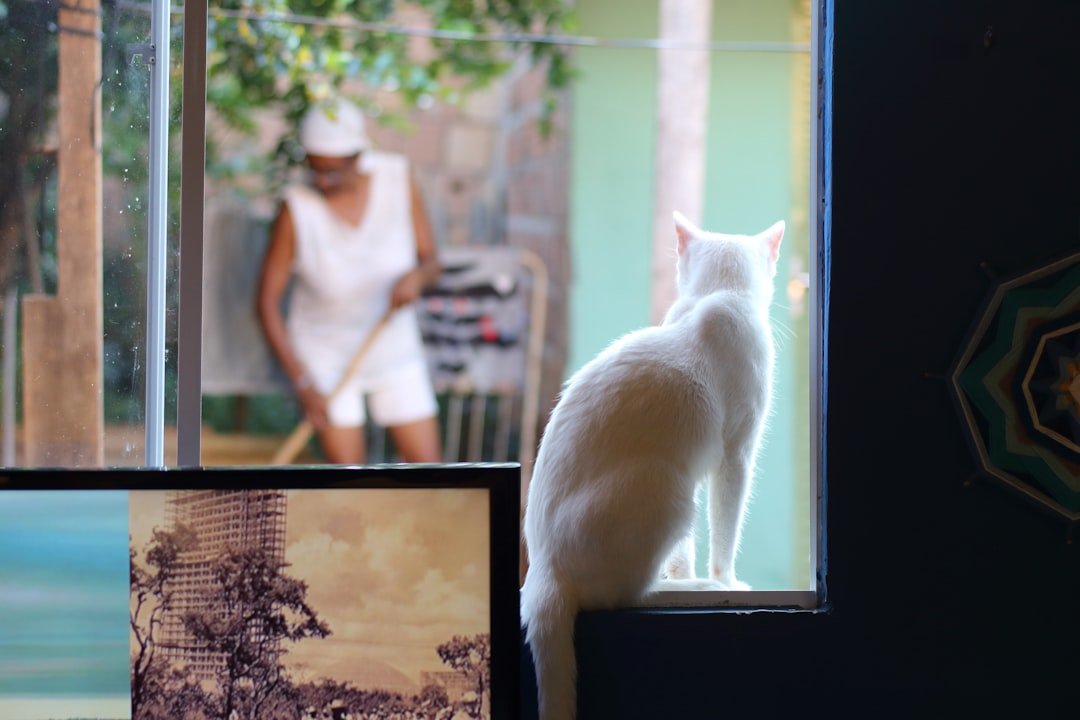
You sit on the sofa, look up, and find your cat silently watching you from across the room. Why does my cat stare at me? Most of the time, a cat is checking what you are doing, waiting for something familiar, or quietly communicating comfort and interest. It is usually normal. If you are wondering why does my cat stare at me every evening, look at the timing and the rest of their body language before assuming the stare means one specific thing.
Why does my cat stare at me so closely?
Cats notice small changes in their environment, including when you stand up, open a cupboard, pick up keys, or settle into the spot where you usually offer attention. Your cat may be waiting for the next predictable event. Routine matters. A stare around breakfast time, before play, or near the door often means your cat has learned that your movement leads to something they want.
Cats also use eye contact differently than people do. A relaxed cat may watch you with soft eyes, normal pupils, ears facing forward or slightly sideways, and a loose body. That is calm attention. They do not need to be purring for this to be friendly, since many cats show comfort by simply choosing to stay nearby and keep track of their person.
Some cats stare because they are curious about your face and hands. Your voice, posture, and movements give them information, especially if they have learned that you are about to feed them, reach for a toy, or open a door. Cats are observant. A cat who watches you from a favorite perch may simply enjoy being near the activity without wanting to be picked up.
When staring is a sign of affection
A slow blink is one of the clearest relaxed signals many cats offer. Your cat may look at you, slowly close their eyes, then open them again while staying loose and settled. Try returning one slow blink. Keep it gentle. Do not lean over them or hold eye contact for a long time, because direct staring can feel tense or challenging to some cats.
Affectionate staring often comes with other comfortable behavior, such as sitting with paws tucked, resting nearby, rubbing their face on furniture after looking at you, or approaching with an upright tail. Context is the clue. A cat who looks at you, blinks, and then comes over for a head rub is giving a very different message from a cat who is crouched, rigid, and unable to settle.
Individual personality changes the picture. One cat may gaze from across the room and rarely seek lap time, while another may follow you closely and stare until you respond. Both can be attached. The useful question is whether this is normal behavior for your particular cat and whether they otherwise seem comfortable.
Common stare patterns and what to check
| What you see | Likely everyday meaning | Helpful response |
|---|---|---|
| Soft eyes, slow blinks, relaxed body | Comfort, interest, or social connection | Slow blink back or speak quietly |
| Staring near the food area at a usual time | Expectation based on routine | Check the feeding schedule and avoid extra meals if they are not due |
| Watching your hands or a cupboard | Interest in play, treats, or a familiar activity | Offer a brief play session if appropriate |
| Wide eyes, tense posture, ears back, tail flicking | Stress, frustration, fear, or overstimulation | Give space and reduce pressure |
| Fixed stare with new behavior changes | A possible health or discomfort concern | Contact a veterinarian for guidance |
The table is a starting point, not a verdict. Eyes alone are not enough. Watch the tail, ears, posture, breathing, appetite, litter box habits, and willingness to move around normally, especially when the stare seems unusually intense or has appeared suddenly.
When a stare may point to a medical concern
Staring by itself does not tell you that a cat is ill. However, a new fixed or vacant-looking stare can matter when it appears alongside other changes, such as hiding, confusion, unsteady walking, reduced appetite, vomiting, unusual vocalizing, squinting, eye discharge, or a change in pupil size. New changes matter. Cats often hide discomfort well, so a behavior shift paired with physical signs is worth taking seriously.
Pay special attention if your cat seems to stare at walls, miss familiar routes through the home, bump into objects, wake and appear disoriented, or stop responding to sounds or your usual cues. These signs do not identify the cause. They do mean your veterinarian should hear about what you have observed, when it began, and whether it is getting more frequent.
Eye-related changes deserve prompt attention too. Contact a veterinarian promptly if one or both eyes look cloudy, red, swollen, partly closed, injured, or unusually sensitive to light, or if the pupils remain very different in size. Do not use human eye drops. Eye problems can worsen quickly, and the right treatment depends on the cause.
If your cat is staring and also has trouble breathing, collapses, has a seizure-like episode, cannot stand normally, or appears severely distressed, seek urgent veterinary care. Act quickly. These are not situations to monitor at home while waiting for the behavior to pass.
What to do when your cat watches you
- Check the moment. Notice what happened just before the stare, such as the time of day, food preparation, a visitor, or a new sound. Keep it simple.
- Read the body. Look for relaxed muscles and soft eyes versus crouching, flattened ears, a lashing tail, or enlarged pupils. The full posture gives better information.
- Offer a low-pressure response. Slow blink, speak softly, or toss a toy nearby if your cat seems interested. Let them choose.
- Track new patterns. Write down the date, duration, and any other changes for a few days. Details help.
- Call the veterinary clinic if needed. Share a short video if you can safely take one, along with notes about appetite, litter box use, mobility, and eye appearance.
A calm response is usually best. Avoid staring back hard, forcing cuddles, or repeatedly testing your cat by waving hands in their face. Give them room. If the stare is about attention, your cat will often approach, meow, lead you somewhere, or respond when you offer a familiar activity.
In many homes, a staring cat is simply a cat who knows you well and is waiting to see what happens next. Familiar patterns are reassuring. When the behavior is new, intense, or paired with changes in health or daily habits, treat it as useful information and check in with a veterinarian rather than trying to interpret it on your own.
Related posts
This post is for general informational purposes only and is not veterinary advice. Every cat is different — if you have concerns about your cat’s health or behavior, please consult a qualified veterinarian.