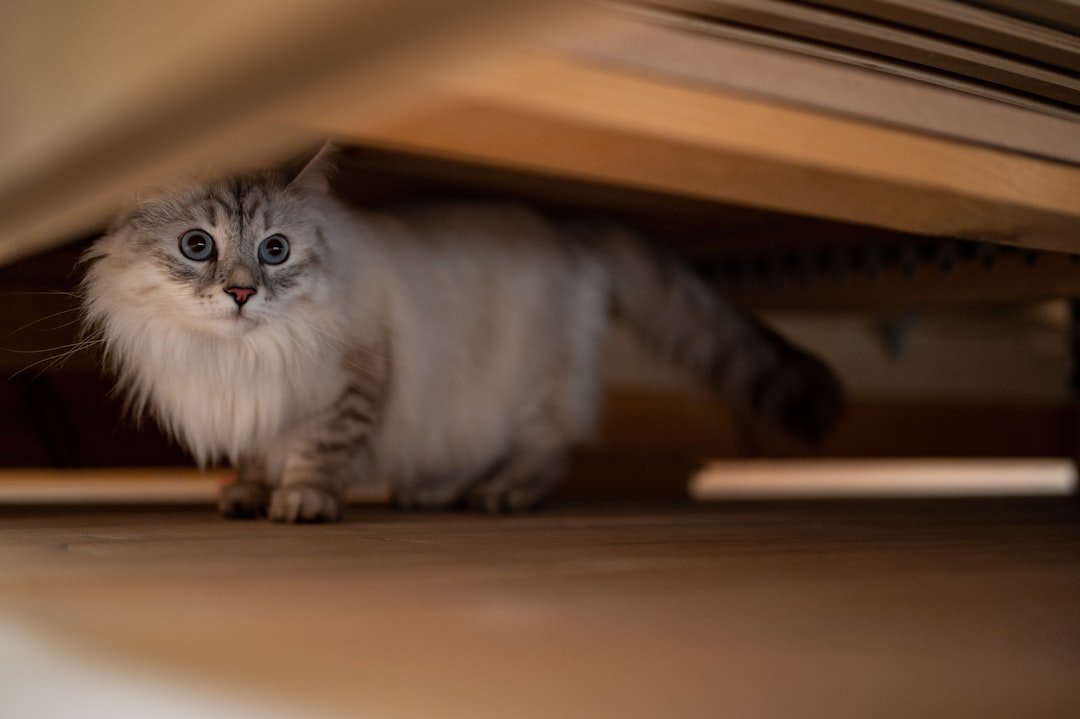
A cat hiding under bed suddenly is usually trying to feel safe, not trying to be difficult or distant. When cat hiding under bed suddenly becomes a new pattern, look for recent changes, possible stress triggers, and signs that your cat may feel unwell. Hiding is a safety behavior. Many cats choose low, enclosed spots because they can rest without being watched, and an under-bed space may feel especially secure when the household seems noisy, unfamiliar, or unpredictable.
Why a cat hiding under bed suddenly may happen
A single startled dash under the bed is common. A door slam, dropped pan, vacuum, thunder, visitor, or unfamiliar animal outside the window can be enough. Some cats settle within minutes, while others need several quiet hours before they feel ready to come out.
Changes that seem minor to people can matter a great deal to cats. New furniture can alter familiar pathways and scents. Rearranging a room, changing litter, bringing home a baby, hosting overnight guests, having builders nearby, or adjusting your work schedule may disrupt the predictable routine that helps a cat feel settled.
Other pets are a frequent cause. A confident cat may block a hallway, stare near the food bowl, chase briefly, or claim the preferred resting spot without obvious fighting, and the quieter cat may respond by staying hidden. Watch calmly. Tension is not always loud.
Physical discomfort can also make a cat withdraw. Cats often conceal pain or illness, so a sudden hiding habit deserves closer attention when it comes with reduced appetite, litter box changes, vomiting, limping, unusual vocalizing, poor grooming, or a noticeable drop in normal activity. Do not assume it is stress alone.
| What you notice | A possible context | A practical first response |
|---|---|---|
| Hides after loud sounds or visitors | Startle or unfamiliar activity | Give the room time to become quiet and leave a safe exit open. |
| Hides after a household change | New smells, layout, schedule, or person | Keep meals and play times predictable for several days. |
| Hides when another pet is nearby | Resource guarding or social pressure | Separate resources and avoid forcing close contact. |
| Hides with appetite or litter box changes | Possible physical problem | Contact a veterinarian promptly for guidance. |
Possible stress triggers to check first
Start with the previous 24 to 72 hours. Keep it simple. Think about what changed in the cat’s territory, schedule, sounds, smells, or access to favorite places.
- People and activity: Visitors, children home from school, parties, arguments, deliveries, or workers can make a normally social cat retreat. Even friendly guests may be too much.
- Other animals: A new pet, a neighborhood cat visible through a window, or tension between resident cats can make a home feel less secure. Check doorways and food areas.
- Routine changes: A different feeding time, longer workdays, travel, or a partner staying elsewhere can unsettle a routine-oriented cat. Predictability helps.
- New scents: Strong cleaners, paint, scented candles, laundry products, or veterinary smells on another pet may be unsettling. Cats rely heavily on scent.
- Lost access: A closed bedroom, moved cat tree, blocked window perch, or changed furniture layout can remove a familiar refuge or observation spot. Space matters.
What to do while your cat is hiding
Let your cat stay under the bed if the area is safe and accessible. Do not pull them out. Reaching underneath, shaking treats, or repeatedly checking can confirm that the hiding place was necessary.
Instead, reduce pressure around the room. Keep voices low, ask visitors not to approach, and avoid running appliances nearby when possible. Sit nearby for a few minutes without staring. You can place a small amount of familiar food or a few treats a short distance from the bed, then leave the room so your cat can choose whether to investigate.
Make basic needs easy to reach. Place water, food, and a clean litter box in a quiet nearby location, but do not put them directly beside the bed if that makes the space feel crowded. If another pet is involved, give each cat separate access to food, water, litter boxes, and resting places.
Offer a better hiding option too. A covered cat bed, open carrier with a blanket, cardboard box on its side, or quiet shelf can give your cat a refuge that is easier for you to monitor. Leave the under-bed area available at first. Removing a hiding spot too soon can raise stress.
A simple plan for the next day
- Check essentials: Notice whether your cat eats, drinks, urinates, passes stool, and moves normally when they come out. Write down changes.
- Remove one likely trigger: Close blinds if an outside cat is visiting, separate pets, pause a noisy task, or give guests a cat-free room. Change one thing at a time.
- Restore routine: Serve meals at the usual time and offer a familiar short play session only if your cat seems receptive. Keep it low-key.
- Observe without crowding: Look for gradual signs of relaxation, such as coming out at night, using the litter box, eating normally, grooming, or resting in another usual spot. Small progress counts.
If your cat returns to normal after the trigger passes, continue the calmer routine for a few days. If hiding continues, becomes more frequent, or comes with any change in eating, drinking, litter box habits, movement, breathing, or alertness, contact a veterinarian. A sudden behavior change is useful information. Share when it began, what changed at home, and what you have observed.
Frequently asked questions
How long is it normal for a cat to hide under the bed?
After a brief scare, some cats come out once the home is quiet. Others may take much longer, especially after visitors, moving house, or a new pet. The bigger concern is a new hiding pattern paired with changes in normal daily habits. Watch the basics.
Should I block access under the bed?
Usually, do not block it while your cat is actively relying on it. That can leave them feeling trapped or force them into an even less accessible location. First provide appealing alternatives, then make changes gradually once your cat is using those spaces comfortably.
Should I bring food under the bed?
Place food nearby rather than pushing it underneath. Your cat needs enough privacy to eat, and you also need to notice whether they are actually eating. A small amount of favorite food can be useful. Do not rely on treats as proof that everything is fine.
Can a new cat cause this behavior even without fighting?
Yes. Cats can feel pressured by staring, following, doorway blocking, or competition over resting spots and litter boxes, even when there is no obvious aggression. Give them separate resources and allow slow, controlled introductions rather than expecting them to work it out alone.
Related posts
This post is for general informational purposes only and is not veterinary advice. Every cat is different — if you have concerns about your cat’s health or behavior, please consult a qualified veterinarian.