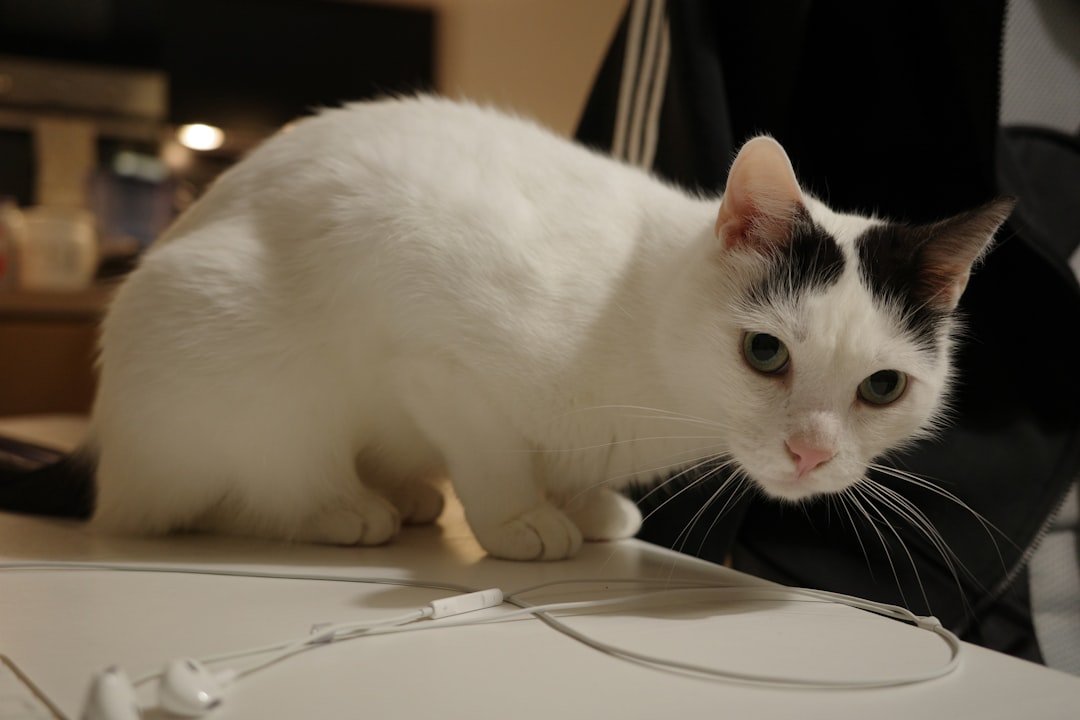
Clear breakable items from the table right now, then give your cat a safe object and place to investigate instead. Why do cats knock things off tables? Usually because a paw swipe produces an interesting result, and sometimes because it reliably gets a person to respond. The object falls. It moves, makes noise, and may bring you running across the room, which can turn one casual experiment into a repeated habit.
Why do cats knock things off tables?
Cats use their paws to test the world. Their paws are sensitive, mobile, and made for checking whether something moves, rolls, slides, or reacts. A pen near the edge is especially tempting because one light tap changes its position fast. That immediate feedback is fun. A mug, remote, plant pot, or glass can also become a target if it sits where the cat likes to walk, perch, or watch the room.
This behavior is not usually about spite. Cats do not generally connect a knocked-over object with your annoyance in the human sense, but they can learn that certain actions produce a big, predictable reaction. If you gasp, speak loudly, rush over, or pick up the item while your cat watches, the whole scene may become rewarding even when your reaction is frustrated.
Some cats are simply more persistent investigators than others. Age matters too. Young cats often spend more time batting loose objects because play and exploration are major parts of their day, while an older cat may start doing it when a new item, new routine, or new source of boredom appears. Context matters most.
Curiosity vs attention seeking
Curiosity and attention seeking can look identical at first. Your cat reaches out, taps an item, and watches it drop. The useful difference is what happens before and after the swipe. Watch the pattern for several days rather than deciding based on one incident.
Curiosity is more likely when your cat finds a new object, encounters something that rolls or crinkles, or investigates while you are busy elsewhere. The cat may continue examining the object after it falls, sniff it, chase it, or repeat the action even when nobody reacts. The item itself is the reward. This is common.
Attention seeking is more likely when the behavior happens while you are nearby but occupied, such as during a call, meal, computer session, or the time you usually prepare food. Your cat may look directly at you before swiping, pause after the noise, or repeat the move after you speak or stand up. The fallen item matters less than your response, especially if the behavior stops once you interact.
There can be overlap. A cat may begin by investigating a bottle cap, discover that you always react, and then use the same behavior when it wants engagement. That does not mean the cat is plotting. It means the behavior has worked before.
What the table setup tells you
Look at which objects get targeted. Small, light objects near an edge are easy to move and give quick feedback, while a heavy decorative object may be ignored because it does not shift under a gentle paw. Items with dangling cords, reflective surfaces, loose lids, or interesting smells may attract extra attention. Make the setup boring.
Also notice the location. A dining table can be a high-value route because it is elevated and gives a broad view of the home. A desk may become a target zone because it puts your hands, keyboard, pens, and face in one concentrated area. If your cat wants access to you, removing pens alone may not solve the reason it keeps returning.
Timing gives useful clues. If swiping happens shortly before meals, before your usual playtime, or during a long stretch when the cat has been alone indoors, add an activity before that predictable moment. A short play session is often easier than trying to interrupt a behavior after it starts.
How to reduce the behavior
Start by managing what your cat can practice. Put fragile objects in closed cupboards, move tempting items away from edges, use a tray with raised sides for small desk supplies, and keep cords secured where possible. This is not giving in. It prevents a rewarding rehearsal while you teach a better routine.
- Choose a safe replacement activity. Offer a toy that can be batted, a cardboard box with a few safe toys inside, or a food puzzle that suits your cat’s normal diet.
- Use it before the usual trouble time. Give the activity five to ten minutes before you sit at your desk, eat dinner, or start another routine that often triggers table swiping.
- Reward the alternative promptly. When your cat uses its scratcher, settles on a nearby perch, or plays with the approved toy, offer calm attention, play, or a small portion of its usual food.
- Keep your reaction to a swipe quiet. If the item is safe to leave briefly, avoid an immediate dramatic response. Pick it up later when your cat has moved away, then reset the area.
Safety comes first. If your cat knocks down glass, medication, hot drinks, candles, sharp objects, or anything that could spill, calmly intervene and remove the hazard right away. Do not ignore a dangerous situation just to avoid giving attention. The goal is a low-key response, followed by better management.
Avoid yelling, spraying water, or tapping your cat’s paws. Those reactions can make the room or your presence feel unpredictable, and they do not teach what you want the cat to do instead. A clear alternative works better: an approved perch beside the desk, a play break before dinner, or a puzzle placed away from the table.
Set up a better place to be
Many cats want height, a view, or proximity to their people. Put a stable cat tree, shelf, or chair near the area your cat keeps visiting, as long as it does not create access to unsafe counters or shelves. Add a blanket or bed if your cat likes soft resting spots. Location is the point.
If attention is the likely driver, schedule brief contact before your cat demands it. Two focused minutes of wand-toy play, gentle petting if your cat enjoys it, or tossing an approved toy can meet the need more clearly than repeated interruptions at the table. End play with a small meal or a portion of regular food when that fits your routine, since many cats naturally settle after an active hunt-like game.
Do not expect one change to erase a learned habit overnight. If a cat has received a response for weeks or months, it may test the old behavior more often for a short time when the response changes. Stay consistent. Keep hazards out of reach and make the approved option easier to choose.
When a behavior change deserves a check-in
A sudden increase in knocking things over can be worth discussing with a veterinarian, particularly if it comes with changes in appetite, drinking, litter box habits, sleep, mobility, vision, vocalizing, or general comfort. A cat that seems disoriented, unsteady, or unusually restless needs prompt professional guidance. Do not assume it is mischief.
For an otherwise well cat, a simple notes log can reveal the pattern. Write down the time, object, your location, what happened just before, and how you responded for one week. You may find that nearly every incident occurs at 5:30 p.m. while dinner is delayed, or only when pens are left near the desk edge. That gives you a practical place to start.
Frequently asked questions
Do cats know an object will fall?
Many cats appear to learn quickly that items near an edge will move or drop when pushed. They do not need a human-style understanding of gravity to repeat the action. The sound and motion are enough. If it happens repeatedly with the same kind of item, your cat has likely learned that it produces an interesting result.
Is my cat knocking things over for attention?
Possibly, especially if your cat watches you first and repeats the behavior when you are occupied. It is more likely attention seeking when your response immediately follows the swipe and the cat seems satisfied once you engage. Curiosity may still be part of it.
Should I ignore my cat when it knocks something down?
Ignore the performance only when it is safe to do so. Remove hazards, clean spills, and protect fragile objects without drama. Then give attention when your cat is using an approved toy, resting on its perch, or approaching you calmly instead.
Why does my cat knock things over at night?
Nighttime can be quiet, which makes a small sound or moving object more noticeable. Your cat may also have unused energy, want food, or be looking for interaction while you are unavailable. Try an evening play session and put tempting objects away before bed.
Related posts
This post is for general informational purposes only and is not veterinary advice. Every cat is different — if you have concerns about your cat’s health or behavior, please consult a qualified veterinarian.