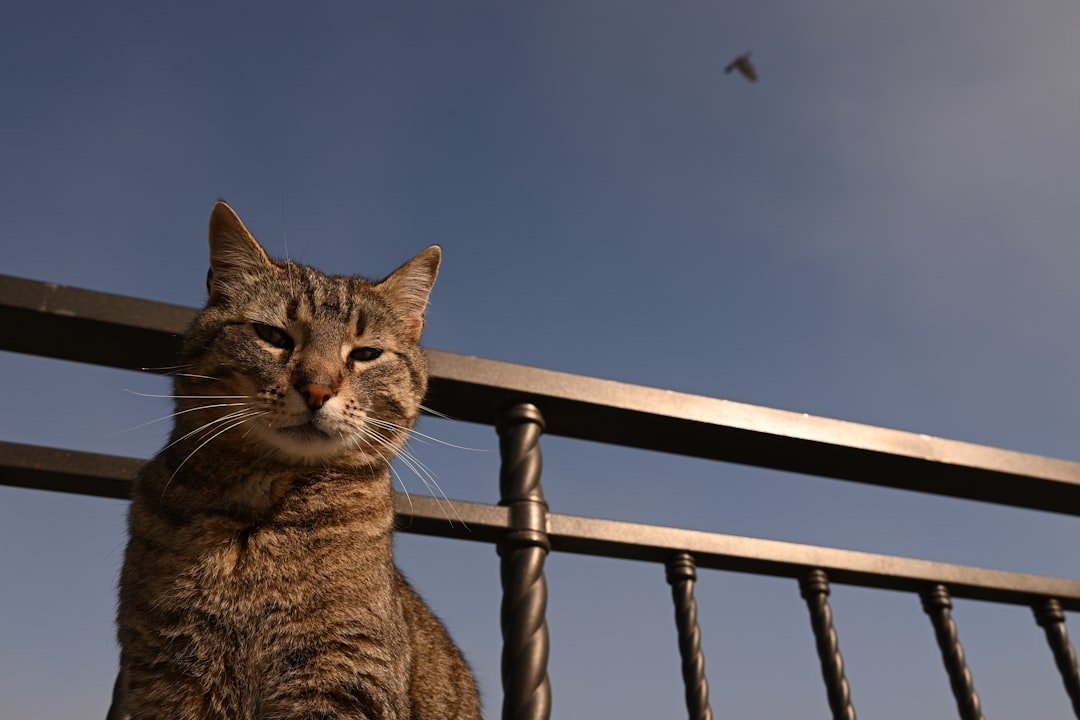
Start by letting your cat watch safely, then offer a short play session with a wand toy after the birds leave. Keep the window closed. If you are wondering, “why does my cat chatter at birds,” the usual answer is that your cat is intensely focused on prey they can see but cannot reach. Why does my cat chatter at birds while sitting perfectly still? It is commonly part of an instinctive hunting response, especially when birds, squirrels, or other quick small animals move outside a window.
This is common. Chattering can sound like rapid teeth clicking, little chirps, squeaks, or a fluttery jaw movement, and some cats do it silently with only their mouth and whiskers moving. A cat may stare, crouch low, twitch the tip of their tail, and make these sounds all within a few seconds. The behavior can look odd. In many cases, though, it means your cat is highly interested rather than upset.
Why does my cat chatter at birds?
Birds trigger several parts of a cat’s prey response at once: movement, small size, fluttering wings, high-pitched sounds, and an unpredictable path. Your cat’s brain is built to notice those cues quickly. Even a cat who has never been outdoors and has never caught prey may react strongly, because the underlying behavior does not depend on hunting experience alone.
Cat behavior researchers and veterinarians do not agree on one single reason for the jaw movement itself. That is normal. One idea is that chattering reflects excitement and frustration when prey is visible but unreachable, such as a pigeon on the other side of glass. Another possibility is that the movement is connected to the fast, precise bite cats use to catch small prey. Some people also suggest cats may be trying to imitate bird sounds, but that explanation is less certain and should not be treated as fact.
Think of chattering as a clue. Your cat has spotted something that has switched on their hunting attention, but a window, screen, or distance prevents the sequence from continuing. The sound does not mean your cat is being cruel, angry at the bird, or unhappy with you. It means they are keyed up.
What predatory instinct explained looks like at home
A cat’s hunting behavior often follows a loose sequence: notice, watch, stalk, chase, grab, bite, and eat. Indoor cats may stop at the watching stage because there is no real prey available. That is why a bird feeder can produce a very alert cat on the windowsill, followed by chattering, tail twitching, and a sudden burst of energy around the room.
Every cat shows this differently. One cat may chatter loudly at sparrows every morning, while another stays silent and only crouches or swishes their tail. Age, temperament, prior experience, and how stimulating the view is can all affect the response. A quiet cat can still be fully engaged.
| What you see | What it often means | Useful response |
|---|---|---|
| Chattering while staring at birds | Strong prey focus and excitement | Allow safe viewing, then offer play later |
| Crouching with wide eyes and a twitching tail | Stalking or chase readiness | Give space and avoid startling your cat |
| Zooming after window watching | Leftover hunting energy | Use a wand toy for a brief chase session |
| Hissing, swatting, or biting people nearby | Over-arousal or redirected behavior | Step back and reduce stimulation calmly |
The last row deserves attention. A cat who is very wound up may redirect that energy toward another cat, a dog, or a person who reaches in at the wrong moment. Do not scold or grab them. Instead, give your cat room, lower the blinds if needed, and wait until their body looks relaxed before interacting.
How to respond without making the moment worse
You do not need to stop normal chattering. It is a safe behavior when your cat is indoors and the viewing area is secure. What helps most is giving your cat an appropriate way to finish some of that hunting energy without using hands, feet, or another pet as the target.
- Let your cat watch for a minute or two if they are calm and the window is secure.
- Wait until the bird or squirrel has moved away, then bring out a wand toy with feathers or fabric at the end.
- Move the toy in short, uneven bursts along the floor, with pauses that let your cat stalk and pounce.
- Let your cat catch the toy occasionally. A hunt that never ends in a catch can be frustrating.
- Finish with a small portion of their regular food or a treat, then put the toy away.
Keep sessions brief. Five to ten active minutes can be enough for many adult cats, though kittens and high-energy cats may want more play spread across the day. Avoid shining laser pointers as the only outlet, since your cat cannot physically catch the light. If you use one at all, end by directing your cat toward a toy they can grab.
Windows can also become useful enrichment. A sturdy perch gives your cat a comfortable viewing spot, but check that it cannot tip and that screens are intact. Screens are not fall protection. If you live several floors up, keep windows closed or use properly fitted window guards designed for the opening.
Be thoughtful about outdoor wildlife too. A feeder placed very close to a window may create constant stimulation for a cat who cannot settle. Moving it farther away, closing the blind during the busiest bird hours, or choosing a different viewing window can reduce the intensity. Prices and product designs vary by region, so check the maker’s instructions before installing a perch, guard, or feeder.
When chattering may need a closer look
Bird-directed chattering by itself is usually not a reason for concern. A sudden change is different. Contact a veterinarian if the mouth movements are new and happen when no prey or exciting trigger is present, especially if you also notice drooling, pawing at the mouth, trouble eating, bad breath, facial swelling, or signs that your cat seems painful.
Watch the context. Teeth clicking can sometimes be confused with other mouth movements, and only a veterinary professional can assess possible dental or medical causes. Record a short video if you can do so without disturbing your cat. That can give the veterinarian a clearer picture than a description alone.
Also seek professional behavior guidance if window watching repeatedly leads to fights between household cats, attacks on people, or long periods when your cat cannot calm down. Separation and a quieter environment may help in the moment. A qualified veterinarian can help you decide what next step fits your cat.
Frequently asked questions
Is cat chattering at birds a sign my cat wants to hunt?
Usually, yes. It often appears when a cat is visually locked onto something that resembles prey, such as a bird, squirrel, insect, or even a moving toy. The urge is instinctive. It does not mean your cat needs to go outdoors to be happy.
Is chattering a sign of frustration?
It can be. A bird behind glass is exciting but unreachable, so many cats seem to show a mix of anticipation and frustration. Some cats chatter with no obvious stress signs at all. Look at the whole body, not the sound alone.
Should I open the window so my cat can get closer?
No. An open window can create a fall risk or allow a cat to escape, and a loose cat can harm wildlife or get hurt outdoors. Keep the barrier secure. A safe perch and supervised indoor play are better options.
Why does my cat chatter at birds but ignore toys?
Real birds move, sound, and change direction in ways toys cannot fully copy. Try moving a wand toy less predictably, dragging it behind furniture, pausing it, and allowing a catch. Keep your hands away. Some cats also prefer a particular toy texture or play time.
Can kittens learn chattering from older cats?
They may notice and copy parts of another cat’s behavior, but chattering also appears in cats who live alone. The basic prey response is already there. Individual habits develop over time.
Related posts
This post is for general informational purposes only and is not veterinary advice. Every cat is different — if you have concerns about your cat’s health or behavior, please consult a qualified veterinarian.