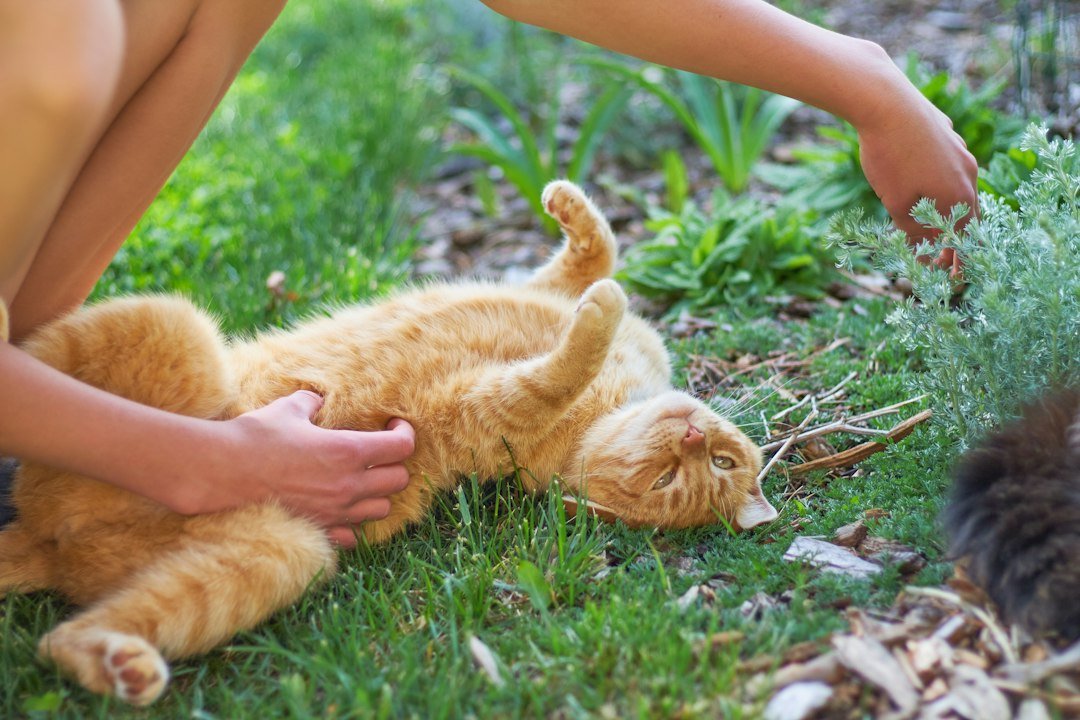
A common misconception is that cat overgrooming belly causes are always emotional, so a bald belly automatically means an anxious cat. That is not a safe assumption. Cat overgrooming belly causes can include stress, but itchy skin, fleas, allergies, pain, and urinary discomfort can all lead a cat to lick hair away from the abdomen. Start with a veterinary visit. It is the practical way to look for a physical trigger before focusing on behavior.
Cat overgrooming belly causes and what the pattern can mean
Cats groom to keep their coat clean and to settle themselves, so occasional belly licking is normal. The concern starts when grooming becomes frequent, intense, or focused enough to thin the coat, break hairs, leave bare skin, or create redness and sores. Watch the coat closely. Many cats remove hair by snapping it off with their tongue, so the area may look like short stubble rather than a completely smooth bald patch.
The belly is a common target because it is easy to reach and because discomfort in the skin or body can feel centered there. A cat may also lick the inner thighs, sides, lower back, or genital area. Location gives clues. It does not prove the cause, because stress-related grooming and physical discomfort can overlap in the same body areas.
A useful first question is whether the cat seems itchy, painful, or generally unwell in addition to grooming. Scratching, head shaking, ear debris, chewing at the feet, dandruff, scabs, vomiting, changes in litter box habits, or reduced appetite all give your veterinarian more to work with. Take notes. Small changes can matter when the skin itself looks fairly normal.
| Clue | Stress-related grooming may be more likely | Medical discomfort may be more likely |
|---|---|---|
| Timing | Starts after a move, schedule change, conflict, loud construction, or a new pet | Can begin without an obvious household change |
| Skin and coat | Hair may be evenly shortened with little visible irritation | Redness, scabs, dandruff, greasy coat, ear issues, or flea dirt may be present |
| Other behavior | Hiding, vigilance, conflict near resources, or grooming after a trigger | Scratching, scooting, frequent urination, appetite changes, limping, or sensitivity when touched |
| Response to routine changes | May ease when the home becomes calmer and more predictable | Usually continues unless the underlying discomfort is addressed |
This comparison is only a guide. Cats can have both stress and a medical problem at once, and some cats hide discomfort extremely well. Do not self-diagnose. A calm-looking cat can still have itchy skin or pain that needs attention.
Medical causes to rule out first
Fleas are a frequent reason for sudden licking and chewing, even when you never see a live flea. Some cats react strongly to flea bites, and a single bite can trigger intense itch in a sensitive cat. Check the coat. Tiny black specks near the tail base or in the fur may be flea dirt, though a veterinarian can help confirm what you are seeing and advise on safe parasite control for every pet in the home.
Environmental or food-related allergies can also cause itch that appears as overgrooming rather than obvious scratching. Cats may lick the belly, feet, or legs, and some develop ear trouble or small crusty bumps. The signs vary. Allergy testing and diet changes are not simple home experiments, especially because many over-the-counter products and abrupt diet switches can muddy the picture.
Skin infections, ringworm, mites, and other skin conditions can cause hair loss or itch as well. Ringworm can spread between animals and people, so circular patches, scaling, crusting, or hair loss in more than one household member should prompt a call to a veterinary clinic. Keep hands clean. Do not apply human antifungal creams, essential oils, or medicated shampoos unless the clinic specifically tells you to use them.
Pain can lead to licking too. Arthritis, a sore hip, abdominal discomfort, constipation, and dental pain may change grooming habits, although the exact target area does not always match the painful spot. Cats mask pain well. A cat that no longer jumps onto familiar furniture, walks stiffly, withdraws from touch, or becomes less social deserves an assessment even if the belly skin looks clear.
Urinary tract discomfort is especially relevant when a cat licks the lower belly or genital area and also visits the litter box repeatedly, strains, vocalizes, or produces very little urine. Treat that as urgent. A cat that cannot pass urine needs immediate veterinary care, and male cats are at particular risk of a dangerous blockage.
When stress is part of the problem
Stress grooming is real, and it is not a sign that a cat is being difficult or spiteful. Grooming can briefly soothe a tense cat, then become a repeated habit when the original trigger remains. It can become a loop. Common triggers include a new animal, visitor activity, conflict with another cat, moving furniture, loss of a companion, unpredictable handling, or outdoor cats visible through windows.
Indoor cats may also become stressed when basic resources are scarce or easy to guard. A single litter box in a busy hallway, food placed beside a washing machine, or one prized sleeping spot can create tension that people miss. Space matters. In multi-cat homes, each cat needs access to essentials without having to pass another cat that may block the route.
Stress is more plausible when the grooming began around a clear change and occurs after particular events, such as a noisy delivery, another cat entering the room, or a tense encounter at a window. Even then, book the veterinary appointment. A visible trigger does not rule out fleas, allergies, or pain.
What to do before and after the appointment
Do not punish, interrupt sharply, or repeatedly pull your cat away from grooming. That can add stress and may make the cat hide the behavior. Stay neutral. Instead, quietly redirect with a familiar activity if your cat is receptive, such as a short play session or a food puzzle.
- Photograph the area every few days. Use similar lighting and include the same general angle so you can tell whether the hair loss is spreading.
- Keep a simple seven-day log. Note grooming times, litter box output, appetite, vomiting, scratching, household events, and any products used on the cat.
- Check parasite prevention history. Tell the clinic when it was last given and whether all pets sharing the home are covered.
- Make resources easier to use. Provide separate resting spots, water stations, scratching surfaces, and litter boxes in calm locations. For litter boxes, a common starting point is one box per cat plus one extra.
- Build predictable play. Two brief daily sessions can help many cats release energy, particularly if play ends with a small portion of their regular food.
Here is a practical example. In a two-cat home, try three litter boxes placed in different rooms rather than lined up together, then give each cat at least one elevated resting place where it can leave a room without squeezing past the other cat. Keep it simple. This will not cure a medical issue, but it can lower everyday pressure while you investigate the grooming.
Ask the veterinarian whether photographs, a flea-comb sample, or a fresh stool sample would be useful. Bring the product names for flea treatments, shampoos, supplements, and foods. Details help. Avoid starting several new remedies at once, because it becomes harder to tell what changed and some products are unsafe for cats.
When belly overgrooming needs prompt care
Make a veterinary appointment soon if the fur loss is new, progressing, or recurring, especially if the skin is irritated. Sores can become infected. Contact a clinic promptly for bleeding, swelling, pus, widespread hair loss, marked lethargy, vomiting with weakness, refusal to eat, or clear pain when the belly is touched.
Urgent care is needed when a cat repeatedly strains in the litter box, cries while trying to urinate, passes only drops, or cannot urinate. Do not wait overnight. Those signs can become serious quickly, particularly in male cats.
Frequently asked questions
Can a cat lick its belly bald from stress alone?
Yes, stress can contribute to bald patches through repeated self-soothing grooming. But the appearance alone cannot confirm stress as the cause. Rule out physical discomfort first, because a stressed cat may also have fleas, allergies, or pain.
Why is my cat overgrooming but has no rash?
Many causes do not create an obvious rash, particularly early on. The tongue can break hair before the skin becomes visibly inflamed, and some cats groom in private. Look for subtle changes. Short broken hairs, increased shedding, or a larger patch over time are useful observations to share with the veterinarian.
Will a cone stop belly overgrooming?
A cone may temporarily protect damaged skin when a veterinarian recommends it, but it does not address why the cat is licking. Some cats also find cones stressful or struggle to eat and drink normally in them. Use one only with guidance, and check that your cat can move, rest, eat, and use the litter box safely.
Can I use a calming diffuser for overgrooming?
A feline pheromone diffuser may be one low-risk environmental support for some cats, particularly during household changes. Results differ between cats. It should sit alongside medical evaluation and practical changes such as better resource placement and a predictable routine, not replace them.
How long does belly fur take to grow back?
Hair regrowth varies with the cause, coat type, season, and whether the licking has fully stopped. It often takes weeks rather than days. Focus on the trigger. New hair can be slow to appear even after the skin is more comfortable.
Related posts
This post is for general informational purposes only and is not veterinary advice. Every cat is different — if you have concerns about your cat’s health or behavior, please consult a qualified veterinarian.