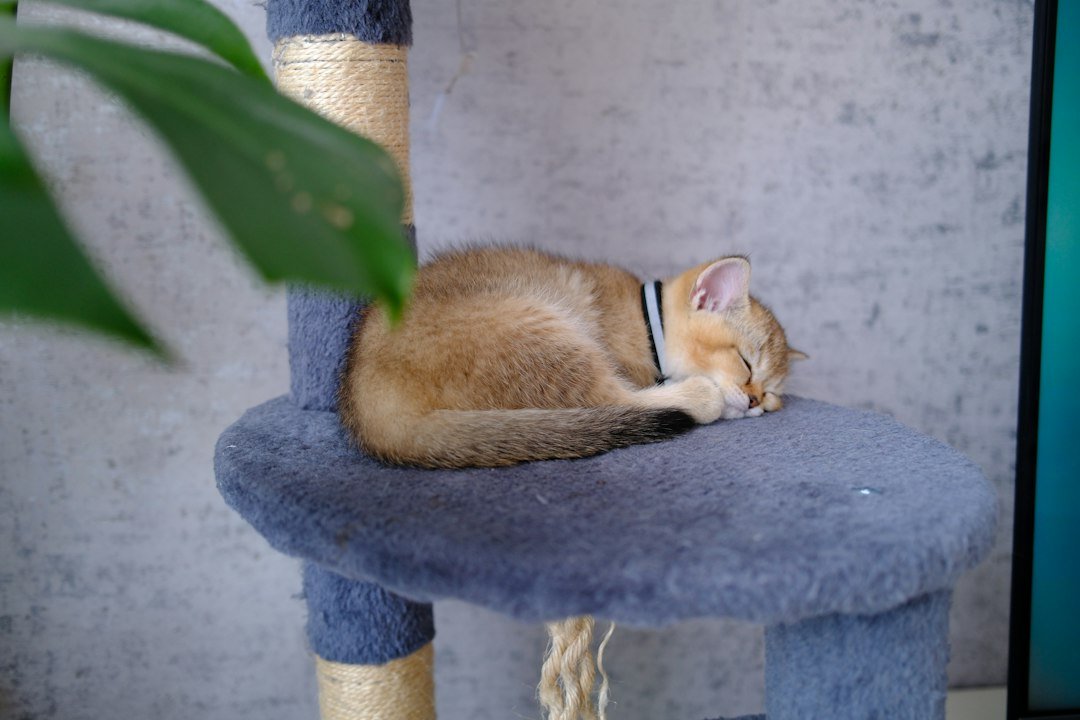
In the cat tree sisal rope vs carpet choice, sisal rope is the better pick for most homes because it takes repeated scratching better and gives cats a clear place to use their claws. Choose carpet instead only when your cat clearly prefers soft fabric, or when you are covering a perch rather than a scratching post. Sisal usually wins.
The main difference is how each material handles claw contact. A cat does not scratch only to sharpen claws. Scratching also stretches the shoulders and back, leaves a visual mark, and deposits scent from glands in the paws, so a well-used scratching area gets pulled, hooked, and raked in the same spots many times each day. That is hard wear. A cat tree needs to handle it.
Sisal rope has a rough, firm texture that many cats can grip without their claws sinking deeply into a loose backing. Carpet feels softer under the paw, but its loops or pile can snag, flatten, pull free, and eventually expose the backing beneath. Both can work. They do not age the same way.
Cat tree sisal rope vs carpet durability compared
If durability is the deciding factor, buy a cat tree with sisal-covered posts. Thick, tightly wound sisal rope generally lasts longer than carpet when a cat uses the post as a daily scratching target, especially when the rope is firmly attached and the post does not wobble. Stability matters. A shaking tower can make even good sisal wear faster because the rope shifts against the post.
Carpet can look tidy at first, particularly on a new cat tree with dense pile and a solid backing. Under regular clawing, though, cats often catch individual fibers and pull them into fuzzy tufts, while the surface gradually becomes thin and matted around the preferred scratch height. That damage is usually cosmetic first. Later, it can become a loose-fiber problem.
Sisal has its own wear pattern. The outer fibers fray, darken with use, and can form a rough fuzzy patch where your cat starts each scratch, but the material normally keeps enough texture to remain useful well after carpet would have flattened. Fraying is normal. Loose long strands are different.
| Factor | Sisal rope | Carpet |
|---|---|---|
| Daily scratching durability | Usually stronger, especially on vertical posts | Usually wears sooner at claw level |
| Texture for claws | Coarse and firm | Soft, with loop or pile snag risk |
| Repair | Often possible by rewrapping one post | Harder to patch neatly |
| Comfort on shelves | Less comfortable for resting | Warm, soft footing and lounging surface |
| Best use on a cat tree | Posts, ramps, scratching panels | Platforms, cubbies, and resting areas |
| Cleaning | Vacuum carefully and spot-clean lightly | Vacuuming is easy, but odors and stains can linger |
The comparison is not only about which surface survives longer. Cats often develop strong texture preferences, and a durable surface that a cat ignores does not protect the sofa, stairs, or rug. Preference comes first. The most useful cat tree has a scratchable material your cat actually returns to.
Why sisal rope is the usual recommendation
Sisal rope is made from plant fiber and is commonly wrapped around cat tree posts because its coarse surface gives claws resistance. Cats can pull downward against it, which suits the natural vertical scratch many cats make after waking, before eating, or when they enter a room. The grip feels deliberate. That feedback can make the post more appealing than a soft carpeted column.
It is also practical when the tree gets worn. A damaged sisal post can often be renewed by removing the old rope, checking that the underlying post is still solid, and wrapping new rope tightly with pet-safe attachment methods that remain fully covered after installation. Replacement rope costs less than replacing an entire tree in many cases, although prices vary by region. This is useful. It makes the worn part replaceable.
Look closely at rope thickness and how it is installed. Thin rope can work, but it may show wear faster and can leave more seams for claws to catch. Rope that is tightly wound in close rows gives a more even scratching surface, while rope with gaps, loose ends, visible staples, or exposed glue deserves caution. Check the base. A sturdy post should not twist when you press it firmly.
Natural sisal is often beige or tan, but color is not a quality test. The better clues are density, tight wrapping, post diameter, and whether the rope reaches the full area where your cat stretches. A short band near the bottom can be ignored by a large cat that wants to extend fully upward. Height matters. Most adult cats need room to lengthen their body.
A larger, heavier cat can put substantial force on a scratching post, especially during a full-body stretch with both front paws engaged. For that cat, a tall post attached to a broad, heavy base is generally more useful than a lightweight tower covered in thick rope, because a sturdy structure lets the cat scratch with confidence instead of stepping away when the unit moves. The material cannot fix instability.
Where carpet can be the better option
Carpet is not a bad cat tree material. It is simply less suitable as the primary high-use scratching surface for many cats. Carpeted platforms give paws traction when a cat jumps up or down, soften the floor of a cubby, and provide a warmer place to settle than bare wood or woven rope. For resting spots, carpet is often pleasant.
Some cats also prefer carpet because it resembles a household rug, stair runner, or upholstered surface they already target. If your cat consistently scratches carpet on the floor and walks away from every sisal post you offer, a carpet scratch panel may get more use in the short term. Follow the cat. You can still place sisal nearby and make it easy to test.
Carpet may also suit senior cats or cats with limited confidence on rough, uneven surfaces, although behavior and comfort needs vary widely between individuals. A low, stable carpeted scratcher can be easier to approach than a tall rope post for a cat that no longer wants to stretch upright. Keep it steady. Avoid assuming a change in scratching habits has one simple cause.
The downside is repair. When a carpeted section becomes badly snagged, you may need to remove a larger piece of covering to make the tree look and feel safe again, and matching the color or pile can be difficult. A small pulled loop can lead to more catches. Trim only truly loose fibers carefully, and do not leave long threads hanging where a cat may chew or swallow them.
Carpet also holds shed hair and can retain odors after accidents more readily than a hard post covering. Regular vacuuming helps, but deep cleaning has limits when the carpet is glued around wood, cardboard tube, or particleboard. Do not saturate it. Moisture can reach the structure and loosen adhesive.
Choose by your cat’s scratching style
Watch where and how your cat scratches before buying a new cat tree. A cat that reaches up a door frame, sofa arm, or tall scratching post is asking for a vertical surface. A cat that crouches over a rug and drags the claws backward may prefer a flat board or low ramp. Position is a clue.
For a vertical scratcher, sisal rope is usually the straightforward choice. It has the texture and durability most owners need, and it can be wrapped around a post wide enough for the cat to hug while scratching. For a horizontal scratcher, cardboard, woven sisal, or a carpeted board may be more relevant than a carpet-covered tree post. Match the format first.
Notice whether your cat scratches with quick light rakes or long, forceful pulls. A gentle scratcher may leave a carpeted post looking acceptable for a long time, while a powerful scratcher can wear through carpet surprisingly quickly. Use matters. Material labels alone cannot predict lifespan.
Location affects success too. Put the tree near the place your cat already scratches, beside a favored sleeping spot, or near a room entrance where the cat regularly pauses. Moving a scratching surface into an unused corner may make it less attractive, even if it is well made. Cats tend to scratch where it is socially and physically useful.
If you are replacing a scratched sofa arm with a cat tree, place the new post directly beside the sofa at first. Make the approved surface easy to reach, reward interest with calm praise or a favorite treat, and protect the furniture temporarily with a cover or suitable barrier. Do not punish scratching. Punishment can make a cat avoid you without explaining where scratching should happen instead.
What to look for before buying
Start with the structure, not the covering. A cat tree should stay planted when your cat jumps, climbs, or scratches at full stretch, because a top-heavy tree can become unsafe and a wobbling post may be rejected. Test it in the shop if possible. At home, press each platform and post before inviting your cat onto it.
- Measure your cat’s stretch. Watch your cat scratch a favorite surface, then choose a post that lets the front paws reach high without the body being cramped.
- Check the base. A broad, weighted base is helpful, especially for larger cats and tall trees.
- Inspect the sisal. Choose tightly wrapped rope with no hanging ends, exposed staples, or obvious gaps.
- Look at the resting surfaces. Carpet or plush fabric is useful on beds and platforms where comfort matters more than claw resistance.
- Plan for replacement. A tree with accessible posts is easier to repair than one where the scratching area is built into a complicated frame.
A useful everyday setup often combines both materials. Choose sisal on the vertical posts where claws do the most work, then choose carpet or plush covering on the platforms where the cat sleeps, watches birds, and lands after a jump. That arrangement uses each material where it makes sense. You do not need every part to be sisal.
Be cautious with cat trees that use thin carpet over cardboard tubes as the only scratching surface. They may be inexpensive and perfectly adequate for a light user, but they often show damage quickly when an active cat uses the same post every day. A lower upfront price can mean earlier replacement. Inspect the construction before deciding.
How long each material may last
There is no reliable single lifespan for a sisal or carpet cat tree because it depends on the number of cats, their size, their scratching habits, construction quality, and whether they have other scratchers available. One cat may barely touch a post. Another may make it a daily project.
In practical terms, carpet usually shows visible wear earlier on a dedicated scratching post. Sisal often remains functional after it looks rough, while carpet can become less useful once the pile is flattened or the backing is exposed. Appearance is not everything. Safety and stability are the real replacement tests.
Replace or repair the scratching section when rope comes loose in long strands, staples or tacks become exposed, the post spins, carpet backing is accessible, or the structure develops cracks and instability. Do not wait for a cat to investigate loose materials with its mouth. Chewed fibers can create a hazard.
Vacuum both surfaces regularly to remove hair and dust. For sisal, use a brush attachment gently so you do not pull out more fibers. For carpet, a vacuum can lift loose hair, but avoid aggressive brushing over snags because it may pull loops farther out. Let the surface dry fully after any light spot cleaning.
Can you replace worn sisal rope?
Yes, many simple posts can be rewrapped if the core post and base are still stable. Remove every loose piece of old rope, check for sharp fasteners or damaged wood, and use new rope that is secured so no adhesive, staples, or ends remain accessible to the cat. Take your time. A loose wrap will wear poorly.
Wrap in tight rows, pushing each new row against the previous one as you work upward. If you are not confident that you can create a secure finish, replacing the post or tree is the safer choice. A repair should leave no dangling rope. Check it again after several scratching sessions.
When carpeted posts make sense
A carpeted post makes sense when your cat has a strong, proven preference for carpet and ignores rough scratching materials despite sensible placement. It can also be useful as a secondary option in a multi-scratcher setup, especially if your home has carpet and your goal is to direct the cat toward an approved matching texture. Preference can outweigh material theory.
Choose dense, tightly attached carpet with no loose loops, and expect to inspect it more often than sisal. If the post is used heavily, consider keeping a sisal scratcher beside it rather than relying on carpet alone. The cat gets a choice. Your furniture gets more protection options.
FAQ
Is sisal rope safe for cats?
Sisal rope is commonly used on cat scratching posts, provided it is tightly secured and free of loose ends, exposed staples, or accessible glue. Inspect it regularly because any frayed material can become a concern if your cat chews or swallows fibers. Scratching is fine. Chewing deserves closer attention.
Do cats prefer sisal or carpet?
Many cats enjoy sisal because it is rough and resists their claws, but individual preference varies. A cat that has spent years scratching rugs may choose carpet first, while another may immediately use a sisal post. Offer the surface in the right position. The cat’s repeated choice is the useful answer.
Is carpet better for cat tree platforms?
Often, yes. Carpet is softer and gives paws traction on platforms, cubby floors, and ramps, where the main job is standing, landing, or resting rather than intense scratching. Keep the high-wear vertical posts covered with sisal if you want the tree to last longer. Separate jobs help.
What is better than sisal rope for a scratching post?
Some cats prefer woven sisal fabric, corrugated cardboard, or untreated wood textures. There is no universal best material, but sisal rope remains a practical choice for a vertical cat tree post because it is widely available, tough, and often repairable. Try another texture if your cat ignores it. Do not force one surface.
Should I buy a carpeted cat tree if my cat scratches the couch?
Usually, choose a stable sisal-post tree first and place it directly beside the couch arm your cat targets. Couch fabric and carpet do not always feel alike to a cat, and a vertical sisal post better matches the upright scratching motion many cats use on furniture. Add a carpeted option later if your cat clearly seeks that softer texture. Placement is part of the solution.
For the common household case, choose a sturdy cat tree with sisal rope on the posts and softer carpet or plush material only on the sleeping platforms. You get the longer-lasting scratch surface where wear is highest, while your cat still gets a comfortable place to climb and rest. That is the sensible balance. Check the tree regularly as it ages.
Related posts
This post is for general informational purposes only and is not veterinary advice. Every cat is different — if you have concerns about your cat’s health or behavior, please consult a qualified veterinarian.