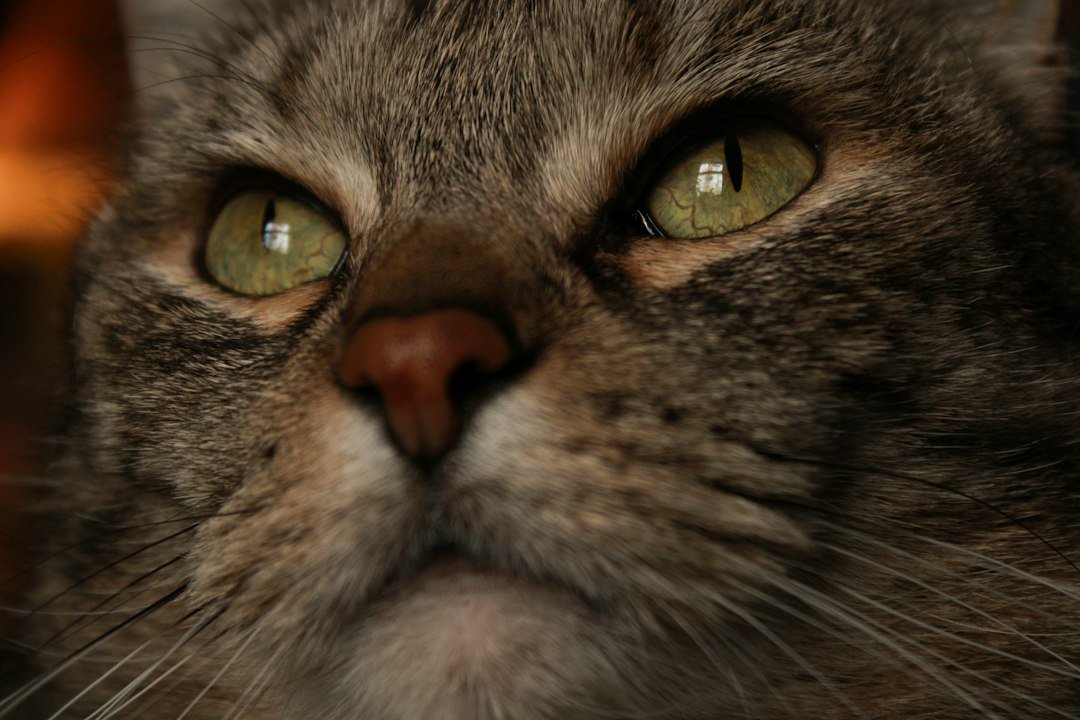
Cat eye discharge color meaning can give you a useful first clue, but it cannot identify the cause by itself. Clear, watery tears are often less urgent than thick yellow or green material, while blood, cloudiness, squinting, or a suddenly closed eye calls for prompt veterinary advice. Color is only one clue. Look at the amount of discharge, whether one or both eyes are involved, how your cat acts, and whether the eye itself looks painful or changed.
What cat eye discharge color meaning can tell you
A small amount of clear moisture in the inner corner of an eye can be normal, especially after sleep or exposure to dust. A cat may also have a little dark, dry crust that wipes away easily. Watch both eyes. Discharge that keeps returning, becomes heavy, or is paired with redness deserves a closer look, even if your cat is still eating and acting fairly normal.
Clear or watery discharge
Clear discharge often looks like tears and may leave the fur beneath the eye damp. It can happen with mild irritation, dust, wind, environmental allergens, or the early stage of an infection. Some cats simply tear more than others. If the eye is open, comfortable, and otherwise normal, you can gently monitor it for a day, but ongoing tearing or repeated episodes should be discussed with a veterinarian.
Brown or reddish-brown staining
Brown, rust-colored, or reddish staining on pale fur is often dried tear material rather than fresh blood. It may be more noticeable in cats with light faces, short noses, or facial folds that hold moisture. Check the skin. Constant wetness can irritate the skin below the eye, and a new increase in staining may occur when tears are not draining normally or the eye is being irritated.
White, gray, or mucus-like discharge
White or pale gray discharge can look sticky or stringy. It may appear when the surface of the eye is irritated, dry, inflamed, or affected by an infection. Do not guess the cause. Thick mucus, especially when it returns soon after cleaning, is a good reason to arrange a veterinary appointment because different eye problems can look similar at home.
Yellow or green discharge
Yellow or green discharge is more concerning, particularly when it is thick, sticky, or causes the eyelids to stick together. It can occur with infections or significant inflammation, but only an examination can determine what is going on. Call your vet. If your cat is squinting, rubbing the eye, hiding, or has a red or swollen eye alongside this discharge, seek same-day guidance.
Pink or red discharge
Pink or red discharge may mean fresh blood is present in the tears or on the eye surface. A tiny amount can sometimes follow a scratch around the eyelid, but it should never be ignored if you cannot clearly see a minor external source. Eye injuries can worsen quickly. Contact a veterinarian promptly, especially if there was a fight, a fall, rough play, or possible contact with a sharp object or chemical.
When to see a vet for eye discharge
Arrange a veterinary visit within a day or two for discharge that persists beyond 24 hours, keeps coming back, becomes thick, or affects one eye repeatedly. Cats are skilled at concealing discomfort. A cat who seems calm may still have a painful eye, and eye conditions can change faster than many skin or coat issues.
Seek urgent veterinary help the same day if you see a closed or tightly squinting eye, a cloudy blue, white, or gray appearance on the eye, a visible wound, marked swelling, unequal pupils, bleeding, or sudden vision-related behavior such as bumping into furniture. Do not wait overnight. These signs can be associated with problems that need prompt examination to protect comfort and vision.
- Yellow or green discharge with redness or swelling
- Discharge after an injury or suspected chemical exposure
- A cat pawing at the eye repeatedly
- An eye that looks cloudy, enlarged, sunken, or unusually protruding
- Lethargy, poor appetite, sneezing, or nasal discharge along with eye symptoms
- A kitten with sealed eyelids or heavy discharge
Kittens, senior cats, and cats with known health concerns deserve a lower threshold for calling the clinic. Small kittens can become unwell faster. If you are unsure whether the eye looks normal, a clear photo taken in good light can help you describe the change when you call, though it does not replace an exam.
How to check and clean the eye safely
Start by looking at your cat from a comfortable distance before touching the face. Notice whether both eyes are equally open, whether the whites look red, and whether the surface looks clear and shiny. Be gentle. For a cooperative cat with minor crusting, wash your hands, dampen a clean soft cloth or cotton pad with lukewarm water, and wipe once from the inner corner outward.
- Use a fresh damp pad for each eye.
- Hold the pad on dried crust briefly to soften it first.
- Wipe away from the eye without pressing on the eyeball.
- Stop if your cat resists strongly or appears painful.
- Note the color, amount, and time you first noticed it.
Do not use human eye drops, leftover pet medication, contact lens solution, peroxide, essential oils, or medicated creams around your cat’s eye unless a veterinarian specifically told you to use that product. Avoid home remedies. Even products that seem mild can sting, worsen irritation, or delay the correct treatment.
Why eye discharge happens
Eye discharge can have many causes, including a minor irritant, a scratch, eyelid or eyelash problems, blocked tear drainage, infection, inflammation, or illness affecting the upper respiratory tract. The color does not sort these causes neatly. For example, clear tears can occur with irritation but may also appear early in an infection, while yellow discharge may accompany several different problems.
One eye versus both eyes can offer another useful clue. Discharge in one eye may be more consistent with a local issue such as debris, trauma, or a tear drainage problem, whereas both eyes plus sneezing can occur with an upper respiratory illness. This is not a diagnosis. Your veterinarian may examine the eyelids, eye surface, tear production, and surrounding structures to work out what care is appropriate.
What to monitor before the appointment
Keep a simple note of when the discharge began, its color and texture, whether it is one-sided, and any changes in appetite, energy, sneezing, or hiding. Photos taken several hours apart can show whether swelling or discharge is increasing. Details help. Also mention recent boarding, a new cat in the home, outdoor access, a fight, grooming products, dusty litter, or anything else that may have affected the eyes.
Keep your cat indoors and away from other cats if eye discharge comes with sneezing or nasal discharge until you have spoken with a veterinarian, since some respiratory illnesses can spread between cats. Wash your hands after cleaning the face. Do not share cloths, bowls, or bedding between cats when one cat is unwell.
Reducing everyday eye irritation
You cannot prevent every eye problem, but a clean environment helps reduce avoidable irritation. Use low-dust litter if your cat seems sensitive, avoid scented sprays near the cat’s sleeping area, and trim sharp nails in multi-cat homes when safe to do so. Keep routines simple. Regularly check the face during grooming, because early changes are easier to describe and act on than a problem noticed after several days.
In short, cat eye discharge color meaning is most useful when you consider it alongside pain, redness, behavior, and changes to the eye itself. Clear discharge may be watched briefly when the eye looks comfortable, but thick colored discharge, blood, cloudiness, or squinting should move veterinary care higher on the list. Trust visible changes. Eyes are delicate, and prompt attention is usually the safer choice when something looks wrong.
Related posts
This post is for general informational purposes only and is not veterinary advice. Every cat is different — if you have concerns about your cat’s health or behavior, please consult a qualified veterinarian.