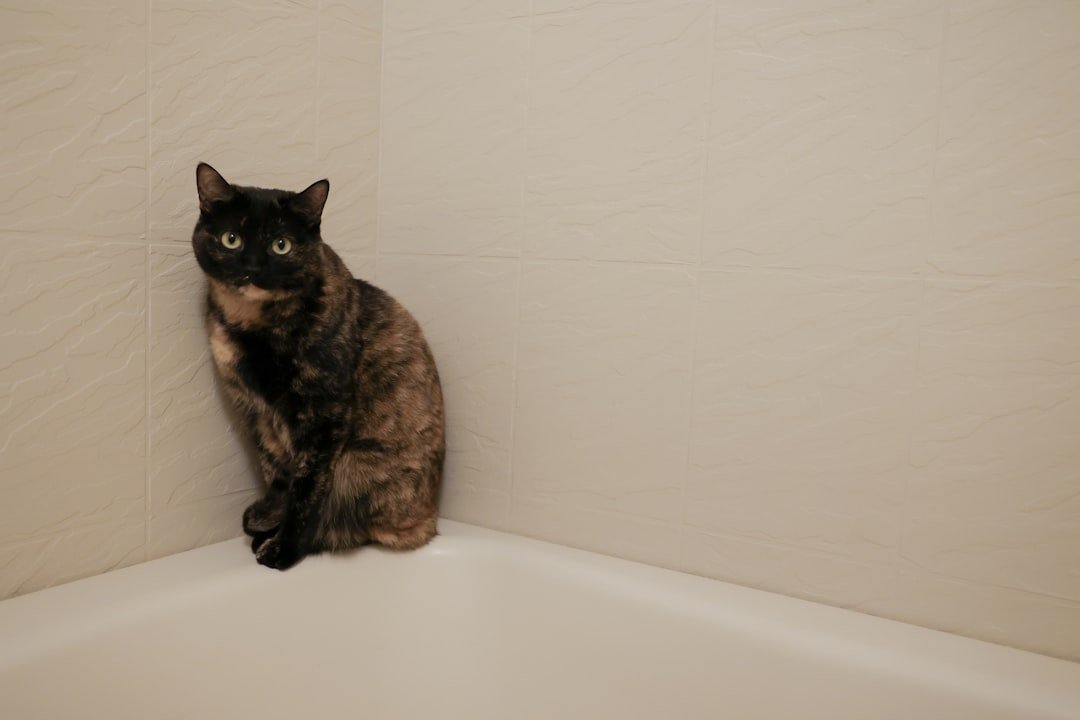
A common misconception is that a cat who follows you into the bathroom is being clingy or trying to control you. Usually, the answer to why does my cat follow me to the bathroom is much simpler: your cat likes your company, knows your routine, and finds the small room interesting. Bathrooms are predictable. Your cat may also have learned that you are likely to sit still there, which makes this a reliable chance for attention, a lap, or a quiet chat.
For many cats, following their person is normal social behavior. Cats have a reputation for independence, but plenty form close attachments and choose to stay near the people they trust. A closed door can make an ordinary room suddenly fascinating. Your cat may hear water, smell unfamiliar scents, notice moving towels, or simply dislike being excluded from a part of the home.
Why does my cat follow me to the bathroom so often?
The bathroom has several things cats tend to enjoy. It is often cooler than other rooms because of tile floors, and many cats like a cool place to stretch out. It is also usually quiet. When the household is busy, the bathroom may be one of the few places where your cat can have your full attention without another person, pet, screen, or meal competing for it.
Your routine matters a lot. Cats notice patterns quickly. If you visit the bathroom at similar times each day, your cat may have added that trip to its own schedule, especially if you have spoken, petted it, or let it investigate while you are there. Small habits stick. Even a few seconds of attention can reward the behavior enough that your cat repeats it tomorrow.
Some cats are drawn to bathroom objects. Dripping taps, running water, shower curtains, toilet paper, bath mats, and cabinets all offer smells, sounds, textures, or movement. A cat that paws at the sink may be curious about water rather than thirsty, although fresh water should always be available elsewhere in the home. Keep it safe. Toilet lids should stay closed, cleaning products should be stored securely, and medications should never be left on counters.
There is also the closed-door issue. Cats often want access to spaces that are suddenly unavailable. This does not always mean they desperately need you. The barrier itself can prompt curiosity or frustration, especially in a cat that normally has free run of the home. If your cat waits outside, gives one brief meow, then wanders off, that is usually different from persistent distress.
What normal bathroom following looks like
Normal following tends to look relaxed and flexible. Your cat walks in with you, settles on the bath mat, rubs against your leg, or watches you for a moment. Then it can leave or rest calmly when you are unavailable. Body language is useful. Loose posture, normal eating, normal litter box habits, and an ability to settle alone are reassuring signs.
Age and personality make a difference. A confident adult cat may follow because it enjoys company, while a kitten may be more curious and socially dependent as it learns the home. Senior cats sometimes seek familiar people more often too. That can be ordinary. A sudden change, however, deserves closer attention because changes in behavior can sometimes accompany stress, discomfort, or age-related changes.
| More likely ordinary following | More concerning pattern |
|---|---|
| Walks in calmly and settles nearby | Panics, scratches doors, or vocalizes for long periods when shut out |
| Can nap, play, or eat without you nearby | Stops usual activities whenever you leave the room |
| Behavior has been stable for a long time | Behavior begins suddenly or becomes much more intense |
| Uses the litter box and eats normally | Has litter box changes, appetite changes, or repeated vomiting |
| Seeks contact but settles after a short time | Cannot settle when alone and damages items or eliminates outside the box |
No single behavior confirms a problem. The pattern matters. A cat who enjoys trailing you around the house but is otherwise calm may simply be social, while a cat that becomes distressed whenever it loses access to you needs a more careful look.
Separation anxiety signs in cats
Separation anxiety signs are usually most noticeable when a cat is left alone or separated from a preferred person, not only during bathroom trips. Possible signs include prolonged yowling after you leave, destructive scratching near doors, repeated attempts to escape, overgrooming, hiding, appetite changes, or urinating outside the litter box. These signs can also have other causes. That is why a veterinarian should help rule out medical issues before you assume anxiety is the explanation.
Look for timing. If your cat only cries when you close the bathroom door but quickly settles after you come out, it may be protesting a temporary barrier. If your cat becomes upset before you leave for work, stays distressed for extended periods, or changes its behavior after a move, schedule change, new pet, or loss of a household member, separation-related stress becomes more plausible. Keep notes. A simple record of what happens, when it starts, and how long it lasts can help you describe the pattern clearly.
A camera can be useful if you are concerned about behavior while you are out. Check whether your cat settles after a few minutes, sleeps, eats, uses the litter box, or spends most of the time pacing and vocalizing. Do not use a camera to punish behavior remotely. It is only there to give you a clearer picture of your cat’s day.
Call a veterinarian promptly if following behavior appears alongside signs of illness, such as straining in the litter box, frequent trips to the box with little output, trouble breathing, weakness, severe lethargy, or a refusal to eat. Those signs are not a behavior-training issue. Sudden clinginess combined with confusion, crying, pain responses, or changes in mobility also warrants a veterinary conversation.
How to respond without making your cat more worried
If you do not mind the company, there is no need to stop a calm cat from joining you. Let it sit on a washable mat or provide a small bed just outside the door. Keep the room cat-safe. Avoid leaving dental floss, hair ties, razors, cosmetics, or cleaning chemicals within reach, since many ordinary bathroom items can be dangerous if chewed or swallowed.
If you want more privacy, practice short and boring separations instead of suddenly shutting your cat out for long periods. Start by giving your cat something pleasant outside the bathroom, such as a small portion of its regular food in a puzzle feeder or a few treats scattered on a snuffle mat. Then close the door for ten to twenty seconds. Open it before your cat becomes upset. Calm repetition helps.
- Choose a time when your cat is relaxed, not hungry or highly playful.
- Set up a comfortable spot outside the bathroom with a bed, toy, or food puzzle.
- Step inside and close the door briefly.
- Return quietly before vocalizing or scratching starts when possible.
- Increase the time slowly over several days only if your cat stays calm.
Do not punish meowing, scratching, or door-pawing. Yelling, spraying water, or banging on the door can make the bathroom and your absence feel more stressful. Keep your response neutral. If your cat is already upset, make the next practice step easier rather than trying to wait it out.
Give your cat other predictable ways to connect with you during the day. A short interactive play session before work or before bed can help meet social and hunting needs, especially for indoor cats. End play with a small meal or portion of normal food. That sequence often fits a cat’s natural rhythm of stalk, chase, eat, and rest.
Environmental variety can reduce boredom that gets mistaken for clinginess. Rotate a few toys rather than leaving every toy out all the time. Offer a scratching surface near a window, a stable perch, and places to hide or rest at different heights if your space allows. Keep changes manageable. Some cats need time to trust a new bed, puzzle feeder, or perch.
When bathroom following needs extra help
Contact your veterinarian if the behavior is new, escalating, or paired with physical changes. Bring notes about your cat’s daily routine, food intake, litter box use, household changes, and what happens during separations. A veterinarian can check for health concerns and discuss appropriate next steps. If anxiety appears likely, they may suggest environmental changes or refer you to a qualified feline behavior professional.
Most of the time, a cat at your bathroom door is asking for access, company, or a little entertainment. It is a small social ritual. Why does my cat follow me to the bathroom? Often because you are their favorite moving part of a familiar routine, and the room happens to have a closed door, cool floor, and a captive audience.
Related posts
This post is for general informational purposes only and is not veterinary advice. Every cat is different — if you have concerns about your cat’s health or behavior, please consult a qualified veterinarian.