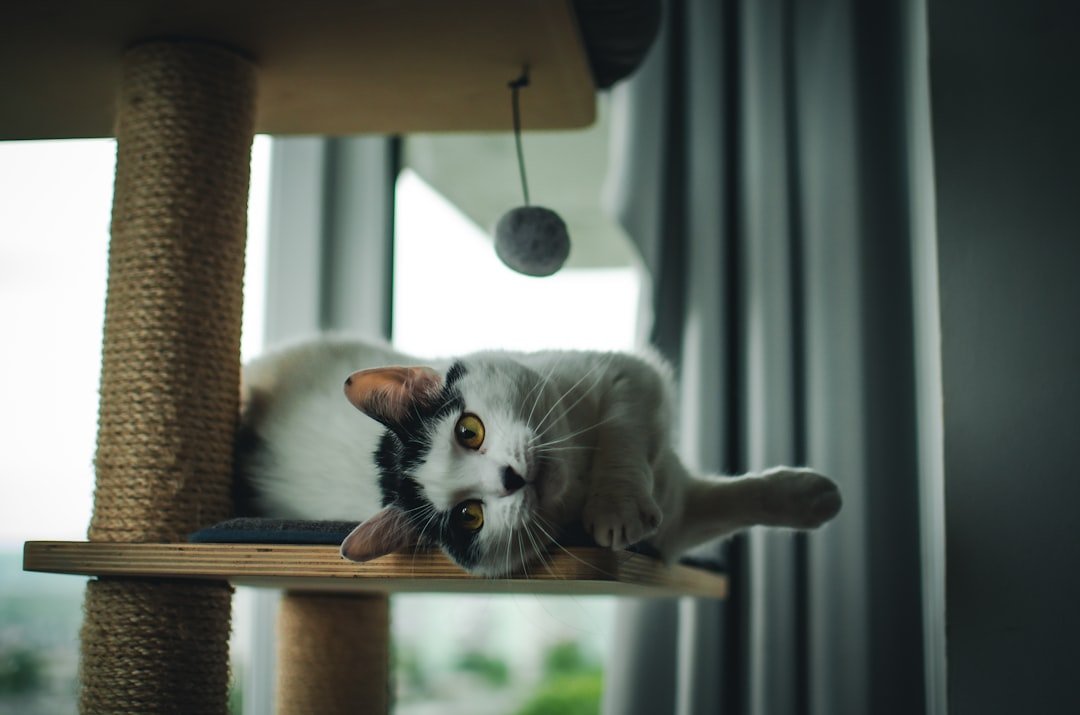
Measure the intended footprint first. For cat tree vs cat condo for small apartments, a tall, open cat tree is the better choice for most households because it gives a cat usable vertical territory while claiming less floor area than a wide, boxy condo. Pick a stable tree that fits beside a wall or window, then check that doors, drawers, and walking paths still clear it comfortably. Height matters more than bulk.
A cat tree usually wins. Cats often like getting above floor level, where they can watch a room, rest away from foot traffic, and feel less exposed in a compact home. A slim tree with two platforms and a scratch post can meet those needs without turning the apartment into an obstacle course. The best option still depends on your cat.
Cat tree vs cat condo for small apartments
The basic difference is simple. A cat tree is built around vertical climbing, perches, and scratching posts, while a cat condo puts more emphasis on enclosed cubbies and sheltered beds. Many products combine both, but one design usually dominates. Look at the structure, not the label.
For a typical healthy adult cat in a small apartment, choose a cat tree with a narrow base, a sturdy scratching section, and at least one perch high enough to give a view of the room. This arrangement uses vertical space that would otherwise sit empty, and it often makes a smaller home feel more usable to the cat without requiring a large furniture footprint. Open perches are easy to inspect.
A cat condo wins when privacy is the main need. Some cats sleep deeply only in covered spaces, dislike busy rooms, or prefer to hide during visitors, vacuuming, or household activity. A low condo can also make more sense for a senior cat, a cat with limited mobility, or a cat who has little interest in climbing. Keep access easy.
Compare the footprint before the height
Apartment shoppers often focus on the listed height, then discover that the base is what blocks the room. Measure the widest part of the base, including any lower ramp or side scratching panel, and mark that area on the floor with painter’s tape. Walk around it normally. This quick test catches many bad purchases.
A narrow cat tree often has a base around the size of a small side table, while a condo with two or three cubbies may spread outward to stay stable and fit its enclosed compartments. Exact dimensions differ widely by model, so use the manufacturer measurement diagram rather than a product photo. Photos hide depth.
| Factor | Cat tree | Cat condo |
|---|---|---|
| Best use of small space | Usually better because it builds upward | Better only if it has a compact, low base |
| Floor footprint | Often narrow, but check the stabilizing base | Often wider because cubbies need room |
| Climbing and lookout spots | Usually strong | Often limited unless it includes upper platforms |
| Private sleeping space | May have one small cubby | Usually strong |
| Scratching value | Often includes a tall scratching post | May need a separate scratcher |
| Typical budget fit | Good at lower and middle price ranges | Can cost more when heavily padded or enclosed |
| Best for | Cats who climb, perch, and watch | Cats who hide, nest, or need low access |
Leave clearance around the furniture as well. A cat needs a clear jump path to a tree, especially if the top perch is high, and you need enough room to vacuum, retrieve toys, and avoid catching a hip on the base every morning. Tight placement causes frustration.
Wall placement usually works best. Put the tree near a window only if the window is secure and the cat cannot push through a loose screen; the view can make an ordinary perch much more appealing. Avoid placing a tall tree directly beside a tall bookcase or shelf where a cat might attempt an unsafe jump. Keep routes predictable.
Cost considerations that matter
Budget matters, but the cheapest option is not always the smaller one. A very light cat tree can wobble, wear out quickly, or become unused if your cat feels unstable on it, while a bulky condo can cost more simply because it uses more fabric, padding, and enclosed panels. Stability comes first.
For a modest apartment setup, it is often more sensible to buy one solid medium-height cat tree and add an inexpensive cardboard scratcher or simple covered bed later if needed. That gives your cat climbing, scratching, and resting options without paying for a large all-in-one unit that may not fit your space or your cat’s habits. Start with the core need.
Prices vary by region. Entry-level trees and condos are commonly less expensive but may use thinner particleboard, lighter posts, or fabric that sheds and frays faster, while larger and sturdier units can cost substantially more. Check current dimensions, weight limits, replacement-part availability, and return terms on the official retailer or manufacturer listing before buying. A sale does not fix poor sizing.
Consider the cost per useful feature. A condo with three tiny cubbies may look generous, yet an adult cat may only fit comfortably in one of them, and the other compartments can become dead space. A tree with a large top perch, a full-height sisal post, and one roomy bed may give more daily value in a studio or one-bedroom apartment. Bigger is not automatically better.
Choose for your cat’s normal habits
Watch where your cat already spends time. If they sit on the back of the sofa, climb shelving, or seek the highest safe place in the room, a tree is the clear match. Give them an approved high spot. You are more likely to see use when the new furniture follows an existing habit instead of trying to create a completely different one.
If your cat spends afternoons under the bed, inside a closet, or tucked behind cushions, a condo may feel more natural. An enclosed cubby can give a shy cat a retreat that is easier for you to clean around than an inaccessible hiding place. Do not force them inside. Let the cat inspect it at their own pace.
Size affects the decision too. Check the dimensions of every bed, cubby opening, and platform against your cat’s actual body length and sleeping style, especially for larger cats. A cat should be able to turn around comfortably in an enclosed compartment and lie without limbs hanging over a narrow perch. Small cubbies are common.
Age and mobility can change the answer. A young, agile cat may enjoy a tall tree with staggered platforms, but an older cat may need lower steps, broad landings, or a low condo with an easy entrance. Watch how your cat currently jumps. Hesitation is useful information.
How to pick the right model
Use this short process before ordering. It takes a few minutes and prevents the most common mismatch between attractive product photos and real apartment space.
- Measure the open floor area where the furniture will sit, then subtract space needed for doors, cabinets, and normal walking.
- Measure your cat while stretched out and compare that length with perch and cubby dimensions.
- Choose the primary need: climbing and viewing points to a tree, while hiding and low resting points to a condo.
- Check the listed product weight, base size, and suggested cat weight, then avoid models that look too light for your cat.
- Place it near an area your cat already uses, rather than in an isolated corner with no view or activity.
For example, if you have a 30-inch by 24-inch clear area beside a window, do not buy a unit with a 28-inch by 24-inch base just because it technically fits. You still need space to reach the window and pass by safely. A 20-inch by 20-inch base gives the room more breathing space. Measure in three dimensions.
Set it up so your cat uses it
A well-chosen tree can still be ignored if it is placed poorly. Put it where your cat already relaxes or watches activity, then make sure it does not wobble on carpet, uneven flooring, or a loose rug. Secure any anti-tip strap according to the product instructions when one is included. Wobble discourages climbing.
You can place a familiar blanket on a bed platform or toss a few treats onto lower levels for the first day or two. Avoid repeatedly lifting a reluctant cat onto the highest perch, because that can make the new item feel uncomfortable rather than inviting. Let curiosity do the work.
If you choose a condo, keep the first cubby opening facing an open part of the room rather than a blank wall. Cats often want cover, but they also want to see who approaches. A covered bed with a view is usually more useful than a dark box wedged into a forgotten corner. Placement changes everything.
When a cat condo is the better buy
Choose a cat condo instead of a tree if your cat consistently seeks enclosed naps, has trouble with high jumps, or needs a quiet retreat in a busy home. It can also be the better option when your available location is low and wide, such as under a window ledge or beside a short cabinet, where a tall tree would crowd the room visually. Low furniture can be practical.
A condo is also useful when you already have vertical options. If your cat has safe shelves, a window hammock, or a sturdy sofa back that they use regularly, adding another tall climbing structure may be less valuable than giving them a covered resting place. Think about the gap in your current setup. Do not duplicate what works.
FAQ
Is a cat tree too big for a studio apartment?
Not necessarily. A medium-height tree with a narrow, stable base can fit a studio better than a broad condo because it uses wall height instead of open floor space. Check the base depth first. Keep it out of the main path between the bed, kitchen, and bathroom.
Should I get a cat tree or condo for one cat?
For one average adult cat, get a cat tree unless your cat clearly prefers enclosed hiding places or cannot comfortably climb. One cat still benefits from a high perch and a dedicated scratching surface. Single cats use vertical space too.
Do cats actually use enclosed condos?
Many do, especially for naps or when the home feels noisy, but preferences differ. Some cats ignore cubbies and sleep on top of the furniture instead. A condo with an open top perch gives you a safer fallback if your cat decides the enclosed section is not appealing. Give it time.
How tall should a cat tree be in a small apartment?
Choose a height your cat can reach safely and that your ceiling and room layout can accommodate. A medium-height tree is often easier to stabilize and place than a very tall tower, while still giving a cat a useful lookout point. A secure base matters more than maximum height.
Can two cats share one cat tree?
They can, if the platforms are large, the base is stable, and the cats already tolerate sharing resting spots. In a small apartment, two cats may still need separate scratchers or beds so one cat cannot block the other from every desirable place. Add resources when tension appears.
For most small apartments, buy the compact cat tree first. Choose a condo instead when your cat’s behavior, mobility, or existing climbing options make private low-level rest the more useful need. The right furniture is the one your cat can use comfortably every day. Measure before you click buy.
Related posts
This post is for general informational purposes only and is not veterinary advice. Every cat is different — if you have concerns about your cat’s health or behavior, please consult a qualified veterinarian.