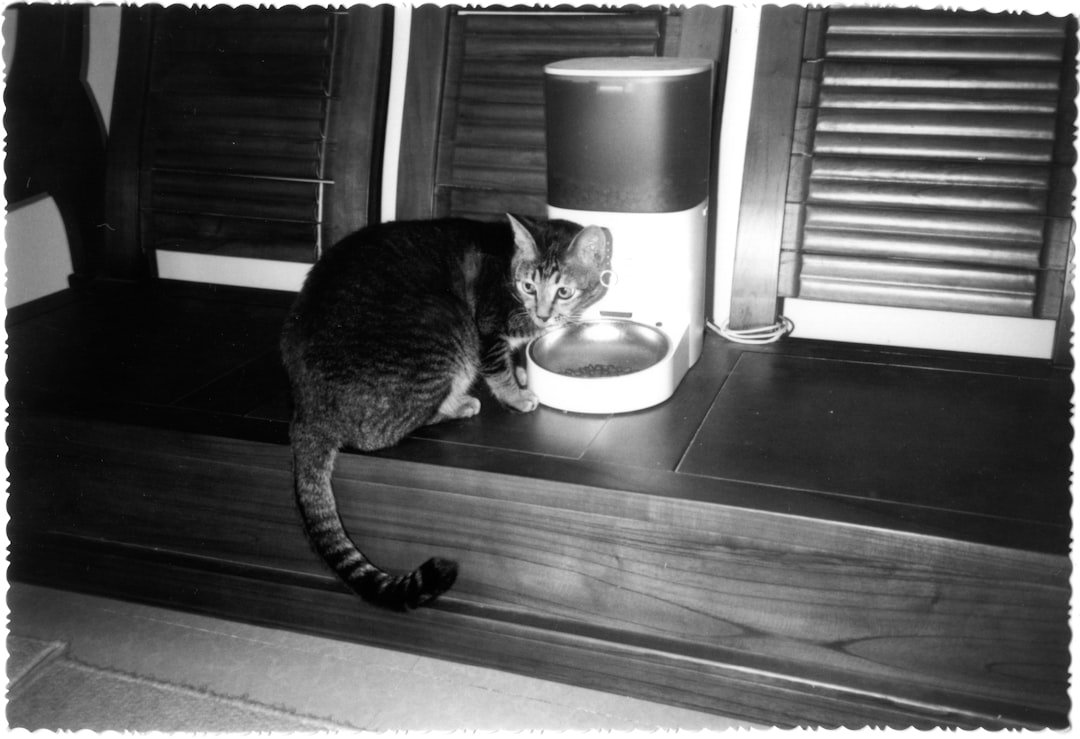
For cats, choose manual feeding over an automatic feeder this week: measure each meal and feed it at the same two times every day. In the automatic feeder vs manual feeding for cats decision, manual meals are the better default for most healthy adult cats because you see what your cat eats, notice skipped meals quickly, and can adjust portions without relying on a machine.
That does not mean automatic feeders are a bad buy. They can make a real difference when your work hours change, you leave home before dawn, or your cat wakes you for breakfast long before you need to get up. The best choice depends less on which product looks convenient and more on whether your schedule still lets you watch your cat eat and handle the food safely.
Automatic feeder vs manual feeding for cats at a glance
| Factor | Manual feeding | Automatic feeder |
|---|---|---|
| Best for | Owners home for regular meals | Owners with inconsistent timing |
| Food monitoring | Easy to see appetite changes | Needs daily checking |
| Portion control | Depends on accurate measuring | Useful if portions are calibrated |
| Wet food | Usually the simpler option | Limited by food safety and cleaning |
| Early-morning begging | May interrupt your sleep | Can separate breakfast from you |
| Equipment risk | No battery or jam concerns | Needs cleaning, testing, and backup power |
Why manual feeding is the best default
Manual feeding gives you a small daily health check without making it feel like one. You notice whether your cat comes eagerly, eats slowly, leaves food behind, drinks unusually much, or seems uncomfortable around the bowl. Those details matter. A feeder may dispense food right on time while a change in appetite goes unnoticed for hours.
It also keeps portions straightforward. Read the feeding guide on the food package as a starting point, then divide the daily amount into your chosen meals and use a measuring cup or kitchen scale consistently. Small changes add up. If a dry food serving is 1/4 cup, guessing an extra spoonful at every meal can turn into a meaningful increase over a week.
Most adult cats do well with a predictable meal routine. Two measured meals, often morning and evening, are practical for many homes. The exact timing can vary, but a routine helps cats anticipate food without spending all day checking an empty bowl.
Manual meals are also usually easier for wet food. You can put down a fresh portion, remove leftovers after a reasonable period, wash the dish, and avoid leaving moist food out for long stretches. Wet food feeders exist, but they need careful cleaning and may use ice packs or chilled compartments that only keep food cool for a limited time.
There is a relationship benefit too, although every cat is different. Food can be a calm, predictable interaction, especially for a shy cat or a cat that enjoys a brief greeting before eating. Do not turn meals into a performance. Just being present lets you see whether the routine is working.
When an automatic feeder is the better choice
Choose an automatic feeder if your schedule makes reliable manual meal times genuinely hard. This is common for people with rotating shifts, long commutes, or early work starts. A feeder can provide a measured dry-food meal at the same time even when your arrival home moves around.
It can also help with cats that connect one person with breakfast and start pestering them before sunrise. When food arrives from the feeder instead, some cats stop treating the bedroom door as the breakfast button. A cat may still wake you at first because the old habit has been rewarding.
An automatic feeder is useful for portion control only after you test it. Many models dispense by volume, and kibble size and shape affect what comes out. Run ten portions into a bowl, measure or weigh the total, divide by ten, and compare that amount with the portion you intended to feed.
For example, if the feeder is set to dispense 20 grams but repeatedly gives 24 grams, that four-gram difference may be small at one meal but becomes 28 grams across a week of one daily feeder meal. Adjust the setting or choose a feeder with finer portion control. Check it again when you switch foods. Different kibble can flow differently through the same machine.
A feeder should support your routine, not replace daily care. Look at the bowl and hopper every day, confirm food is dispensing, and keep a backup plan for a power cut, dead batteries, or a jam. A simple covered container with a pre-measured emergency portion can prevent a stressful scramble when equipment does not work as expected.
Match the feeding method to your actual schedule
Manual feeding is the clearest recommendation for households that are home at roughly similar times most days. Set two meal windows that fit real life, such as before work and after dinner, rather than choosing an ideal schedule you will abandon after a busy week.
Being home for one meal but not the other often makes a mixed routine the best fit. Feed one meal yourself and program one measured dry-food meal in the feeder. This preserves regular contact with your cat’s appetite and behavior while the feeder handles the least convenient part of the day.
Irregular shift work can make an automatic feeder the more dependable choice. Program the meal times around your cat’s needs rather than your sleep pattern, then make a point of checking food intake when you are home. Your cat does not need a different meal schedule every time your shift changes.
Traveling overnight does not mean a full hopper makes care unnecessary. A feeder can be helpful, but a responsible person should still check on your cat, refresh water, scoop the litter tray, and make sure the device has worked. Daily visits are a sensible minimum for many cats. Some cats need more direct care because of age, medication, diet, or temperament.
Food type changes the answer
Dry food is the easiest fit for a standard automatic feeder. It stores well in the hopper for a limited period, moves through the dispensing mechanism, and is less messy than moist food. Keep the lid closed. Moisture can make kibble stale or cause it to clump in some feeders.
Wet food usually favors manual feeding. It should not sit at room temperature for long, and an uncovered wet-food tray can dry out even before it becomes unsuitable to serve. If your cat prefers wet meals, feeding them yourself is often simpler than building your routine around a specialized feeder.
Some cats eat a mix of wet and dry food. In that case, use manual feeding for wet meals and reserve the automatic feeder for a small dry meal if it solves a timing problem. Treats, dry food, and wet food all belong in the same daily food plan.
Cats on a veterinary-prescribed diet need extra care with any feeder setup. A device cannot tell which cat ate the meal in a multi-cat home, and it cannot confirm that the right amount was consumed. Ask your veterinarian about the safest routine for your cat’s specific diet. This is especially useful when food intake needs close attention.
Check the feeder before trusting it
Do not fill a new feeder, leave for work, and assume it will behave. Test it at home for several days. Watch each scheduled meal. Listen for unusual motor sounds, check whether the lid stays secure, and make sure your cat cannot tip the unit or reach food through the chute.
- Place the feeder on a stable, dry floor away from the water bowl.
- Use fresh batteries if the model has battery backup.
- Program one small test meal and watch it dispense.
- Measure the dispensed amount over several cycles.
- Clean food-contact parts as directed by the manufacturer.
- Check the hopper and bowl daily once you begin using it.
Do not overfill the hopper for weeks at a time. Freshness matters. Refill it in amounts you can use reasonably soon, and wash removable parts before oils and crumbs build up. A dirty feeder can smell off to a cat. It can also become less reliable.
Watch for problems that a schedule cannot solve
Neither feeding method is a substitute for noticing a change in your cat. Contact a veterinarian promptly if your cat refuses food, has a sudden major appetite change, repeatedly vomits, seems weak, or shows other worrying changes in behavior. Do not wait on the feeder. Cats can become unwell quickly when they stop eating.
Food guarding and rushing meals are separate issues too. An automatic feeder may reduce competition if it allows meals in separate areas, but one shared feeder rarely solves tension between cats. In some homes, cats need separate bowls, meals behind closed doors, or supervised feeding so each cat can eat its own portion.
For a cat that eats too fast, consider a slow-feeding bowl or feeder insert that is safe for the food type. Introduce it gradually. The goal is to make eating calmer, not frustrating enough that your cat gives up or paws food all over the floor.
FAQ
Is an automatic feeder good for cats?
An automatic feeder can be good for a healthy adult cat when it provides a measured dry-food meal on a reliable schedule and you still check the cat and the machine every day. It is a tool. It is less suitable when your cat mainly eats wet food, needs close monitoring, or can access another cat’s food.
How many times a day should an adult cat eat?
Many adult cats do well with two measured meals a day, though individual needs vary with age, food type, activity, and veterinary guidance. Keep the routine consistent. If you prefer more frequent smaller meals, an automatic feeder can make that easier without increasing the total daily amount.
Can I leave my cat alone with an automatic feeder?
A feeder is not a replacement for a person checking on your cat. It can cover a scheduled meal while you are out for the day, but overnight or longer absences still need a reliable caregiver to confirm your cat is safe, has water, and has used the litter tray normally.
Will an automatic feeder stop my cat waking me up?
It may help if your cat wakes you mainly because you are the person who delivers breakfast. Set the feeder to go off before your usual wake-up time, then avoid getting up to feed after being pestered. Cats often keep trying a habit that worked in the past.
What is the simplest choice for one adult indoor cat?
Manual feeding twice daily is the simplest choice if you can manage it most days. You need no device, no programming, and no concern about a jammed chute. Choose an automatic feeder instead when your schedule prevents that consistency, and keep at least one daily check-in around food or litter habits.
Related posts
This post is for general informational purposes only and is not veterinary advice. Every cat is different — if you have concerns about your cat’s health or behavior, please consult a qualified veterinarian.