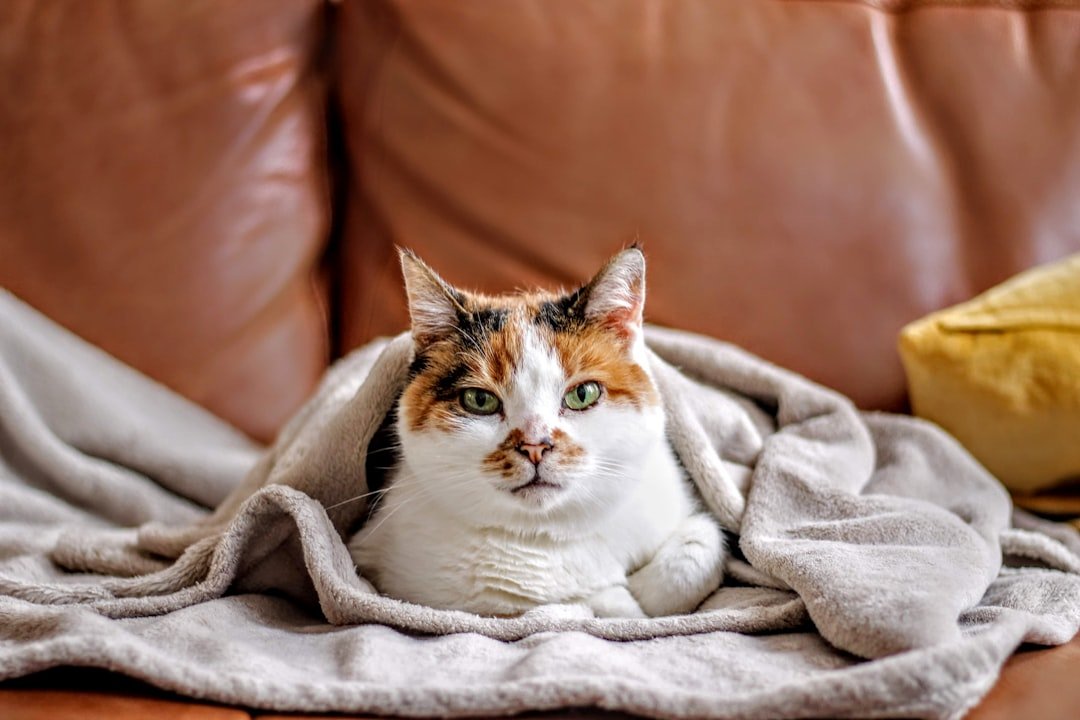
Let your cat knead if their body looks loose and content, then place a thick, soft blanket under their paws to protect your clothes and skin. The short answer to why does my cat knead blankets is usually comfort: the rhythmic pressing motion is an instinctive behavior many cats carry from kittenhood into adult life.
Kneading is often called making biscuits because cats alternately push their front paws into a soft surface. Some cats use just the paws. Others purr, drool, suckle a corner of the blanket, stare into space, or slowly settle down for a nap. It can look intense, but in a relaxed cat it is generally a normal part of understanding cat behavior.
Why Does My Cat Knead Blankets?
The strongest explanation goes back to nursing. Kittens knead around their mother’s belly while feeding, which may help stimulate milk flow. That early pairing matters. Warmth, softness, food, safety, and closeness all happen together, so the paw motion can remain soothing long after a cat is weaned.
A blanket has many of the qualities cats seem to like for kneading. It is soft, gives under the paws, holds warmth, and may carry familiar household scents. Fleece, plush throws, quilts, sweaters, and bedding are common targets. A cat may choose one particular blanket because it smells like them, smells like you, or has the texture they prefer.
Kneading also involves scent. Cats have scent glands in their paw pads, and pressing the paws can leave subtle scent information behind. Your cat is not necessarily making a grand claim of ownership every time they knead. Still, adding their scent to a favorite sleeping spot may help make that place feel familiar and secure.
Sometimes it is simply part of getting comfortable. Wild cats may press down vegetation before resting, and domestic cats still show a version of this settling behavior on beds, rugs, cushions, and blankets. Think of it as arranging the spot before lying down. Cats are particular. They like a good bed.
Read the Rest of Your Cat’s Body Language
The surrounding signals tell you far more than the kneading alone. A content cat commonly has half-closed eyes, relaxed ears, slow blinking, a soft tail, gentle purring, and an unhurried rhythm. They may knead for a minute or two, circle, then curl up.
Some cats knead when they are excited to see a person, especially during a quiet evening or when they climb onto a lap. This can be an affectionate, self-soothing routine rather than a request to be handled. If your cat kneads you and then suddenly turns away when petted, respect that limit. Kneading does not always mean they want strokes.
Adult cats sometimes knead with more complicated signals. An unneutered male may knead and mount soft items during sexual behavior. A female cat in heat may also be unusually vocal, affectionate, restless, and prone to rolling or posturing. In those cases, kneading is not the whole story. A veterinarian can discuss spaying or neutering and any behavior questions that come with it.
Watch for tension instead of assuming every kneading session means happiness. Ears flattened back, a lashing tail, wide pupils, growling, hiding, repeated pacing, or sudden avoidance suggest your cat may be overstimulated or uneasy. The blanket itself may still be a coping tool, but it is sensible to look at what is happening around them: visitors, noise, a new pet, changes in routine, or a disruption to their usual resting space.
Why Some Cats Drool or Suckle While Kneading
Drooling and suckling a blanket can appear alongside kneading because all of these actions are tied to early comfort behavior. Many cats do it occasionally when they are deeply relaxed. A small amount of drool on a favorite blanket is often more inconvenient than alarming.
It is wise to pay attention to pattern and intensity. Contact a veterinarian promptly if drooling is new or heavy, if your cat seems painful while eating, paws at their mouth, has trouble swallowing, stops eating, vomits repeatedly, appears unwell, or shows a sudden major behavior change. Those signs need individual assessment because drooling can have causes unrelated to contented kneading.
Blanket suckling deserves a little practical supervision. Choose washable fabrics without loose threads, beads, buttons, stuffing, ribbons, or long fringe. Put away wool, yarn, string, and damaged blankets. Swallowing fabric or threads can be dangerous, and pulling a thread away from a cat’s mouth is not a safe fix if they have swallowed it. Call a veterinarian for advice if you think your cat has eaten non-food material.
How to Handle Kneading Without Getting Scratched
Do not punish kneading. Your cat is doing a natural behavior, and scolding can make a comforting moment stressful without teaching them what you would prefer instead. Redirect the location, not the instinct.
- Keep a designated soft throw on the sofa, bed, or your lap for kneading sessions.
- Use a folded towel or thicker blanket when your cat kneads on you. Quietly slide it under their paws before the claws catch your skin.
- Keep nails trimmed on a regular schedule if your cat tolerates it. Ask a veterinary team or qualified groomer to show you safe trimming if you are unsure.
- Offer a calm resting area with a bed, blanket, and a predictable routine, especially after household changes.
- Pause petting if the cat’s tail starts flicking, their skin ripples, or they turn to look at your hand. Let them finish their ritual in peace.
Declawing is not an appropriate solution for normal kneading. It is a surgical procedure with lasting physical and behavioral considerations, not a substitute for nail care, blankets, scratching options, and handling boundaries.
When Kneading May Need More Attention
A cat who has always kneaded a favorite blanket at bedtime is different from a cat who suddenly starts kneading, vocalizing, hiding, or obsessively sucking fabric for long periods. Context matters. New behavior after a move, new baby, visitor, schedule change, or another pet entering the home may reflect stress or a need for more predictability.
Try to make the environment easier first. Keep feeding and play times steady. Provide separate resting places, litter boxes, water stations, scratching surfaces, and elevated spots if cats in the home are competing for space. Short daily play sessions with a wand toy can also give an energetic cat a better outlet. End play with a small meal or treat if that fits their usual feeding plan.
Arrange a veterinary visit if the behavior is sudden, compulsive-looking, difficult to interrupt, paired with appetite or litter box changes, or accompanied by physical signs of illness or pain. Bring a short video if you can capture the behavior without upsetting your cat. It gives the veterinary team a clearer picture than a description alone.
Understanding Cat Behavior Without Overreading It
Cats do not knead for one single reason every time. One cat may knead only before sleep. Another may do it on a person they trust. A third may reserve the behavior for one ratty fleece blanket and ignore every expensive cat bed in the house. Individual preference is normal.
The useful takeaway is simple: relaxed kneading on a safe soft item is usually a comfort ritual. Give your cat an acceptable place to do it, keep their claws managed, and pay attention if the pattern changes. Those small steps let your cat enjoy their biscuits while keeping your furniture, blankets, and lap in better shape.
Frequently Asked Questions
Is kneading a sign that my cat is happy?
Often, yes. Cats commonly knead when they feel safe, sleepy, warm, or affectionate. Look at the whole body: soft eyes, relaxed ears, purring, and settling down support the idea that your cat is content. Kneading by itself does not prove a particular emotion.
Why does my cat knead me but not other people?
Your scent, body warmth, lap position, and the quiet time you share may make you the preferred spot. Cats also form individual habits. It can be a sign of trust and comfort, but it does not mean your cat dislikes everyone else.
Should I stop my cat from kneading with claws out?
Do not scold or forcefully remove them. Put a thick blanket between their paws and your skin, trim nails as needed, or calmly move away once they pause. Consistently offering the same kneading blanket can help direct the habit to a more comfortable place.
Why does my cat bite or suckle the blanket while kneading?
That combination can be a leftover comfort behavior from kittenhood, especially with soft fabrics. Keep the item clean and free of loose pieces. If your cat chews and swallows fabric, or if the behavior suddenly becomes frequent or intense, contact a veterinarian for guidance.
Related posts
This post is for general informational purposes only and is not veterinary advice. Every cat is different — if you have concerns about your cat’s health or behavior, please consult a qualified veterinarian.