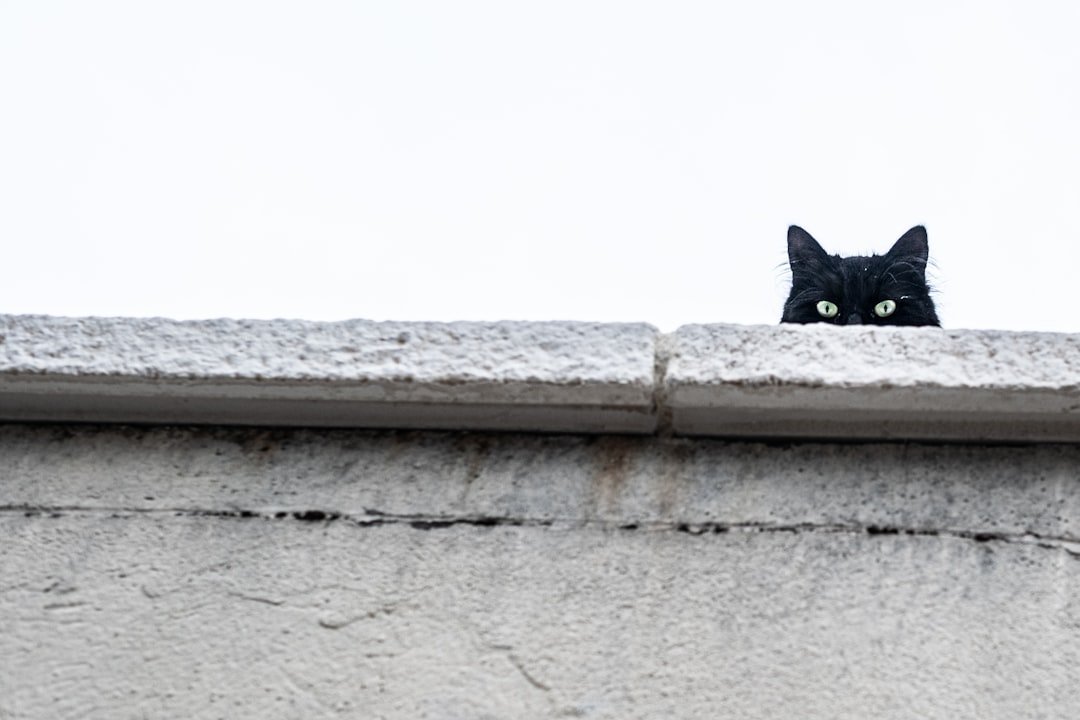
Why does my cat stare at the wall while you are folding laundry, then flick an ear or creep closer? In most cases, why does my cat stare at the wall has a simple answer: your cat has noticed something subtle that you cannot detect. Cats notice a lot. Their hearing, vision, and sensitivity to movement make an ordinary-looking wall much more interesting than it appears to us.
Why does my cat stare at the wall?
A wall is not always quiet or still to a cat. Pipes can tick as they cool, insects can move behind drywall, and small shadows can shift when light changes outside. Very small things count. Indoor walls can also transmit faint vibrations from plumbing, appliances, footsteps, or a neighbor in an attached home, and a cat may sit perfectly still while working out where the sound came from.
Cats are especially tuned in to high-pitched sounds and quick movement. A tiny moth near a ceiling, a dust speck drifting through a sunbeam, or a reflected patch of light may hold their attention for several minutes. This is normal hunting behavior. The cat is watching, listening, and deciding whether the possible prey is worth pursuing.
Sometimes the explanation is less exciting. Cats may stare into space, at a blank wall, or toward a familiar corner while resting without being asleep. Quiet pauses happen. A relaxed cat with soft eyes, normal movement, and no other changes is often simply taking a break between naps, meals, and household patrols.
Normal vs concerning wall staring
Context matters more than the staring itself. Look at your cat’s body, how easily they respond to you, whether the behavior is new, and what happens immediately before and after it. One odd moment rarely tells you much. A repeated change in a cat who otherwise behaves differently deserves closer attention.
| More often normal | More concerning |
|---|---|
| Looks alert, ears move, and the cat tracks a sound, bug, light, or shadow | Stares fixedly and seems difficult to interrupt or unaware of nearby activity |
| Happens now and then in a particular spot or at a particular time | Is new, frequent, prolonged, or happens in many locations without an obvious trigger |
| Cat returns to normal play, eating, grooming, and social behavior afterward | Appears alongside hiding, confusion, unsteadiness, sudden fear, or marked behavior changes |
| Cat responds when you speak, open food, or make a familiar sound | Cat does not respond normally, seems disoriented, or has unusual movements |
A normal-looking episode usually has an end point. Your cat may pounce, inspect the baseboard, lose interest, or walk away when another activity catches their attention. That is reassuring. Curiosity tends to shift when the stimulus disappears.
Pay closer attention if your cat seems mentally absent during episodes, repeatedly presses their head against a wall, walks into objects, circles, loses balance, vocalizes in an unusual way, or shows twitching or other unfamiliar movements. Do not wait it out if those signs are present. Contact a veterinarian promptly for advice, especially if the change is sudden or your cat seems distressed.
Older cats can also develop changes in hearing, vision, sleep patterns, and awareness of their surroundings. Age alone does not explain away a new behavior. If an older cat begins staring at walls more often and also seems lost in familiar rooms, changes litter box habits, or becomes unusually noisy at night, arrange a veterinary visit.
Check the wall before assuming anything
It is reasonable to investigate the spot safely. Look for a fly near a window, a moving reflection from a phone or watch, a loose vent cover, or sounds from a pipe. Keep it simple. Do not knock holes in the wall or use pest chemicals where your cat can reach them.
If your cat repeatedly focuses on one exact area, listen there at different times of day. Plumbing noises may occur after a shower, while heating systems can make sounds when they switch on or off. Insects may be more active after dark. If you hear scratching, see droppings, or suspect pests inside the wall, use a qualified pest-control service and tell them a cat lives in the home.
Light reflections are easy to miss. Sunlight bouncing from a car window, a mirror, glassware, or a screen can create a tiny moving spot that keeps a cat interested. Try closing a blind or moving the reflective object for a few minutes. If the staring stops, you may have found the trigger.
What to do in the moment
You do not need to interrupt every wall-staring session. Watch first. A calm, observant cat may be enjoying harmless mental stimulation, and abruptly grabbing or scolding them can make them uneasy.
- Look at the ears, pupils, tail, and posture. A focused but loose body usually suggests interest rather than distress.
- Say your cat’s name once or make a familiar gentle sound. Note whether they turn, blink, or come over.
- Check for a visible trigger near the wall, ceiling, window, vent, or floor edge.
- Write down the time, location, and duration if the behavior is new or repeats. A brief note is enough.
- Record a short video if anything seems unusual, then share it with your veterinarian if you call or book an appointment.
A video can be more useful than a description because behavior may not happen during an appointment. Keep the recording natural. Avoid shining lights in your cat’s face or trying to provoke the behavior for the camera.
When a vet call makes sense
Call your veterinarian when wall staring is a clear change from your cat’s usual behavior, becomes frequent, lasts unusually long, or occurs with physical or behavioral changes. Trust a pattern. You know what “normal” looks like for your own cat better than anyone seeing them for the first time.
Urgent guidance is appropriate if your cat has a sudden loss of balance, collapses, has trouble walking, seems unable to see, has repeated unusual episodes, or is otherwise acting severely unwell. Keep your cat somewhere quiet and safe while you seek help. Do not give human medication.
Most wall staring is ordinary feline attention at work. Still, the normal vs concerning distinction becomes clearer when you watch the whole cat rather than the wall alone. Alert curiosity that ends naturally is usually less worrying than fixed staring paired with confusion, distress, or a sudden change in daily behavior.
Related posts
This post is for general informational purposes only and is not veterinary advice. Every cat is different — if you have concerns about your cat’s health or behavior, please consult a qualified veterinarian.