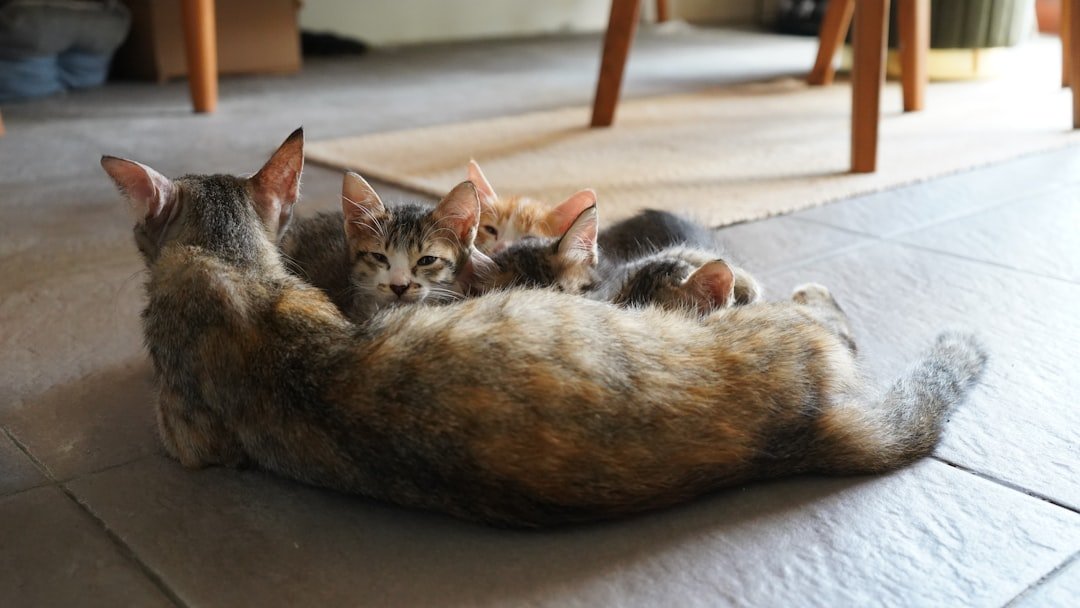
The signs a kitten is ready to leave its mother usually appear around eight weeks of age, once the kitten is fully weaned, using a litter tray, gaining weight, and handling normal separation without distress. Age matters. A kitten may look active and independent at six or seven weeks, but those signs a kitten is ready to leave its mother are not complete if it still relies on nursing, has loose stools after meals, or struggles socially with other cats.
For most kittens, eight weeks is the earliest sensible time to go to a new home. Many kittens do well with their mother and littermates for a little longer, especially if they are shy, small, still learning manners during play, or not yet settled on solid food. There is no prize for rushing. Time with the litter teaches bite control, body language, and how to stop play when another kitten has had enough.
Signs a kitten is ready to leave its mother
A ready kitten eats kitten food on its own at every meal, drinks water, uses the litter tray consistently, and keeps gaining weight without nursing. Watch daily. The kitten should also move around confidently, groom itself a little, play normally, and settle after brief periods away from its mother rather than crying continuously or searching for her.
Look at the whole pattern rather than one milestone. A kitten that chews kibble once is not necessarily weaned, and a kitten that uses a litter tray once may still have accidents when stressed or after a meal. Consistency counts. Ideally, the kitten has had at least several days of regular solid-food meals and normal stools before a move is planned.
- Solid food: The kitten eats a complete kitten food independently and does not need nursing to finish meals.
- Water intake: The kitten drinks water from a shallow bowl without help.
- Litter habits: The kitten uses a low-sided litter tray reliably and can step in and out comfortably.
- Steady growth: The kitten continues to gain weight over time instead of losing weight after weaning begins.
- Normal energy: The kitten plays, sleeps, explores, and wakes for meals in a typical kitten rhythm.
- Social confidence: The kitten can interact with people and littermates without extreme fear or constant dependence on its mother.
None of these points means a kitten must be bold or cuddly. Personalities differ. A quiet kitten can be ready to leave if it eats well, eliminates normally, grows steadily, and recovers reasonably quickly after ordinary noises or short handling.
Age and weaning milestones
Newborn kittens depend completely on their mother for warmth, milk, toileting help, and safety. That changes quickly. Weaning often begins at roughly three to four weeks, when kittens start tasting soft food and become more mobile, but it is a gradual process rather than a single day when the mother stops nursing.
| Approximate age | Common milestone | What it means for leaving |
|---|---|---|
| Birth to 3 weeks | Milk-fed, poorly coordinated, dependent on mother for nearly all care | Too young to leave except in an emergency care situation |
| 3 to 4 weeks | Begins tasting wet food and using a shallow litter tray | Weaning has started, but the kitten still needs mother and littermates |
| 5 to 6 weeks | More active, eating more food, practicing play and social boundaries | Usually still too young for a routine move |
| 7 to 8 weeks | Often fully eating solid food, using litter reliably, and gaining independence | Assess the individual kitten; eight weeks is a common minimum |
| 9 weeks and older | More practice with social play, household sounds, handling, and recovery from change | Often an easier transition if health and care needs are settled |
The table gives broad milestones, not a deadline. Growth can vary. A kitten born small, recovering from illness, dealing with parasites, or simply taking longer to eat enough solid food may need extra time with its mother or closer guidance from a veterinarian.
By the end of weaning, the mother may nurse less often, walk away from demanding kittens, or set firmer limits during play. That is normal. It does not mean she has rejected them; she is helping them become independent while they still have a safe place to eat, sleep, and learn.
Why leaving too early can be difficult
Kittens learn a surprising amount through ordinary litter life. They wrestle, chase, get corrected for biting too hard, and see how another cat responds when play becomes annoying. Small lessons matter. A kitten separated very early may miss some of that practice, which can make rough play, frustration, or adjustment to a new home harder for some kittens.
Early separation can also complicate feeding and digestion. A kitten that has only recently stopped nursing may eat too little after a move because the food, bowl, room, and routine are all unfamiliar at once, and a young kitten has limited reserves if it refuses meals. Keep changes simple. The new home should continue the same food at first unless a veterinarian advises a different plan.
There are exceptions, including abandonment, danger to the mother or kittens, serious maternal illness, or a mother who cannot care for the litter. Those situations need individual advice. Very young orphaned kittens require careful warmth, feeding, and toileting support, so contact a veterinarian or an experienced local rescue group promptly rather than treating them like normally weaned kittens.
How to check readiness before pickup
If you are adopting a kitten, ask direct questions before setting a pickup date. Get specifics. Ask the caregiver what the kitten eats, how often it eats, whether it drinks water, what litter it uses, whether stools have been normal, and whether the kitten has been weighed regularly.
- Confirm the kitten is at least eight weeks old, unless a veterinarian or rescue caregiver has explained an emergency exception.
- Ask to see the kitten eat its usual food independently if that is practical.
- Check that the kitten has clear eyes, a clean nose, normal energy, and a clean rear end. These observations do not replace a veterinary exam.
- Watch the kitten walk, play, and use or approach the litter tray. A little shyness is common in unfamiliar situations.
- Take home several days of the same food and ask for the current feeding schedule.
- Arrange a veterinary visit soon after adoption, particularly if you do not have reliable health and vaccination records.
Do not judge readiness by size alone. Some eight-week-old kittens are tiny while others are quite sturdy, and a large six-week-old kitten is still developmentally young. Calendar age, independent eating, litter habits, and stable health together give a more useful picture.
Making the first days easier
Set up one quiet room before the kitten arrives. Keep it simple. Put food and water away from the litter tray, offer a warm bed or covered sleeping spot, and remove gaps behind appliances or furniture where a frightened kitten could get stuck.
Use the food and litter the kitten already knows for the first few days. Sudden switches can upset a young kitten’s stomach or make it avoid the tray, while a familiar smell gives it one predictable part of a very unfamiliar day. Change food gradually later if you choose to do so. Follow the new food’s guidance and adjust with veterinary input when needed.
Expect some calling during the first night or two. Stay calm. Sit nearby, speak softly, offer brief play when the kitten is awake, and let it rest when it retreats, rather than passing the kitten around or giving it unrestricted access to a large home immediately.
Call a veterinarian promptly if a newly adopted kitten will not eat, seems weak, has repeated vomiting, has ongoing diarrhea, struggles to breathe, or becomes suddenly much quieter than usual. Young kittens can deteriorate quickly. It is safer to ask early than wait for a routine appointment.
The practical answer is simple: a kitten is usually ready to leave its mother when it is at least eight weeks old and has shown reliable independence in food, water, litter use, growth, and everyday behavior. Give the kitten time. A calm, prepared transition is kinder than an early one.
Related posts
This post is for general informational purposes only and is not veterinary advice. Every cat is different — if you have concerns about your cat’s health or behavior, please consult a qualified veterinarian.