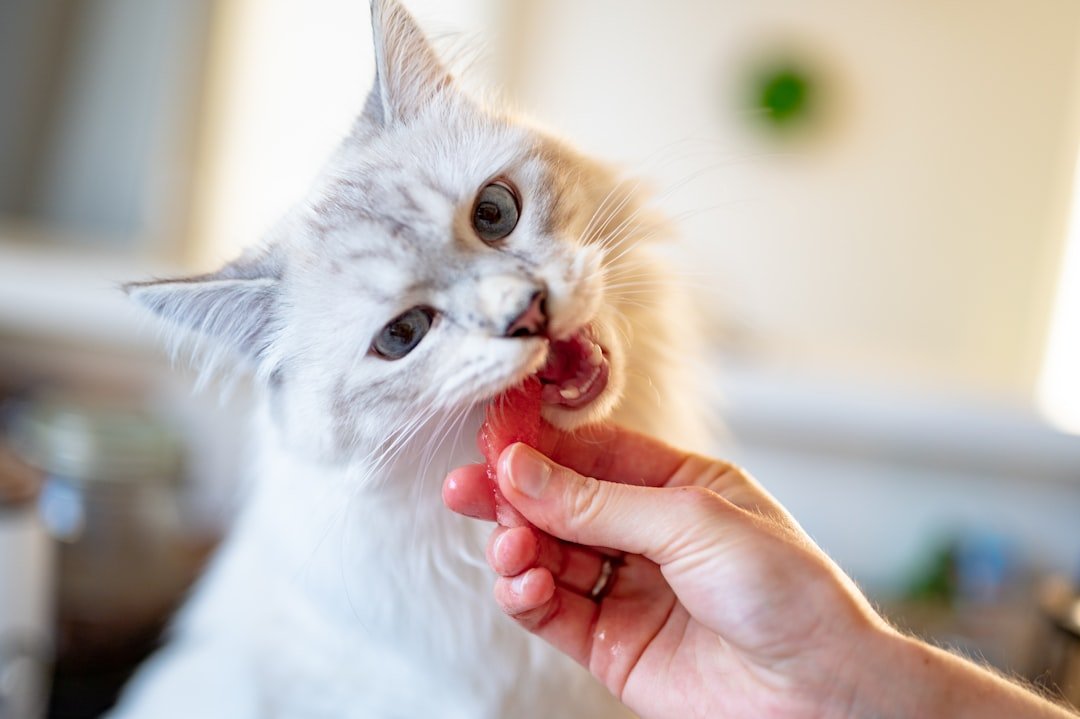
For the best cat dental chews review, start by checking whether the product is on the current Veterinary Oral Health Council accepted-products list, then confirm it suits your cat’s size, teeth, and daily calorie allowance. That is the quickest filter. A best cat dental chews review should focus less on a tempting flavor claim and more on whether the chew has a plausible dental purpose, a safe texture, and enough appeal that your cat will actually eat it often enough to matter.
What dental chews can realistically do
Dental chews are mainly intended to reduce plaque buildup through chewing and surface contact, sometimes with added ingredients that support oral hygiene. They work best as prevention. Plaque is a soft bacterial film that can form on teeth after meals, while tartar, also called calculus, is hardened plaque that has mineralized onto the tooth surface. Existing tartar is different. A treat may help slow additional buildup, but it will not reliably remove a thick, firmly attached layer of tartar that is already present.
This is the main trade-off behind products marketed as effective for tartar control. A chew can be useful for maintenance, especially when used consistently, but it is not a substitute for professional dental care when a cat already has significant buildup, inflamed gums, bad breath, visible mouth pain, or trouble eating. Chews have limits. Cats also commonly develop dental problems below the gumline, where any treat has little or no effect.
Brushing remains the most direct at-home way to clean tooth surfaces, though many cats resist it at first and some will never accept a full brushing routine. Dental chews can fill part of that gap. They are usually easier to give than a toothbrush, yet they rely on the cat biting and chewing rather than swallowing the treat whole. A cat that gulps treats gets less mechanical benefit.
Best cat dental chews review buying guide
The strongest shopping signal is a current Veterinary Oral Health Council, or VOHC, seal for plaque control, tartar control, or both. Look closely. VOHC acceptance means the manufacturer submitted data that met the council’s standards for the listed claim; it does not mean every dental product on the shelf has been independently tested, and it does not mean the product prevents all dental disease. Check the current official list because accepted products and claims can change.
A package may say dental, oral care, crunchy, or tartar control without showing a VOHC claim. That wording alone is not proof that the chew meaningfully reduces buildup. Marketing is broad. If a product has no outside acceptance or clearly described testing, treat it as an ordinary treat with a possible dental benefit rather than the core of your cat’s mouth-care plan.
Texture matters, but harder is not automatically better. A very hard chew may be difficult for a cat to bite into and can be a poor match for a cat with sore gums, damaged teeth, or reduced chewing ability. Cats have smaller jaws than dogs. The ideal product encourages several controlled bites, breaks down safely, and is made specifically for cats rather than repurposing a dog product.
Shape also changes how useful a chew may be. Some treats are designed with grooves, ridges, or a larger crunchy surface so the tooth contacts more of the treat during chewing. This can help with mechanical scraping on accessible tooth surfaces. It is still limited. The back teeth, gumline, and spaces between teeth may not get equal contact, particularly if your cat favors one side of the mouth.
| Chew type | Potential advantage | Common trade-off | Best fit |
|---|---|---|---|
| VOHC-accepted dental treat | Has support for its specific plaque or calculus claim | May cost more and still adds calories | Healthy adult cats that chew treats safely |
| Crunchy dental treat without outside acceptance | Often easy to find and may be appealing | Dental effect is harder to judge | Cats that need a low-stakes treat, with modest expectations |
| Dental kibble or therapeutic dental diet | May provide more regular tooth contact at mealtimes | Requires a diet change and veterinary guidance for some cats | Cats whose veterinarian says the food suits their needs |
| Soft oral gel or additive | Can help cats that will not chew a treat | Does not provide the same chewing action | Cats that cannot manage crunchy products |
Check the calorie math before buying
Dental treats can quietly become a significant part of a cat’s daily intake, especially when the feeding directions call for several pieces each day. Calories count. A small treat looks harmless, but cats have relatively modest daily energy needs, and extra treats can make weight management harder over time.
Use the label’s calorie statement and compare it with your cat’s total daily food allowance. As a practical starting point, treats are often kept to no more than about 10 percent of daily calories unless your veterinarian has given a different feeding plan. For example, if a cat eats roughly 220 calories per day, about 22 calories is the usual upper limit for all treats combined. That total includes dental chews, lickable treats, training rewards, and table scraps.
If the suggested dental-chew serving would exceed that amount, you have choices. Give fewer pieces, reduce other treats, or slightly adjust the regular food portion only if that fits your cat’s overall feeding plan. Make the math visible. Do not assume a dental product is calorie-free because it is sold as a care item rather than a snack.
Also read the ingredient list if your cat has known food sensitivities or is on a prescription diet. Dental treats often use animal proteins, grains, starches, fats, flavor coatings, and binders to make a stable crunchy shape. The ingredient list is not a quality score. It is simply a way to identify ingredients your cat needs to avoid and to see whether the product fits the diet you are already feeding.
Choose a chew your cat can use safely
Buy only a product labeled for cats and follow its age, weight, and serving guidance. Size is safety. A large cat may still be a poor candidate for a big, hard chew if they tend to swallow treats quickly, while a smaller cat may struggle with a thick or dense piece even if the package is marketed for all adult cats.
Watch the first few sessions instead of leaving a new dental chew down while you are out. Notice whether your cat bites repeatedly, drops the treat, paws at the mouth, tries to swallow it whole, or walks away after one attempt. Those details matter. A product that causes frantic gulping, coughing, repeated gagging, vomiting, or obvious discomfort is not a good fit, even if it has a strong dental claim.
Cats with painful mouths can hide discomfort well. Be cautious. A cat may still accept a tasty treat despite sore gums, a broken tooth, tooth resorption, or another oral issue that makes hard chewing uncomfortable. If you see drooling, blood around the mouth, one-sided chewing, food falling out, a sudden refusal of crunchy food, persistent bad breath, or behavior changes around meals, pause the chew and arrange a veterinary check.
Kittens need their own consideration. Their mouths and teeth are changing, and products intended for adult cats may not be appropriate during teething or for a very young kitten. Follow the stated minimum age. For senior cats, the deciding factor is often comfort and dental condition rather than age alone.
How to compare products without falling for the package
Start with the claim, then work outward. If the label says tartar control, look for whether it explains that claim and whether there is a current VOHC acceptance for calculus control. Next, check the piece size, texture, calories per treat, recommended daily number, age guidance, and ingredients. Keep notes. This makes it easier to compare two products that use very different serving sizes or bag sizes.
Price per bag is not the most useful number. Calculate the daily cost instead. Divide the package price by the number of days it lasts at the recommended serving, then compare that number with the cost of alternatives your cat will actually accept. Prices vary by region. A cheaper bag can be the more expensive option if it runs out quickly or if the required serving uses too many calories.
Flavor matters more than many shoppers expect because regular use is part of the value. A technically promising chew that sits untouched in the bowl does nothing. Start small. Buy the smallest practical package for a first trial when possible, particularly if your cat is selective or has a history of digestive upset after new foods.
Do not introduce several new oral-care products at once. Give one new chew while the rest of the diet stays stable, then watch appetite, stool, and comfort for several days. This is simpler. If your cat reacts poorly, you will have a clearer idea of what changed.
A simple routine that makes chews more useful
Give the dental chew at a predictable time when you can supervise, such as after the evening meal. Routine helps. Many cats are more willing to chew when they are calm and not overly hungry, although individual preferences vary. Avoid tossing a handful on the floor if your cat tends to rush food or compete with another pet.
- Check the package for cat-specific age and serving instructions. Read the calories too.
- Offer one piece while you watch your cat chew. Stay nearby.
- Stop if your cat gulps it, coughs, paws at the mouth, or seems uncomfortable. Safety comes first.
- Count the treat calories within the day’s total allowance. Adjust other treats if needed.
- Look at the mouth periodically when your cat is relaxed, without forcing the jaws open. Note changes.
If your cat tolerates toothbrushing, consider using a cat toothpaste and soft brush on days when they will accept it, with dental chews as an additional tool rather than the whole plan. Go slowly. Never use human toothpaste because ingredients intended for people may not be safe for cats to swallow.
A veterinary dental examination remains the right next step if visible tartar is heavy, gums look red or swollen, breath has changed sharply, or chewing behavior changes. Do not scrape tartar at home. Metal tools can injure the gums and tooth surface, and visible buildup does not tell you what is happening under the gumline.
What a sensible purchase looks like
A sensible dental-chew purchase is one with a claim you can verify, a texture your cat can safely chew, and a calorie cost that fits the rest of the diet. Keep expectations practical. The best option for one cat may be useless for another if the first cat chews carefully and the second swallows every piece without biting.
When choosing between a widely available crunchy treat and a product with a current VOHC acceptance, the accepted product is usually the clearer research-based choice if your cat tolerates it and the calories work. That does not make it magic. Oral care works through repeatable habits, early attention to changes, and professional help when a cat’s mouth needs more than a treat can provide.
Related posts
This post is for general informational purposes only and is not veterinary advice. Every cat is different — if you have concerns about your cat’s health or behavior, please consult a qualified veterinarian.