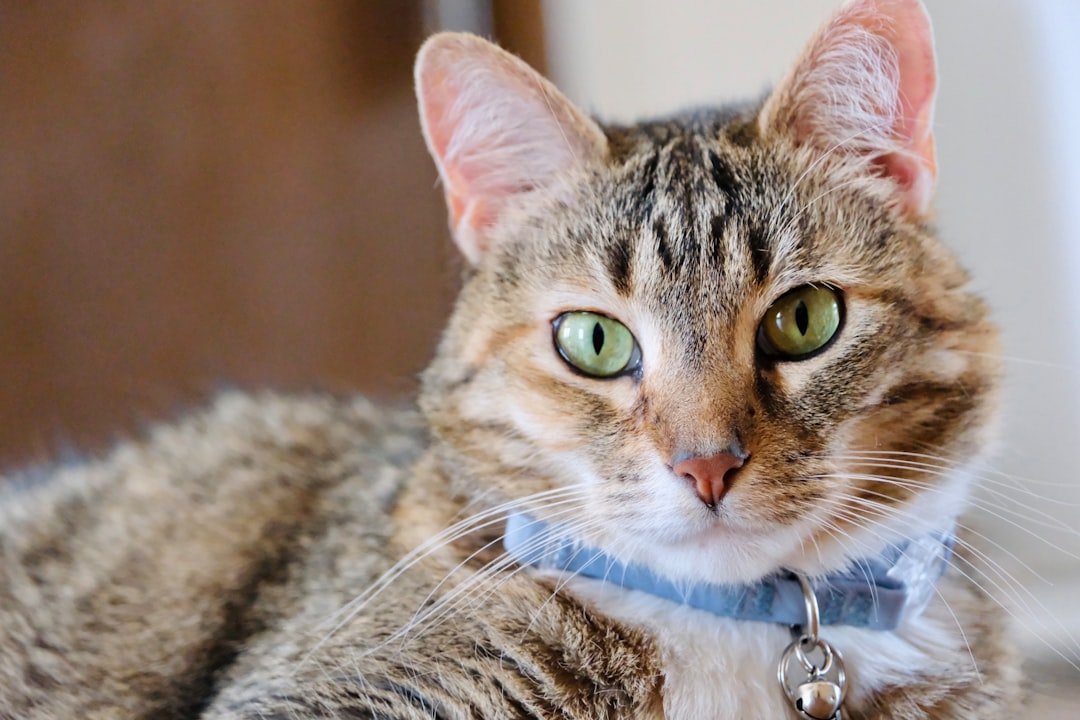
The best breakaway cat collar has a release buckle that opens if it catches on a branch, fence, crate wire, or another household hazard. Fit matters just as much. A good choice should sit comfortably, carry only the identification your cat needs, and have a buckle you can test gently before relying on it.
For most cats, a simple adjustable breakaway collar is the sensible starting point. Release is the point. Decorative hardware, heavy tags, and very thick fabric can make a collar feel more substantial, but they may also add weight or affect how freely the collar moves around a cat’s neck.
Best breakaway cat collar safety tested picks
There is no single universal consumer certification that proves every cat collar is safe in every situation. That matters. When a listing says safety tested, look for a plain explanation of what the company tested, whether the buckle is described as breakaway or quick release, and whether the product page gives clear fitting instructions.
The products below are examples of breakaway-collar types associated with commonly sold pet-product brands, but exact models and availability can change. Check the current product page before buying. Materials, buckle designs, sizing, and included bells can change between versions, so treat the table as a comparison guide rather than a promise about any individual collar.
| Collar to research | Why it may suit some cats | Check before purchase |
|---|---|---|
| PetSafe breakaway collar listing | A straightforward breakaway style that may be offered in basic colors and adjustable sizes. | Verify the exact current model, confirm the buckle release type, and check whether any included bell can be removed. |
| GoTags personalized breakaway collar listing | Useful for owners who prefer identification built into the collar rather than a dangling tag. | Verify that the exact listing is breakaway, then read the personalization limits, current lead time, and buckle details. |
| Safari breakaway collar listing | A basic collar option that may be stocked by pet retailers, which can make in-person sizing easier. | Verify the exact current model and inspect the actual buckle and webbing in store, since product versions may differ. |
| Red Dingo cat collar listing with a safety release buckle | Often considered by owners who want patterned nylon webbing and a lightweight everyday look. | Verify the exact current model and make sure it is labeled with a safety release buckle, not a standard clip. |
None of these names should replace your own inspection. Start with the buckle. If a product description is vague about how it releases, or calls a standard side-release clip a safety buckle without further detail, choose a clearer option instead.
What a breakaway buckle should do
A breakaway buckle is designed to separate when enough force pulls the collar in opposite directions. That can help a cat escape if the collar becomes caught. It is different from the buckle on many dog collars, which is made to stay closed during leash pressure and is usually a poor choice for an unsupervised cat.
The trade-off is obvious. A breakaway collar can come off. Your cat may lose it outdoors, during rough play, or while scratching, especially if the buckle releases very easily. That is frustrating, but a collar that releases too readily is generally less concerning than one that stays caught.
Do not confuse a breakaway collar with a harness. They do different jobs. A collar with a breakaway buckle is for identification and, where permitted and appropriate, visible identification such as a rabies tag. A properly fitted cat harness is the safer tool for supervised walks, travel handling, or attaching a leash.
Try the buckle while holding the collar away from your cat. Close it fully, then pull the two collar sections apart with a firm, even motion while keeping the process calm. You are checking that it opens as designed, not trying to measure an exact release force at home.
Do not pull hard on a collar while it is on your cat. That can frighten them and does not recreate a real snag safely. If the buckle will not open in a reasonable hand test, feels damaged, or closes only halfway, do not use that collar unsupervised.
How to judge safety tested claims
Safety tested can sound more precise than it is, so read further. Some companies use the phrase to mean they checked a buckle design internally, while others may only be describing a general product-development process. A useful product page tells you what was evaluated rather than relying on a broad badge or slogan.
Look for specific language about the safety release. Terms such as breakaway buckle, safety release buckle, or quick-release safety clasp are more useful when the description also explains that the collar separates under pressure. A listing that only says easy-release may refer to convenience for the owner, not snag safety.
Photos help, but they are not enough. Zoom in. The collar should show a distinct central safety clasp, not only a conventional plastic side buckle that must be squeezed by hand. Product reviews can reveal issues with durability or sizing, although reviews cannot tell you how your individual cat will wear it.
Be wary of claims that a collar is escape-proof and breakaway at the same time. Those goals pull in opposite directions. A safety collar needs to release in a snag, while an escape-resistant closure is designed to remain secured.
- Read the current product description for an explicit breakaway or safety-release statement.
- Check the fitting range against your cat’s measured neck, not a guessed size.
- Look at close-up photos of the clasp, adjustment slider, stitching, and tag ring.
- Read recent reviews for recurring reports of broken buckles or collars that release constantly.
- Test the new collar by hand before your cat wears it unsupervised.
That sequence takes only a few minutes. It can prevent a common mistake, which is buying a cute collar with a regular buckle because the product title used vague safety language.
Get the fit right
A well-fitted collar should be snug enough that your cat cannot easily slip a paw through it, while leaving room for comfort. Two fingers is a common rough check. For many adult cats, you should be able to slide one or two flat fingers between the collar and neck without forcing them.
Use your cat’s actual neck measurement as the main guide. Measure low on the neck, where the collar normally rests. Then compare that number with the maker’s stated adjustment range, leaving room to tighten or loosen slightly rather than selecting a collar at the absolute end of its range.
Watch your cat after the first fitting. A little notice is normal. Persistent scratching, repeated attempts to bite the collar, flattened ears during handling, or a collar that rotates under the chin may mean the fit, weight, or material is not working for that cat.
Kittens need especially frequent checks. They grow fast. A collar that fitted last month can become tight surprisingly quickly, so inspect the neck and fit at least weekly while a kitten is still growing.
Long-haired cats need a closer look too. Fur can hide a tight collar. Part the coat with your fingers when checking space, and make sure the collar has not worked its way into a mat or sat tightly against the skin.
Choose materials and extras carefully
Lightweight nylon webbing is common because it dries fairly quickly and comes in many widths and patterns, making it practical for many cats. Cotton-style fabric collars may feel softer to some owners, but they can stay damp longer and may show wear sooner if your cat spends time outside.
A very narrow collar can look neat on a small cat, but it may twist more easily. A wide collar spreads contact across more of the neck, although it can feel bulky on a petite cat. Match the collar width to your cat’s size and coat rather than choosing by appearance alone.
Bells are a personal trade-off. A small bell may help wildlife notice an outdoor cat, but some cats dislike the sound near their ears and some bells add a little weight. If you want one, a removable bell gives you a practical option.
ID tags can be useful, but keep them light. A large tag that clatters against a metal bell can annoy some cats and catch more easily on objects. A collar with embroidered or printed contact details may reduce dangling hardware, though the text can wear over time.
Reflective thread can make a collar easier to spot in low light. It does not make an outdoor cat safe around traffic. Treat it as a visibility extra, not protection, and make sure reflective trim has not made the collar stiff or scratchy.
Know when a collar may not suit your cat
Some cats tolerate collars quickly. Others do not. A cat recovering from a skin problem, one with a sore neck area, or one that reacts strongly to anything around the neck may need individual advice from a veterinarian before wearing a collar.
Indoor-only cats can still benefit from identification, especially if they slip out during a move, repair visit, or unexpected open door. Microchip registration matters here. A collar can be lost, while a correctly registered microchip provides a separate form of identification if it is scanned.
For a cat that goes outdoors, check the collar often. Dirt, rain, sunlight, and climbing can wear webbing and plastic over time. Replace a collar with frayed edges, cracked plastic, loose stitching, a stiff buckle, or a tag ring that has started to bend open.
Do not attach a leash to the collar. Use a harness. Even a breakaway buckle that performs properly in a snag is not intended to manage the forces of a walking cat who suddenly pulls, bolts, or twists.
A practical buying decision
If you want the simplest answer, choose a lightweight collar explicitly described as breakaway, with an adjustable range that comfortably includes your cat’s measured neck size. Keep the setup simple by adding a small ID tag or built-in identification, then test the closure by hand and recheck the fit after a day or two.
For example, if your adult cat’s neck measures 9 inches and a collar adjusts from 7 to 11 inches, that usually leaves useful fitting room. A collar that adjusts only from 9 to 10 inches gives you much less flexibility if the fabric shrinks, your cat gains weight, or the original measurement was slightly off.
Price is not a reliable safety shortcut. Prices vary by region. A low-cost collar can be perfectly workable if the buckle is genuinely breakaway, the fit is right, and you inspect it regularly, while an expensive decorative collar can still be too heavy or use the wrong kind of closure.
Frequently asked questions
Should every cat wear a breakaway collar?
Many owners choose one for identification. It is often the safer collar style for cats because it can release if snagged. Some cats cannot tolerate collars well, and cats with health or behavior concerns may need a veterinarian’s guidance before one is used.
How often should I replace a breakaway cat collar?
Replace it when it shows damage or no longer works smoothly. Check it often. Outdoor use, rough play, sun exposure, and repeated releases can wear a collar faster than a lightly used indoor collar.
Can a breakaway collar still be lost?
Yes, and that is part of the design. It can detach during play or when caught on something. Keep your cat’s microchip registration current and put readable contact information on the collar when possible.
Are magnetic cat collars safer than buckle breakaway collars?
Magnetic closures can be convenient with certain cat flaps, but the relevant question is still whether the collar has a clear safety-release design. Read the exact listing. Do not assume a magnetic closure will release appropriately unless the manufacturer specifically says it is a breakaway safety collar.
Related posts
This post is for general informational purposes only and is not veterinary advice. Every cat is different — if you have concerns about your cat’s health or behavior, please consult a qualified veterinarian.