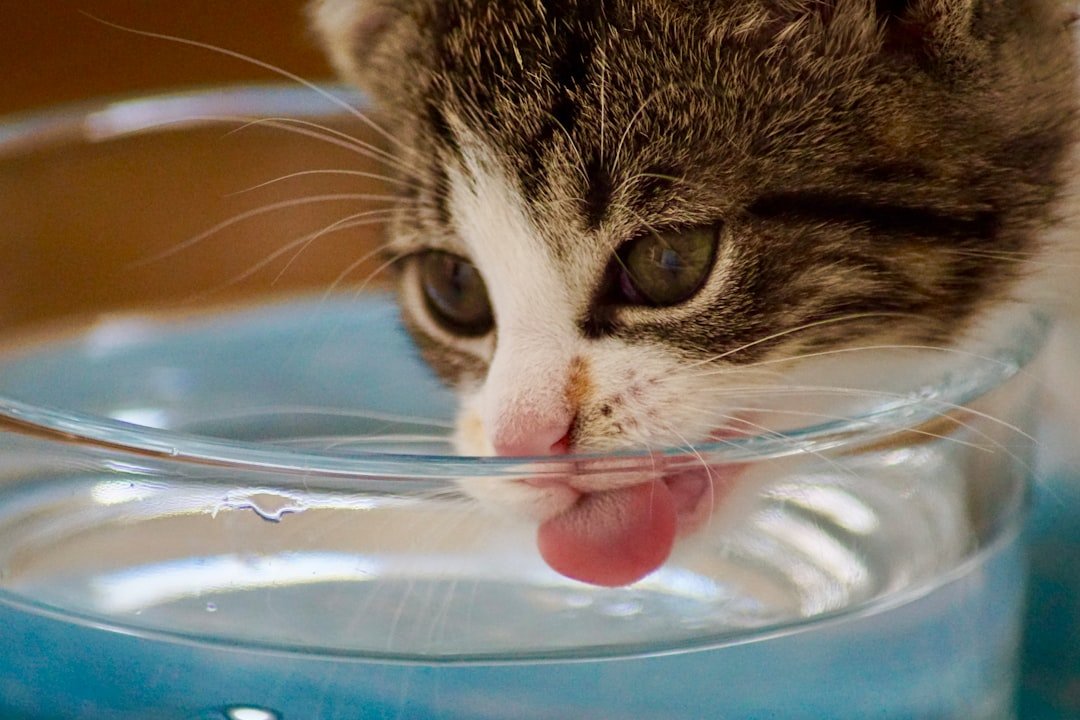
A common misconception is that a cat digging around water is being naughty or trying to make a mess. Usually, why does my cat dig around water bowl has a simpler answer: the behavior often comes from normal instincts, curiosity, or an attempt to make the drinking spot feel better. It is usually harmless.
Your cat might paw at the floor beside the bowl, scrape at a mat, push the bowl, or dip a paw into the water before drinking. These actions can look odd. They make more sense when you remember that cats inspect their surroundings carefully, and many prefer water that seems clean, visible, and safely placed away from food.
Start by watching the pattern. Does your cat dig before drinking, after drinking, only when the bowl is full, or only in one room? The timing gives useful clues. A cat who paws at water before drinking may be checking its depth or making the surface move, while a cat who scratches the floor afterward may be reacting to splashes or following a covering instinct that also appears around food and litter.
Why does my cat dig around water bowl
Some cats seem to treat the area around a water bowl like loose ground. They scratch the floor, a rug, or a feeding mat with their front paws. This can be related to the same instinct that leads cats to scrape around food after eating. In the wild, covering leftovers may help reduce noticeable smells. Indoor cats do not need to do that, but the underlying behavior can still show up around a water station.
A bowl can also be the problem. Narrow, deep bowls sometimes brush a cat’s whiskers while they drink, which some cats dislike. A wide bowl gives more room. Highly reflective metal bowls, shiny floors, or bright overhead lighting can also make the water surface harder for a cat to judge, so they paw at it to create movement.
Location matters too. Cats often prefer water away from their food and litter box. That preference is not stubbornness. A bowl beside a busy doorway, washing machine, barking dog, or another pet can make a cat feel exposed, so they may linger, scrape, or fuss around it instead of settling into a calm drink.
Freshness can play a part. Water that has crumbs, fur, or dust floating in it is less appealing, and a cat may paw at the surface before deciding whether to drink. Clean water helps. So does washing the bowl rather than only topping it up each day.
Occasionally, the digging is part of play. Moving water catches a cat’s attention, especially if light reflects across the surface or the bowl slides when touched. A kitten may do this more often. Adult cats can keep the habit if it has become interesting or if it reliably gets a person to come over.
How to stop the behavior without punishing your cat
Do not scold, spray, or physically interrupt your cat for digging around the bowl. That can make drinking time feel unsafe, and cats need easy access to water. Make the setup less tempting instead. Small changes work best when you make one change at a time and watch what happens for several days.
- Replace the bowl first. Try a wide, shallow ceramic or stainless-steel bowl with a stable base. Avoid chipped ceramic, cracked plastic, or lightweight bowls that skid easily. Keep it simple.
- Put it on a waterproof mat or low-sided tray. Choose one with a non-slip underside and enough raised edge to catch splashes. This does not stop every paw swipe, but it protects the floor and reduces the satisfying movement of a sliding bowl.
- Move water away from food and litter. Put the bowl in a quiet area where your cat can see the room without being trapped in a corner. Give your cat a calm route away. If you have multiple cats, place more than one water station so a confident cat cannot block access.
- Refresh the water daily. Empty the bowl, rinse away debris, and refill it with fresh water. Wash the bowl with mild dish soap and rinse it thoroughly on a regular schedule. Residue has a smell.
- Reduce reflections and spills. Do not overfill the bowl. Place it out of direct sun and away from flickering or very bright light if your cat stares, paws, or startles at the surface.
- Offer a fountain only if your cat likes moving water. Some cats drink more readily from a fountain, while others find the noise or motion annoying. Keep any fountain clean according to its instructions, because slimy buildup defeats the point.
Give each setup a fair trial. If you change the bowl, location, fountain, and mat all on the same day, you will not know which change helped. A useful first test is a wide, heavy bowl on a mat in a quieter spot for one week. Keep the water level below the rim.
Match the fix to what you see
| What you notice | Likely practical trigger | First change to try |
|---|---|---|
| Scratching the floor before drinking | The bowl area feels unfamiliar or the water is hard to judge | Use a wide, shallow bowl in softer light |
| Pawing directly in the water | Your cat wants movement or checks water depth | Try a still bowl with a broad surface, then consider a quiet fountain if needed |
| Pushing or tipping the bowl | The bowl slides, is too light, or play has become rewarding | Use a heavy bowl on a non-slip tray |
| Scratching around the bowl after drinking | A covering-style instinct or irritation from splashes | Use an absorbent waterproof mat and avoid overfilling |
| Ignoring one bowl but using another | Location, bowl material, or nearby activity is bothering your cat | Keep a second water station in a quieter place |
There is no need to remove every opportunity to paw. The goal is a water setup that lets your cat drink comfortably and leaves less water on the floor. A mat is often enough. If the behavior is brief and your cat drinks normally, it is usually a housekeeping issue rather than something you need to train away.
When the digging needs more attention
Watch for a sudden change. A cat that has always drunk calmly but begins obsessively pawing, splashing, avoiding the bowl, or visiting it repeatedly deserves closer observation. Also pay attention if you notice a clear change in how much your cat drinks, eats, urinates, or weighs.
Do not try to judge water intake by eye alone. Bowl size, evaporation, spills, multiple pets, and fountains make that difficult. If your cat seems uncomfortable while drinking, drools, drops food, has bad breath, or seems unusually thirsty, contact a veterinarian for guidance. Those signs need a proper assessment.
Keep the setup accessible while you arrange help. Do not restrict water to reduce splashing. Instead, place extra bowls on easy-clean mats in quiet locations and note what you observe, including when the behavior started and whether anything changed in the home.
FAQ
Why does my cat scratch the floor near the water bowl?
Floor scratching can be a leftover covering instinct, much like scratching around food or litter. It can also happen because water has splashed onto the floor or mat. A stable bowl and waterproof mat usually make cleanup easier. Some cats will still scratch.
Why does my cat put a paw in the water before drinking?
Many cats use a paw to make ripples, check the water level, or avoid placing their face close to a deep bowl. It is common behavior. Try a wider, shallower bowl first, especially if your cat only paw-drinks from a narrow container.
Should I buy a cat water fountain?
A fountain can help if your cat is drawn to moving water, but it is not required and it will not suit every cat. Start with a clean, stable bowl. If you try a fountain, choose one that is easy to take apart and clean, then keep a regular bowl available during the transition.
Why does my cat dig around the water bowl at night?
Nighttime is often quieter, so a cat may have more time and confidence to investigate the bowl. Reflections from nearby lamps or windows can also make water more interesting after dark. Try moving the bowl away from direct light and placing it on a non-slip mat.
Can I train my cat to stop digging around the bowl?
You can reduce the behavior by changing what triggers it, but direct punishment is not a good solution. Reward calm behavior indirectly by keeping the water station pleasant and predictable. Clean water, a quiet location, and a bowl that does not slide give your cat fewer reasons to fuss with it.
Related posts
This post is for general informational purposes only and is not veterinary advice. Every cat is different — if you have concerns about your cat’s health or behavior, please consult a qualified veterinarian.