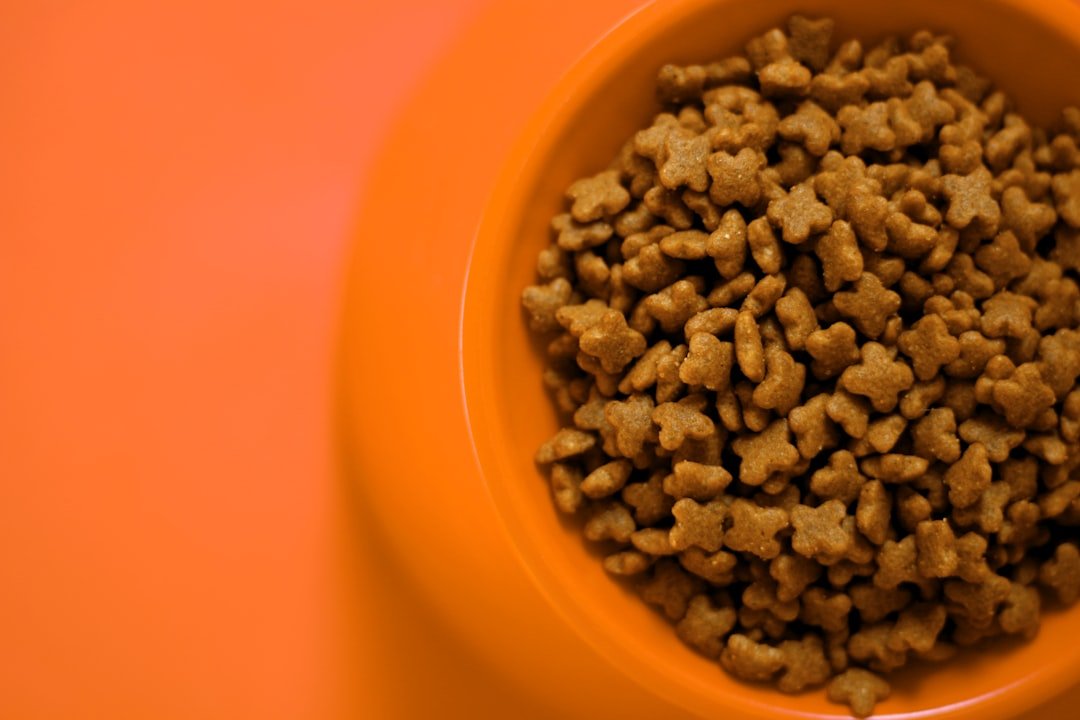
When the bathroom scale rises after you weigh yourself holding your older cat, the best senior cat food for weight loss is one with measured calories, adequate protein, and a feeding plan your veterinarian agrees suits that individual cat. Senior bodies change. A food labeled for older cats is not automatically a slimming food, and cutting portions too sharply can leave an aging cat hungry or reduce muscle along with body fat.
Best senior cat food for weight loss starts with the label
Look for a complete and balanced food with a clearly stated calorie amount, usually listed as kcal per cup, pouch, or can. Calories count. This number lets you compare products properly, because a small scoop of one dry food can contain far more energy than the same scoop of another.
Protein deserves close attention in older cats because maintaining lean body tissue matters as much as reducing excess fat. A higher-protein recipe is often useful, but the ingredient list alone cannot tell you whether a food is right for weight management. Check the guaranteed analysis, calorie density, life-stage statement, and feeding directions together.
Fiber can help some cats feel more satisfied on fewer calories, while wet food can make meals larger in volume because it contains much more moisture than kibble. Texture matters. Some cats strongly prefer crunchy food, while others eat a canned meal more slowly and seem satisfied for longer.
Do not assume that a food marketed as senior, indoor, light, or hairball control will produce weight loss. Those terms describe a product position, not a guaranteed calorie deficit. Compare the actual kcal information and use your cat’s current body condition, activity, appetite, and health history when discussing a choice with the veterinary team.
Get a health check before changing portions
Weight gain in an older cat is worth discussing at a routine veterinary visit before starting a new diet. Start there. Aging cats may have dental discomfort, reduced mobility, changes in appetite, or conditions that affect how they use food, and those details can change the safest feeding approach.
A veterinarian can assess body condition and muscle condition, then give you a realistic target rather than relying on the number on the scale alone. Two cats at the same weight can have very different needs. A broad-backed, low-muscle cat should not be managed exactly like a strongly muscled cat carrying a small fat pad.
Ask for a daily calorie target, including treats, dental chews, lickable treats, and the food another family member may be giving. Tiny extras add up. If your cat has been gaining steadily, the useful question is usually how many calories are entering the bowl each day, not whether one ingredient is supposedly fattening.
Vet recommended brands to research
The phrase vet recommended brands does not mean every veterinarian recommends the same food for every senior cat. Individual needs differ. It usually points shoppers toward companies that make complete diets, employ nutrition specialists, provide detailed calorie information, and offer veterinary diet lines for cats with specific nutritional needs.
For a cat who needs a structured weight-loss plan, discuss veterinary weight-management diets such as Hill’s Prescription Diet Metabolic, Royal Canin Veterinary Satiety Support, or Purina Pro Plan Veterinary Diets OM with your veterinarian. These products are formulated for calorie control and are commonly considered during veterinary weight-management conversations. They are not interchangeable, and availability rules vary by region.
For cats that do not need a prescription formula, owners often research retail options such as Hill’s Science Diet Perfect Weight, Purina Pro Plan Weight Control formulas, and Royal Canin appetite or weight-care formulas where available. Read the current package. Recipes, calorie counts, and life-stage labels can change, so use the manufacturer’s current product information rather than an old review or a photo of a previous bag.
A prescription diet can be more expensive per bag or case than a supermarket formula, and some cats reject a new texture at first. That is a real trade-off. A less costly complete food with a calorie amount you can measure consistently may be more practical than a premium food your cat refuses or that cannot fit the household budget.
Be cautious with foods marketed mainly through dramatic ingredient claims, especially if they do not make calorie content easy to find. Clear information is useful. You want to know how much energy your cat gets per measured meal, not simply whether the front of the package mentions natural ingredients or no grains.
Wet food, dry food, and mixed feeding
Wet food often helps with portion control because a can or pouch has a stated calorie amount and contains a lot of water. Meals look bigger. That can be useful for a cat who complains after a small serving of dry food, although some canned recipes are still calorie-dense, so check every label.
Dry food is convenient and can work for weight loss if every serving is weighed or measured accurately. Free-feeding rarely helps. A food scale that reads in grams is usually more precise than filling a cup by eye, particularly when the daily ration is small.
Mixed feeding can suit a cat who enjoys both textures, but calculate the calories before combining foods. For example, if your cat’s veterinary calorie target is 180 kcal per day, a 70 kcal wet meal leaves 110 kcal for dry food and treats combined. Write it down. Without that calculation, mixed feeding can quietly become double feeding.
How to compare food options
Use the same simple comparison process for every product you are considering. Keep the package nearby. It takes a few minutes and can prevent a purchase based solely on a front-label claim.
- Find the calorie statement and record kcal per can, pouch, or cup.
- Confirm that the food is complete and balanced for the life stage stated on the package.
- Compare protein information and ask your veterinarian whether the formula suits your cat’s muscle condition and medical history.
- Check the feeding guide, then treat it as a starting point rather than an exact prescription.
- Price the food by daily feeding cost, not only by the shelf price of one bag or case.
In the United States, a nutritional adequacy statement on the package can tell you whether a food is intended as a complete daily diet or only for supplemental feeding. Read that line. A topper, broth, or treat may look nutritious but should not replace a properly formulated main food unless a veterinarian has given specific guidance.
For dry food, calculate the cost per day by dividing the package price by the number of days the bag will last at your cat’s measured ration. A 10-pound bag may seem cheaper than small bags, but it is not a bargain if the food goes stale before your cat finishes it. Buy a manageable size while testing acceptance.
Make the switch slowly and monitor progress
Change foods gradually unless your veterinarian gives different instructions. Go slowly. A common approach is to mix a small amount of the new food into the old food, then increase the new proportion over about a week while watching appetite, stool quality, and willingness to eat.
Measure every meal during the transition rather than topping off the bowl. Use one person or one written schedule to handle feeding if several people live with the cat. Consistency helps. It also gives your veterinarian better information if the cat’s weight is not changing as expected.
Weigh your cat on the same scale at regular intervals and keep a short record of weight, food amount, treats, appetite, and mobility. Slow progress is normal. Contact the veterinary clinic promptly if your senior cat stops eating, seems unwell, loses weight quickly, or has a major change in thirst, litter box habits, or behavior.
Frequently asked questions
Is senior cat food automatically lower in calories?
No. Senior food may be designed around age-related preferences or nutritional priorities, but its calories can be similar to standard adult food. Check the number. A food sold for seniors may suit a healthy older cat, yet still provide too many calories for a cat needing weight reduction.
Can a senior cat lose weight on regular adult food?
Sometimes, if the food is complete, the portions are accurately measured, and the calorie target is appropriate for that cat. The overall intake matters. A veterinary weight-management diet may be easier to use when hunger, muscle preservation, or a very low calorie allowance makes a regular maintenance food difficult to manage.
Should I choose high protein food for an overweight older cat?
Protein is often a useful part of a senior weight-loss discussion because older cats need to maintain muscle, but there is no single protein percentage that fits every cat. Ask first. Kidney concerns, previous diet history, appetite, and the full nutritional profile all matter more than one large number printed on the bag.
How many treats can my cat have while losing weight?
Include every treat in the daily calorie plan your veterinarian gives you. Treats count. In many cases, setting aside a few pieces of the cat’s measured daily kibble for rewards is simpler than adding extra snack calories, though a cat that eats only wet food may need a different approach.
What if my senior cat refuses weight-loss food?
Do not leave a senior cat without food in an attempt to force acceptance of a new diet. Call the clinic. Your veterinarian can help you consider a slower transition, another texture, a canned version, or a different appropriate formula while keeping the weight plan realistic.
Related posts
This post is for general informational purposes only and is not veterinary advice. Every cat is different — if you have concerns about your cat’s health or behavior, please consult a qualified veterinarian.