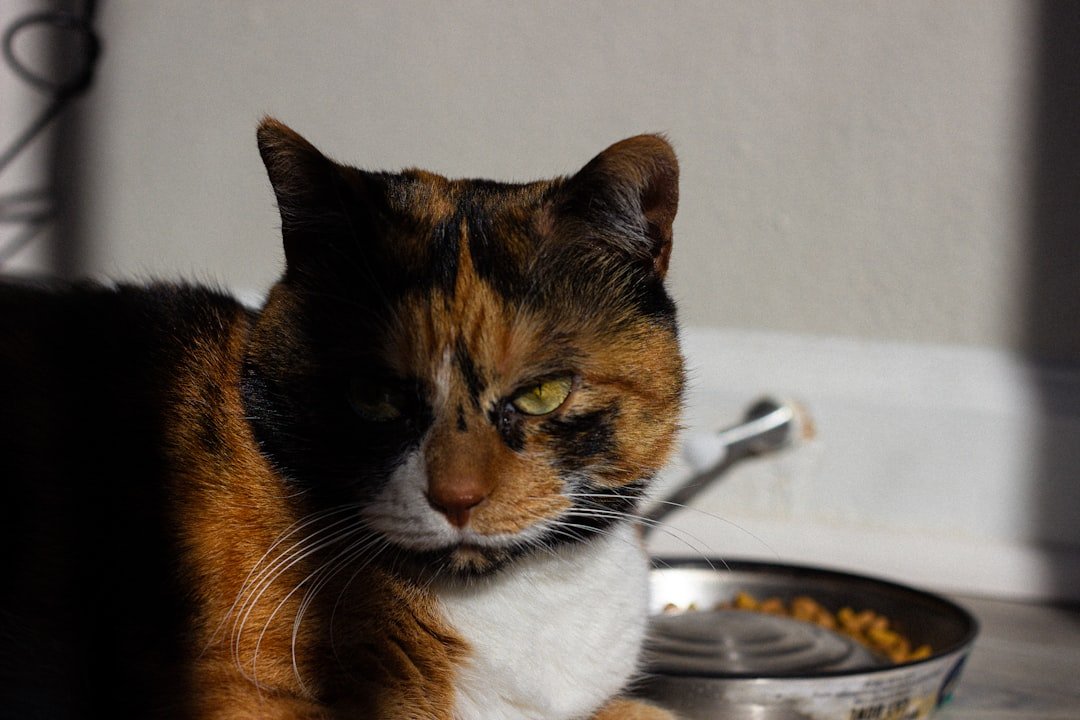
Your cat finishes dinner, then scratches the floor beside the bowl as if trying to cover food after eating with invisible dirt. Why does my cat cover food after eating? Usually, it is an inherited behavior linked to hiding leftovers, reducing food scent, or returning to a meal later, even though your cat lives safely indoors and has no need to protect dinner from other animals. It is very common.
Why does my cat cover food after eating?
Domestic cats keep many instincts that helped their wild ancestors survive. A wild cat that left part of a meal behind might scrape leaves, soil, or loose material over it, which could make the remains less obvious to other animals and insects. The behavior may also help conceal the smell of prey in an area where the cat wants to rest or hunt again. Your kitchen floor is different. Your cat’s brain may still treat leftover food as something that should be hidden.
This is often called caching behavior. A cat may paw at the floor, scratch a nearby mat, pull a towel toward the dish, or make covering motions without touching anything at all. Some cats do it after every meal, while others only do it when they leave a noticeable amount behind. Personality matters. So does the cat’s routine, food type, and sense of security around the feeding area.
The wild instinct explained
In nature, food can attract competition. Covering remains may have reduced the chance that another animal would find the food, and it may have allowed the original hunter to return later if food was scarce. Cats are also careful around strong smells because scent can reveal where they have been. The instinct does not mean your cat feels unsafe. It is simply an old behavioral pattern that can appear in a modern home.
Indoor cats may be especially likely to perform the motion around wet food, fish-based food, or meals with a stronger aroma. Dry kibble has less obvious scent and can be left in a bowl longer, so some cats show less interest in covering it. There is no fixed rule. One cat may cover tuna but eat chicken without any scratching afterward.
Sometimes the action is less about hiding food and more about ending the meal. Cats often like predictable routines, and scratching around the dish can become a small after-dinner ritual. A cat may also be trying to move away from food that is stale, too cold, or no longer appealing. Watch the whole pattern. A single pawing session tells you less than changes in appetite, body language, or bathroom habits.
When food covering is normal
Food-covering behavior is usually harmless when your cat eats normally, maintains their usual energy, and acts relaxed around the bowl. A cat that takes a few bites, scratches nearby, and walks away may simply be full or saving the rest mentally for later. No intervention is needed. You can clean up wet food after the meal and let the ritual pass.
It can also happen in multi-cat homes. A cat may try to hide leftovers if another cat is nearby, even when there has never been an actual fight over food. Feeding stations that are too close together can create quiet tension, with one cat eating quickly or leaving food behind while watching the other. Give each cat space. Separate bowls in different areas can make meals calmer.
The surface around the bowl can change the behavior too. A loose placemat, paper, rug edge, or towel gives a cat something they can pull toward the food, which can turn a small scratching habit into a more dramatic covering routine. If the behavior is messy, use a heavy washable feeding mat with flat edges. Avoid leaving plastic bags, strings, or loose fabric near the bowl, since cats may chew or swallow pieces.
What to do when your cat tries to cover dinner
You do not need to stop a normal instinct, but a few small adjustments can make feeding easier and help you notice whether your cat is actually eating enough. Keep the response low-key. Scolding can make a cat anxious around meals and will not change the reason behind the behavior.
- Check how much was eaten. Look at the bowl before clearing it, especially if your cat usually finishes meals.
- Offer sensible portions. If food is often left over, divide the daily amount into smaller meals rather than leaving a large serving at once.
- Remove wet food promptly. Follow the food maker’s storage guidance and discard food that has been sitting out too long.
- Make the area quiet. Put the bowl away from litter boxes, loud appliances, busy doorways, and another cat’s feeding spot.
- Use a stable mat. A non-slip mat can catch crumbs without giving your cat fabric or paper to drag over the dish.
A simple example helps. If your cat receives two large wet-food meals and leaves about one quarter of each serving, ask your veterinarian whether the same daily amount could be split into three smaller meals instead. Smaller portions stay fresher. They may also better match a cat that prefers several short eating sessions.
When a behavior change needs attention
Covering food by itself is rarely alarming, but a sudden change is worth taking seriously. Contact a veterinarian if your cat begins covering food while also eating much less, refusing food, dropping food, pawing at the mouth, vomiting, losing weight, hiding more than usual, or acting painful near the bowl. Those signs can have many causes. They need proper assessment rather than guesswork at home.
Also pay attention if the scratching becomes frantic or your cat repeatedly circles the bowl without eating. Stress can affect appetite and feeding behavior, especially after a move, a new pet, changed work hours, or conflict between cats. Keep notes for a few days. Record the food offered, amount eaten, timing, and any other changes you notice.
FAQ
Why does my cat scratch the floor near the food bowl?
Floor scratching is usually your cat’s version of covering leftover food. The cat does not need actual soil for the instinctive motion to appear. It is normal when eating and general behavior stay typical.
Does covering food mean my cat dislikes it?
Not always. Your cat may simply be full or following a familiar routine. If your cat repeatedly walks away after only a bite or two, refuses a previously enjoyed food, or has other changes in appetite, consider the food’s freshness and speak with a veterinarian if the pattern continues.
Why does my cat cover food with a toy or blanket?
Your cat may use whatever loose item is nearby as a substitute for leaves or dirt. Move toys and blankets away before meals if they get dirty or if your cat mouths them while trying to cover the dish. Keep it simple.
Should I leave leftover dry food out?
That depends on your cat’s feeding plan and the food’s storage guidance. Some cats do well with measured meals, while others have veterinarian-approved free-feeding routines. Measuring the daily amount makes it easier to spot an appetite change.
Related posts
This post is for general informational purposes only and is not veterinary advice. Every cat is different — if you have concerns about your cat’s health or behavior, please consult a qualified veterinarian.