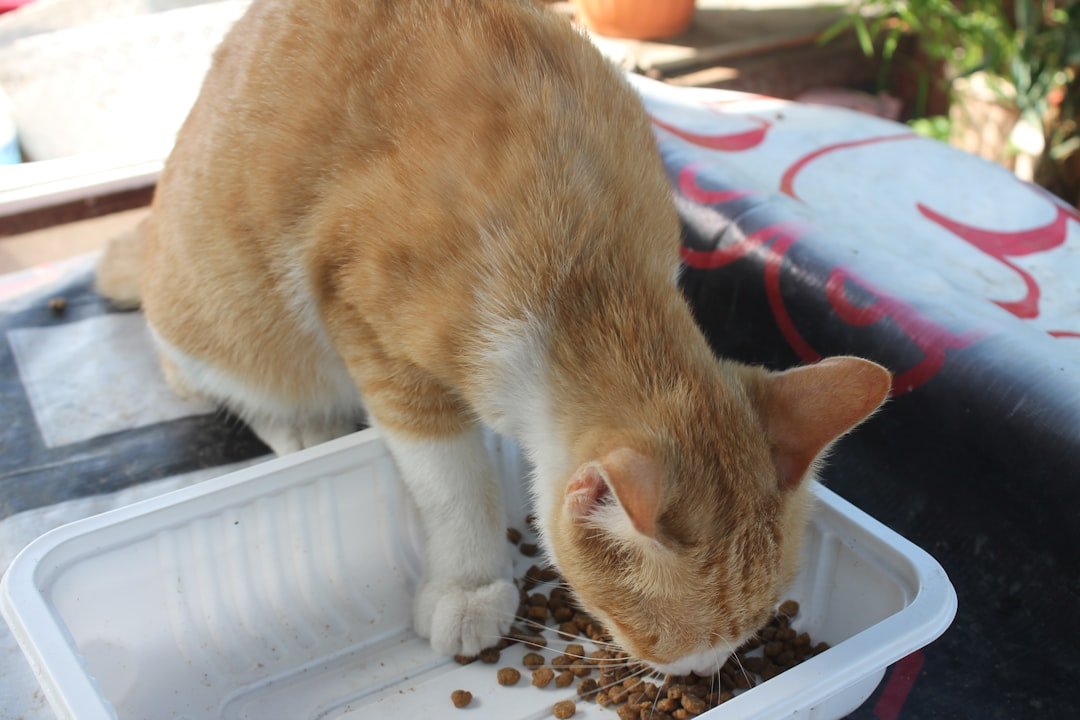
It is breakfast, your cat is waiting by the bowl, and you are choosing between another pouch and a can. Wet food pouches vs cans for cats usually has a clear answer for everyday feeding: choose cans for most meals. Cans generally give you more food for the money, create less packaging per ounce, and make it easier to feed a larger cat or a multi-cat home without opening several individual packages. Wet food pouches vs cans for cats go the other way when your cat needs a small fresh portion, hates refrigerated leftovers, or you need food that fits easily in a bag. Cost is an important part of that choice.
For the most common case, an adult cat eating wet food regularly in a one- or two-cat home, buy canned food in a suitable can size and refrigerate the unused portion promptly. That is the practical recommendation. You can still keep pouches for travel days, appetite dips, or the occasional meal when convenience is genuinely useful, although freshness guidance still matters.
Wet food pouches vs cans for cats at a glance
Cans are usually the value choice because their larger format lowers the packaging and handling cost per ounce of food. A single 5.5-ounce can may cover one or more meals, depending on the food’s calorie density and your cat’s daily needs, while several small pouches may be needed to provide the same amount. Check the label for calorie and feeding information.
- Choose cans if you feed wet food daily, have more than one cat, can refrigerate leftovers, or want the lowest likely cost per calorie.
- Choose pouches if your cat reliably eats only a small amount at once, you cannot store leftovers conveniently, or you need easy meals away from home.
- Use both if cans are the daily base and pouches solve specific situations, such as a pet sitter visit or a short trip.
The food inside can be nutritionally similar when you compare complete-and-balanced recipes made for the same life stage. The container alone does not tell you whether a recipe is better. Read the feeding statement and calorie information, because those details matter more.
Why cans are the better default
A can has a simple advantage: it often holds more food with less individual wrapping. Small pouches are convenient, but each one has its own laminated packet, seal, printing, and shipping space. You are paying for some of that convenience, and it adds up.
Suppose your cat needs about 180 calories per day and a certain canned recipe provides 90 calories in a 3-ounce can. If that can costs $1.20, feeding two cans costs $2.40 per day. If a comparable 45-calorie pouch costs $0.85, feeding four pouches costs $3.40 per day. That is a $1 daily difference before taxes, delivery fees, or discounts. These figures are examples only, not typical market prices; actual prices can vary greatly by brand, region, retailer, and promotion.
Over 30 days, that example is $72 for cans versus $102 for pouches. The exact figures can look very different with premium recipes, sales, and larger can sizes, but the calculation is the same. Compare cost per calorie. Do not compare package prices alone.
To do it quickly, divide the package price by the calories listed on the label, then multiply by 100. A $1.20 can with 90 calories costs about $1.33 per 100 calories. An $0.85 pouch with 45 calories costs about $1.89 per 100 calories. Lower is cheaper.
For cats that eat several wet meals each day, this small bit of label math can make a real difference to the monthly food bill. It also stops a common mistake: assuming the smaller package is cheaper because its shelf price looks lower. Small packs can be expensive.
Cans also simplify pantry storage. They stack neatly, usually have a long unopened shelf life, and are easy to count when you are planning a grocery order. Keep them in a cool, dry cupboard. Avoid badly dented cans.
A deep dent along a seam, a swollen can, a leaking can, or one that spurts unusually when opened is not food to serve. Throw it away and follow the manufacturer’s customer-service instructions if you want to report it. Do not taste it yourself, since food safety comes first.
Where pouches win on freshness
Pouches win when your cat only accepts food immediately after opening. Some cats will eat chilled leftovers after they warm slightly, while others walk away even when the food is perfectly safe and within the storage guidance. Cats can be particular. That is normal.
A small pouch can match one meal closely, so little or no food goes into the refrigerator. This is especially useful for a single cat who eats small portions and leaves anything that has been chilled. Less waste can narrow the cost gap.
For example, a 5.5-ounce can may look cheaper per ounce, but it is not cheaper in practice if your cat eats half and you routinely discard the rest. If a pouch is eaten completely, its higher unit price may be the better household choice. Waste changes the answer.
Pouches are also easier for some people to open, carry, and empty without a spoon. They take up little room in a work bag or travel kit, and you can often squeeze the food directly into a clean dish. Bring a bowl anyway. Cats should not have to eat from sharp or awkward packaging.
The tradeoff is that pouches can be frustrating for cats who need a larger meal. Opening multiple packs each day takes time, and scraping all the food out can be messy. A can with a spoon is often easier at home.
Do not assume every pouch is one complete meal. Some are small supplemental toppers, treats, broths, or complementary foods rather than diets intended to be fed as the main source of nutrition. The package should state whether it is complete and balanced for your cat’s life stage. Read that statement.
Freshness after opening
Once opened, canned food and pouch food need similar care. Transfer uneaten food to a clean covered container, or cover the can securely with a fitted lid or wrap, and refrigerate it soon after your cat finishes. The clock starts.
Do not leave wet food in the bowl all day. A commonly used general guideline is to discard food left at room temperature after about one to two hours, with less time sensible in a very warm room; this is not a universal standard, so always check and follow the product label if it gives different instructions.
Refrigerated leftovers are often used within about two to three days as a general guideline, but recipes and packaging guidance differ, so check the product’s own instructions and follow the label. Mark the container with the opening date if your household opens several foods at once. It prevents guesswork.
Freshness is not only about safety. Refrigeration changes aroma and texture, and many cats respond strongly to smell. A food can still be within its recommended storage period yet be less appealing to a cat that prefers it warmer. That distinction helps.
Instead of microwaving the whole stored portion repeatedly, scoop out only the next meal and let it sit briefly in a clean dish. You can also place the sealed portion container in warm water for a few minutes. It should feel barely warm, not hot. Stir before serving.
Microwaves can create hot spots. If you use one, heat a small serving only, stir thoroughly, and test the temperature with a clean finger before putting it down. Never serve hot food. Your cat’s mouth is sensitive.
Pouches sometimes seem fresher because each meal comes in a newly opened packet. In a practical sense, that can be true when the entire pouch is served immediately. But an opened large pouch with leftovers needs refrigeration just like an opened can. Packaging does not override food handling.
Choosing the right can size
The best can is not always the largest can on the shelf. Choose a size that your cat or cats can finish within the refrigerated storage period stated on the product label after opening. This reduces waste without forcing you into high-cost single portions. Match the package to reality.
A cat eating one 3-ounce can daily may do well with that size if it is the only wet food served. A two-cat household can often use a larger can at one meal, especially if both cats eat the same recipe. Separate bowls are helpful.
If one cat is on a different diet, has a strong preference, or tends to steal food, individual portions may be easier to manage. That does not mean pouches are required. Small cans can offer the same portion-control benefit.
Try a seven-day check before committing to a case. Write down how much food you open, how much your cat actually eats, and how much you discard. Then calculate the cost of food eaten, rather than the cost of food purchased. The difference can surprise you.
- Pick one complete-and-balanced canned recipe and one comparable pouch recipe.
- Record the package price and calories for each.
- Track leftovers for one ordinary week.
- Calculate the daily cost of food your cat actually ate.
- Choose the format with less waste and a manageable routine.
Keep changes gradual if you are switching foods rather than merely changing package format. Mixing a little of the new food with the old food over several days is often easier on a cat’s acceptance than a sudden full replacement. Go slowly.
Texture, ingredients, and nutrition labels
Pouches and cans come in pâté, chunks in gravy, shredded styles, mousse-like textures, and other forms. A cat’s preference can be stronger than any cost calculation. If your cat will only eat one texture, that information is useful. Work with it.
Do not assume pouches are automatically higher quality because they look more premium, and do not assume canned pâté is basic food because it is inexpensive. Compare the individual product label. The named recipe matters.
For a main meal, look for wording that says the food is complete and balanced for the appropriate life stage, such as adult maintenance or growth. Foods labeled for intermittent or supplemental feeding are not designed to be the sole diet. Toppers are different.
Also look at calories per pouch or can. Two foods may look equally filling because their packages are the same size, yet have very different calorie counts due to moisture and recipe composition. This affects portion planning. Use calories, not appearance.
If your cat needs a diet selected for a health concern, ask the veterinarian who knows your cat before making a routine food change. Package format may still be your choice, but the diet itself can matter more. Do not guess.
Packaging, storage, and cleanup
Both formats have drawbacks after dinner. Empty cans may have food residue and sharp edges, while pouches can be difficult to rinse and may not be accepted in every local recycling system because they are made from layered materials. Check local guidance. Rules differ.
Cans are often easier to store in quantity and may be recyclable where you live once cleaned, although local programs set the rules. Pouches take less space before use but can create a larger pile of empty packets over a week. Neither option is waste-free.
If cleanup is part of your decision, use a small silicone can lid for opened cans and a narrow spoon for pâté. For pouches, cut only where directed and squeeze slowly into the dish to avoid splatters. Small habits help.
Buy only enough of a new recipe to test it first. Even a food with a good price, good ingredients, and a convenient package is not a bargain if your cat refuses it. Cats decide quickly.
When pouches are the smarter purchase
Choose pouches over cans when your cat consistently refuses refrigerated leftovers and small pouches eliminate regular waste. This is the biggest exception to the can recommendation. Food eaten is better value than food thrown away.
Pouches also make sense for short travel, emergency kits, pet-sitter instructions, and situations where you cannot easily wash a can lid or store an open container. Their compact shape is useful. Convenience has value.
They can be useful for monitoring intake, too. If one pouch is one known portion, it is simpler to see whether your cat finished breakfast. That can help you notice a routine change, though a single missed meal does not tell you why it happened, so watch the pattern.
For a cat who eats a small amount several times daily, a pouch may reduce handling and make each serving more appealing. You will pay more in many product lines. Decide whether the saved waste and easier routine justify it.
When cans are clearly better
Cans are clearly better when you feed two cats, feed substantial wet meals every day, or have a cat that happily eats refrigerated leftovers after gentle warming. The savings can become meaningful over time. Buy a case only after testing.
They are also the stronger choice when you want a wider selection of larger portions and pâté textures. Many stores stock far more canned options than pouch options, especially in larger sizes. Availability varies.
If your cat eats one 5.5-ounce can in a day and you can portion it into two fresh servings, there is little reason to pay pouch prices for ordinary home feeding. Keep a few pouches for backup. Let cans do the routine work.
This comparison provides general feeding information, not veterinary or individualized nutrition advice. Product labels can help with routine feeding choices, but consult a qualified veterinarian for health concerns or diet decisions specific to your cat.
FAQ
Are pouches fresher than cans for cats?
An unopened pouch and an unopened can are both shelf-stable until their printed date when stored as directed. A pouch can feel fresher because it is often a single serving opened right before feeding. Once either package is open, refrigerate leftovers promptly. Handle both the same way.
Are canned cat foods cheaper than pouches?
Usually, yes, especially when you compare similar foods by calorie or ounce and use medium or larger cans. The exception is a cat that wastes canned leftovers but finishes every pouch. Calculate the food actually eaten.
Can I refrigerate an opened cat food pouch?
Yes. Put leftover pouch food in a clean covered container, refrigerate it promptly, and use it according to the product’s storage instructions. A pouch itself is awkward to reseal securely. A container works better.
How long can wet cat food stay in the bowl?
About one to two hours at room temperature is a cautious general guideline, with less time in a hot room. This range is not a universal standard, so check the product label for specific instructions and follow it if it differs. Discard food that has sat out longer rather than mixing it with fresh food. Use a clean bowl next time.
Should I buy small cans instead of pouches?
Small cans are often the best middle ground for one cat. They give near-single-meal portions with the lower cost that cans often have, although the exact price depends on the recipe and store. Compare calories and waste before choosing.
The simple choice is this: use canned wet food as your regular option unless your cat reliably wastes chilled leftovers or your routine needs true single-serve portability. Buy the can size your cat can finish within the storage period stated on its product label after opening, portion leftovers cleanly, and keep pouches for the times they solve a real problem. That keeps feeding practical.
This post is for general informational purposes only and is not veterinary advice. Every cat is different — if you have concerns about your cat’s health or behavior, please consult a qualified veterinarian.