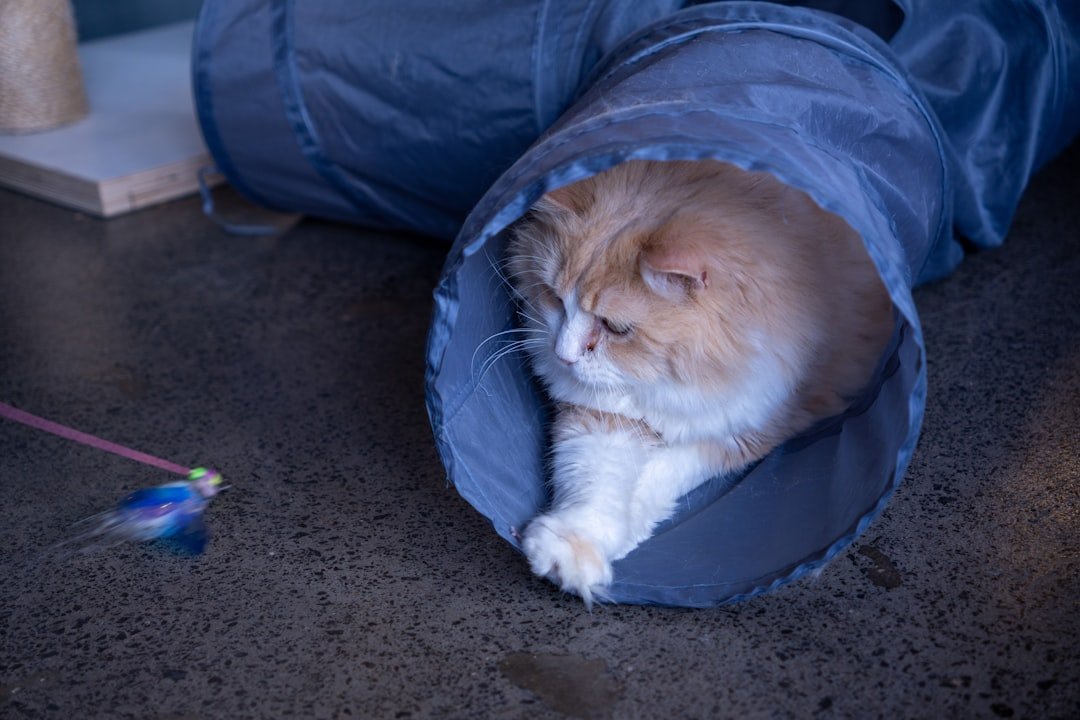
Cat tunnel vs cat cave comes up when a nervous cat slips under the sofa as soon as the doorbell rings, then peeks out only after the house is quiet again. For most homes, choose a cat tunnel first. A tunnel gives a shy cat cover without making them feel cornered, and its usual two openings let them watch the room, leave quickly, or play when they finally feel ready. A cat cave is the better pick when your cat already curls up in baskets, open carriers, or covered beds and clearly prefers a small, enclosed place to sleep.
Cat tunnel vs cat cave at a glance
The main difference is how each product handles escape and visibility. That matters. A tunnel is a long fabric tube, often with an opening at both ends and sometimes a side peephole, while a cave is usually a round or pod-shaped bed with one main entrance and an enclosed sleeping area. For a shy cat, the tunnel is usually less intimidating because it does not ask them to commit to one enclosed dead end.
Think about the cat’s view of the room. A frightened cat often wants shelter while still tracking footsteps, voices, other pets, and the route back to a familiar place. A tunnel offers that middle ground. They can sit with their body hidden and their head near an opening, which is often more comfortable than disappearing fully inside a cave they have not learned to trust.
Start with the tunnel. It is the safer general recommendation for shy cats because it supports cautious investigation and does not trap the cat in a single-entry space if another pet walks past or a sudden noise occurs. Cats vary, though. Some genuinely relax faster in a soft, dark cave, especially if they have a predictable quiet spot and no one tries to reach inside.
Why a tunnel usually suits shy cats better
Shyness is not stubbornness. A cat may be cautious because their environment still feels new, because household activity is unpredictable, or because they have had limited positive experience with visitors and noise. A tunnel will not fix those causes, but it can give the cat a manageable place to pause while they decide whether the room feels safe enough to rejoin.
Two exits change the experience. If a cat enters a cave and hears the vacuum, sees a dog, or notices a child nearby, the one opening can feel like a bottleneck even when nobody means any harm. In a tunnel, they can move away from the disturbance without having to push past it. That sense of choice is useful for a cat who is still building confidence in a busy home.
Tunnels also invite low-pressure play. A wand toy moved slowly past an opening, a tossed soft ball, or a few pieces of dry food can encourage a cat to investigate without a person looming over them, and the cat can stop whenever they want. Keep it gentle. The goal is not to lure a scared cat into a game but to let them discover that the tunnel can be part of a calm, predictable routine.
Many tunnels crinkle or have hanging toys. Be careful here. Some cats enjoy the sound, but a very nervous cat may avoid a loud crinkly tube for weeks, particularly if it shifts sharply under their feet. A quieter fleece-lined or canvas-style tunnel is often the easier first option, and a stable tunnel with a light frame can feel less surprising than a flimsy one that collapses.
Length matters too. A short tunnel, roughly 18 to 24 inches, can work in a small room and is easy for a cat to test with one paw. A longer tunnel gives more cover, but it takes more floor space and may seem too dark for a cat who is only beginning to explore. For an average adult cat, choose a diameter that lets them turn around comfortably rather than squeezing through.
When a cat cave is the better choice
Choose a cat cave first if your cat already seeks tight sleeping spaces. This is common in cats who regularly tuck themselves into an open wardrobe shelf, a laundry basket, the back of a closet, or a carrier left out with bedding inside. Their behavior has already told you something useful: they may find a small, enclosed resting area comforting rather than restrictive.
A cave can hold warmth well. That makes it appealing for cats who spend long hours sleeping, older cats who prefer a cozy bed, or homes that feel cool near the floor. The enclosed shape can also reduce visual movement around the cat, which may help a cat settle when there is ordinary household activity nearby. Put it somewhere quiet.
The entrance needs to be generous. A cave with a tiny opening may look cute, yet some cats will not use it because they cannot easily see inside or turn around, and a larger cat may feel pressed against the sides. Check the product dimensions instead of relying on photos. If your cat avoids a cardboard box with a similar opening, a narrow cave is unlikely to become their favorite overnight.
Firmness matters more than style. Felt caves often keep their shape and stay warmer, while plush caves can be softer but may sag after washing or repeated use. A cave that caves in when the cat leans against it can be unsettling. Look for one that remains open, has a washable insert or is safely washable as directed, and does not have loose decorative parts that could be chewed.
A cat cave wins in one particular household setup: a quiet home where the shy cat has a protected corner and mostly needs help resting, not navigating around other animals. That is a narrower case. If the cat must cross active rooms, shares space with a curious dog, or is easily startled by people passing close by, the tunnel remains the more practical first purchase.
How to choose based on your cat’s habits
Watch where your cat hides now. Their current choices are more useful than a product label that says calming or anxiety-reducing. A cat who hides behind curtains or under low furniture may like a tunnel because it creates a covered passage with open ends. A cat who sleeps inside boxes or carriers may prefer a cave.
Also watch their exit behavior. If your cat backs out of hiding places carefully, darts away when approached, or becomes uneasy when another pet blocks the room, prioritize two exits. A tunnel gives them options. If they settle deeply in one spot and do not react much to normal movement, a cave may be enough.
Use this simple check over three or four calm days:
- Notice whether your cat chooses open-ended cover or enclosed containers. Keep notes short.
- Place an empty cardboard box on its side, with both flaps removed, near their usual resting area. Watch quietly.
- Place another box upright with one wide entrance cut into the side, then leave both boxes available. Do not put the cat inside.
- See which setup they visit, nap in, or return to when something mildly startling happens, such as normal kitchen noise. Their choice is useful.
If they choose the side-opening box more often, try a cave. If they move through the open-ended box, sit at either end, or use it as a covered route, buy the tunnel. This is not a test of bravery. It is simply a low-cost way to match the product to a cat’s existing comfort pattern.
Placement makes more difference than people expect
Even the right hiding product can be ignored in the wrong spot. Do not place it in the middle of a busy walkway, beside a speaker, or beside a litter box. Cats usually prefer a resting place that has a wall behind it and a reasonably clear view of the room. A quiet bedroom corner or the edge of a living room often works better.
Give the cat space. Place the tunnel so both openings are usable, rather than aiming one end directly at a wall or wedging it behind furniture. For a cave, turn the entrance toward the room but away from the busiest route. A cat should be able to enter and leave without people stepping over them.
Leave it alone at first. It is tempting to point, shake a dangling toy, or place the cat inside so they understand the new bed, but that can make a shy cat link the item with pressure. Set it down with a familiar blanket nearby, then let curiosity do the work. A small treat placed just outside the entrance can be enough.
Keep expectations realistic. Some cats inspect a new tunnel within minutes, while others need several days or longer before they touch it, especially if it has a new-fabric smell or makes noise. Avoid moving it repeatedly during that period. Predictability helps a cautious cat decide that an object belongs in their territory.
Safety and cleaning details
Check the product before each use at first. Look for exposed wire, torn mesh, loose pom-poms, dangling elastic, or stitching that has come apart. Small attached toys are not suitable for every cat, particularly cats who chew or pull threads. Remove loose additions if needed.
Supervise early play. A tunnel should be large enough that your cat can reverse direction without panicking, and it should not have a narrow tie, cord, or loop that can catch around the neck. If you have multiple cats, choose a wider tunnel or use separate hiding spaces so one cat cannot easily block another at an entrance.
Wash according to the label. Vacuuming hair and wiping a non-washable frame may be enough between deeper cleans, while fabric items often need gentle laundering and complete drying before they go back on the floor. Strongly scented detergent can put some cats off. Mild, unscented cleaning products are usually the simpler choice.
Replace it when the structure changes. A flattened cave, a tunnel with damaged framing, or fabric that has begun to unravel is no longer a reliable resting spot. Prices vary by region and material, so compare measurements, washing instructions, and construction before paying extra for a shape or print. The cat will care more about feeling safe than matching the sofa.
FAQ
Should I buy a tunnel or cave for a newly adopted shy cat?
Buy a tunnel first in most cases. A new cat benefits from a hiding place with two exits while they learn household sounds, routines, and the location of food, water, and litter. Set it near their safe room wall, not beside the litter tray, and let them use it without being disturbed.
Can a cat tunnel make a shy cat more anxious?
It can if it is noisy, unstable, too narrow, or placed where people constantly walk past. Start simple. A quiet, sturdy tunnel in a low-traffic corner is less likely to feel alarming than a crinkly toy tunnel in the center of family activity. Stop using it if your cat consistently startles away from it.
Do shy cats need both a tunnel and a cave?
They do not need both. One well-placed hiding option is more useful than several items that clutter a small space or keep getting moved around. Later, adding a cave can make sense if your cat uses the tunnel for play and travel but still sleeps under furniture or inside boxes.
Where should a cat cave go?
Put the cave in a quiet corner with a wall behind it. Avoid enclosed closets with doors that may be shut accidentally, areas close to appliances, and spots where another pet can stand directly in front of the entrance. A familiar blanket beside or inside the cave can make the location feel less new.
What if my cat ignores the new hiding spot?
Give it time. Leave the item in one calm location for at least several days, add a familiar-smelling blanket nearby, and avoid placing the cat inside. If there is still no interest after a reasonable settling period, compare its shape and location with the places your cat chooses on their own.
Related posts
This post is for general informational purposes only and is not veterinary advice. Every cat is different — if you have concerns about your cat’s health or behavior, please consult a qualified veterinarian.