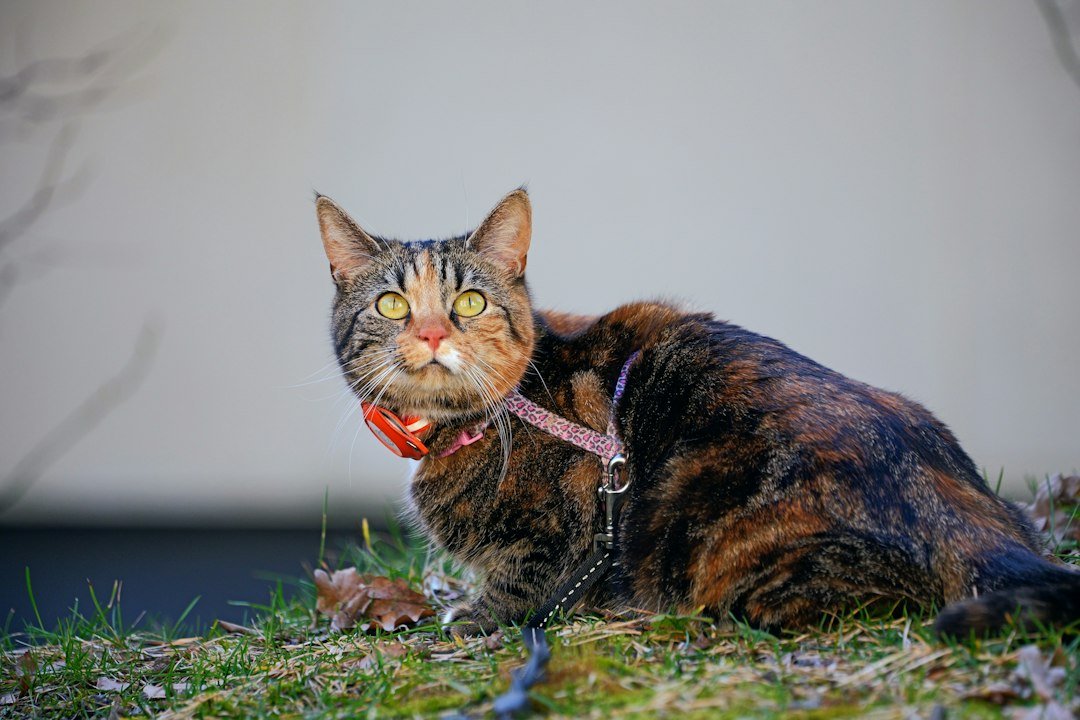
For the best cat GPS tracker for outdoor cats, measure your cat’s neck and check the tracker’s total weight before you compare maps, apps, or prices. Start there. A tracker that is too bulky, catches on brush, or makes your cat resist their collar is unlikely to help, no matter how polished its app looks. For most outdoor cats, the practical choice is a lightweight GPS collar tracker with reliable cellular coverage where the cat actually roams, plus a battery routine you can manage without forgetting.
There is no universal winner. Cats travel differently, and the land around your home matters as much as the tracker itself. A cat that wanders through open suburban gardens has different tracking conditions than one that slips into dense woodland, sheds, under parked cars, or narrow gaps between houses. GPS trackers can be very useful for finding a general location or seeing a recent route, but they cannot guarantee a live dot at every moment.
Best cat GPS tracker for outdoor cats
Choose the tracking technology before getting attached to a particular model. That is the useful dividing line. Products marketed for cats generally fall into cellular GPS trackers, radio-frequency trackers, and Bluetooth item finders, each with a different job and a different set of limits.
| Tracker type | How it locates a cat | Battery life compared | Best fit | Main limitation |
|---|---|---|---|---|
| Cellular GPS | GPS location sent through a mobile network to an app | Manufacturer specifications vary; examples may be about 1 to 7 days, depending on reporting frequency and signal | Cats that range beyond your immediate property | Usually needs a subscription and mobile coverage |
| Radio-frequency | A handheld receiver points you toward the tag | Manufacturer specifications vary; examples may be weeks to months, depending on the unit | Finding a nearby cat hiding in gardens, sheds, or brush | No map or location history |
| Bluetooth finder | Short-range Bluetooth, sometimes aided by nearby phones | Manufacturer specifications vary; examples may be many months to around a year with a replaceable battery | Backup identification or very local searching | It is not true live GPS tracking |
A cellular GPS tracker is what most people mean when they search for a cat GPS collar. It uses satellites to estimate position, then needs a mobile network to send that information to your phone. The app may show current or recent location, location history, activity estimates, and a virtual boundary alert. Those tools are useful. They also depend on a charged unit, a workable signal, and a cat wearing the collar.
Major cellular GPS tracker brands are commonly researched in this category because they sell cellular GPS trackers designed for pets. Check current official product pages before buying. Plans, supported countries, collar attachments, charging claims, and network arrangements can change, and a tracker that works well in one country may have limited support elsewhere.
Radio-frequency trackers take a simpler approach. You carry a receiver, and it gives directional feedback as you move closer to the tag. No monthly plan is normally required. This can be a strong option for a cat that usually disappears nearby, especially when GPS is weak beneath dense cover or inside a building. The catch is range. You must be close enough for the receiver to detect the signal, and it will not show a location on a map.
Bluetooth tags are often tempting because the upfront price is lower and the battery can last much longer. Keep expectations modest. A Bluetooth finder, such as an Apple ecosystem product, is an item finder rather than a dedicated GPS pet tracker; check current product features before buying. It does not continuously transmit a satellite-derived location to your phone; location updates depend on nearby compatible devices detecting it, which may be sparse in rural places or behind a house where your cat is hiding.
Battery life compared in real outdoor use
Battery life is usually the deciding trade-off. A smaller GPS tracker has less room for a battery, while frequent location updates use more power. Manufacturer battery estimates are useful starting points, but they are normally based on particular settings and favorable conditions. Treat them as an upper-end reference rather than a promise for every cat.
Live tracking drains power fast. If a tracker checks in every few minutes, depending on its settings, during an active outdoor session, it will usually need charging sooner than one that updates less often. Poor mobile signal can also shorten runtime because the device may work harder to connect. Cold weather, an aging battery, and repeated use of a light or sound feature may reduce it further.
For a cat that goes out daily, a realistic routine matters more than the largest number printed on a box. A device needing a recharge every two to four days, depending on manufacturer specifications and use conditions, can work well if you bring your cat in each evening and place the tracker on charge beside your keys. It may be a poor fit for a cat that stays out overnight or refuses to come indoors on schedule. That is a practical mismatch.
Look closely at the settings that affect power use. Many cellular trackers offer a standard mode that sends periodic updates, then a live mode for short-term searching. This split is sensible. Use the lower-power setting for normal wandering, and reserve live mode for the moment you need to locate a missing cat. Leaving live tracking on all day often turns a manageable charging schedule into a frustrating one.
Do not compare battery claims without comparing tracker size and reporting mode. A larger dog-oriented tracker may run longer, but its weight can be uncomfortable or unsafe on a smaller cat. A tiny tag may be easier to wear but need more frequent charging. Comfort comes first.
Fit, collar safety, and weight
Use a breakaway collar for an outdoor cat. This is non-negotiable for many owners. A breakaway buckle is designed to release if the collar becomes caught, which reduces the risk of a cat being trapped by a branch, fence, or other obstacle. The downside is obvious: the tracker can come off with the collar, so its last location may lead you to the collar rather than your cat.
Check the tracker maker’s stated minimum neck size and recommended pet weight, then compare those figures with your own cat. Avoid guessing. Measure the neck with a soft tape where the collar normally sits, and leave room for two fingers under the fitted collar. The tracker should sit securely without swinging under the throat, where it can knock against the chest or interfere with comfortable movement.
Weight tolerance varies. A sturdy adult cat may accept a compact tracker quickly, while a smaller, older, or sensitive cat may flatten their ears, scratch at the collar, walk oddly, or try to remove it. Introduce the setup indoors for short supervised periods first. Watch your cat move, jump, groom, and settle down to sleep before relying on it outside.
Check the attachment too. A tracker secured by a flimsy silicone loop can be lost more easily than one held by a purpose-made holder, but even a secure holder needs inspection. Look for cracks, stretched loops, loose screws, or a collar that has become too tight. Do this weekly. Outdoor use is hard on small hardware.
Coverage, maps, and geofence alerts
Check mobile coverage at home and around the places your cat tends to visit. Do not rely on a national coverage map alone. A carrier can be strong on your street but weak behind a hill, in a wooded area, or inside a metal shed. If possible, test your own phone’s service outdoors around your property as a rough first clue, while remembering that the tracker may use a different network.
GPS itself also has limits. Satellite location may be less precise under heavy tree cover, close to tall buildings, or indoors. A tracker can report a location that is near the cat rather than exactly at the hiding place. Search the reported area slowly. Check under decks, inside open garages, behind bins, and in dense shrubs before assuming the signal is wrong.
A geofence is an app-drawn virtual boundary. It can alert you when the tracker appears to leave or return to that area. This is handy for noticing an unusual trip, but it is not a real fence. Location updates can be delayed, and a boundary set too tightly may trigger alerts when the GPS estimate drifts a little. Set the first boundary wider than your garden, then adjust it after several days of normal tracking data.
Location history is often more valuable than a single pin. A map may reveal that your cat regularly pauses near a neighbor’s shed or follows a hedge line toward a quiet corner of the block. That pattern helps you search intelligently if the cat fails to return. It can also show whether the tracker has a repeated dead zone.
Costs beyond the tracker price
Budget for the subscription before you buy. Most cellular GPS trackers require a recurring plan because the device needs mobile data to send locations to the app. Plans may be billed monthly, annually, or over a longer term, and prices vary by region. Verify the full current cost, renewal terms, cancellation process, and whether live tracking is included before entering payment details.
Also consider replacement costs. A lost collar, chewed charging cable, damaged holder, or worn battery can turn a low upfront price into a more expensive setup over time. A radio-frequency tracker may cost more at first but avoid a monthly plan, while a Bluetooth tag may have low upkeep but provide far less help when a cat is genuinely missing beyond local range.
Think about the cost in effort as well. A tracker that needs charging twice a week, depending on manufacturer specifications and use conditions, checking after rain, and occasional app updates may still be worthwhile. But only if it fits your household habits. The best purchase is usually the one you will keep charged and attached properly.
A practical way to choose
Make the decision using your cat’s normal range, not your worst-case worry. Keep it simple. First, write down whether your cat usually stays within a few nearby gardens or crosses roads and travels farther. Next, check mobile service in that area and decide whether you can recharge a device every few days. Then measure your cat and compare the tracker’s stated fit guidance with a breakaway collar you trust.
- Choose cellular GPS if your cat ranges widely and local mobile coverage is reliable.
- Choose radio-frequency if your cat mainly hides nearby and you want long battery life without a plan.
- Use a Bluetooth finder only as a backup tool, not as your sole method of locating a roaming outdoor cat.
- Test the collar indoors, then during supervised garden time, before relying on the tracker for regular outdoor access.
- Set a charging reminder and check the app’s battery warning before your cat goes out.
Here is a quick example. If your cat comes in for dinner every evening, a cellular tracker rated by the manufacturer for several days may fit your routine because you can charge it while they eat or sleep. If your cat sometimes stays out for two nights and is hard to catch, a shorter-life GPS unit may leave you with no location when you need it most. In that case, a radio-frequency option or a change to supervised outdoor time may be more realistic.
FAQ
Can a GPS tracker find my cat anywhere?
No. GPS location still needs a charged tracker and, for most pet GPS products, a mobile signal to send the result to your app. Dense trees, buildings, low network coverage, and a collar that has come off can all limit what you see. It is a useful locating tool, not a guarantee.
How often should I charge a cat GPS tracker?
Check the battery level before outdoor time. For many cellular models, charging every few days, depending on manufacturer specifications and use conditions, is a sensible starting routine, but your actual interval depends on settings, signal quality, weather, and how much live tracking you use. Follow the manufacturer’s charging guidance for the specific model.
Is a breakaway collar safe with a tracker attached?
A breakaway collar is generally the safer collar style for outdoor cats because it can release when snagged. There is still a trade-off. The cat may lose the collar and tracker, so make sure the collar has identification details and do not treat the tracker as a substitute for a properly registered microchip.
Do I need a subscription for a cat GPS tracker?
Usually, yes, for a cellular GPS tracker. The subscription pays for mobile data used to send locations to the app. Radio-frequency trackers usually do not need one, and Bluetooth finders generally do not either, though their range and capabilities are different.
Can I put an AirTag on an outdoor cat?
You can attach a Bluetooth finder, including an Apple ecosystem product, to a collar if the holder is light and secure, but check current product features and it has limits outdoors. It may update when compatible phones pass nearby, rather than showing continuous GPS tracking. It is better viewed as a secondary aid for a cat that stays local than as a replacement for a dedicated GPS tracker.
Related posts
This post is for general informational purposes only and is not veterinary advice. Every cat is different — if you have concerns about your cat’s health or behavior, please consult a qualified veterinarian.