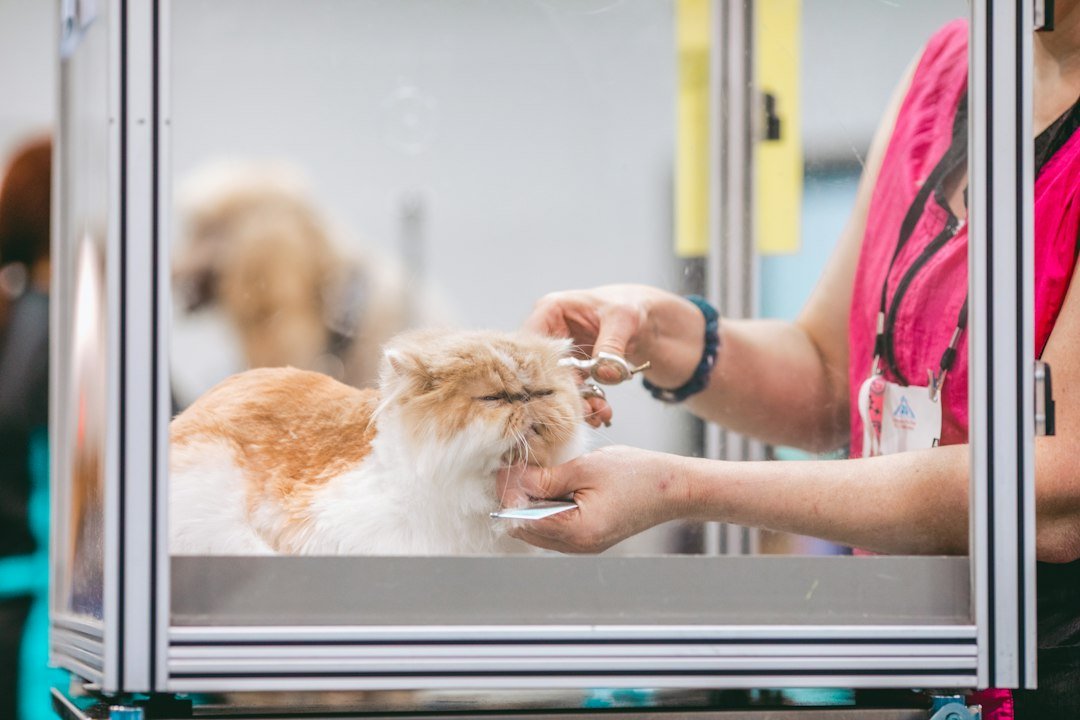
The best cordless cat grooming clippers for matted fur are quiet, low-vibration tools with a sharp blade and enough power to cut without repeated pulling. For matted fur, the best cordless cat grooming clippers are usually professional-style pet clippers rather than tiny face trimmers, but a clipper cannot make every mat safe to remove at home. Mats can sit extremely close to thin cat skin. That is the main risk.
A good purchase starts with the cat and the mat, not the brand name. A small loose mat on the flank calls for a different tool than a dense mat under the collar, in the armpit, around the rear, or near a joint, where skin folds and movement make clipping much less predictable. Location matters most.
Best cordless cat grooming clippers for matted fur
For most home users, look for a cordless pet clipper with a detachable #10 blade or a compatible fine blade, low noise, modest vibration, and a body that feels controllable in one hand. A #10 blade is a common close-cut blade used for sanitary areas and mat removal, though it can cut skin if it is pushed into a fold or used carelessly. Slow is safer.
Clipper makers sell several tool types, and the labels can be confusing. Compact cordless trimmers are useful for small touch-ups, paws, sanitary trims, and a single loose mat. Full-size cordless animal clippers have more motor power and typically accept broader detachable blades, which makes them the more realistic choice for a larger body mat or a thick coat that resists a small trimmer.
When comparing current manufacturer specifications and retailer listings, you may see five-in-one cordless clippers such as the Wahl Bravura Lithium Ion alongside larger professional tools such as the Andis Pulse ZR II. They are different categories, not direct substitutes. Check the current blade system, included battery, charger type, and warranty before buying because bundles and specifications can change.
Specific cordless clipper picks to compare
These models are established pet-grooming clippers with different strengths. Typical U.S. price ranges are approximate and can vary by seller, bundle, and region. Confirm the current manufacturer listing and included blade before ordering.
| Model | Type and published features | Typical U.S. price range | Best fit |
|---|---|---|---|
| Wahl Bravura Lithium Ion | Five-in-one adjustable blade; cord/cordless operation; about 90 minutes of cordless runtime | $140–$190 | Small accessible mats, sanitary work, paws, and cautious touch-ups |
| Andis Pulse ZR II | Full-size detachable-blade clipper; five motor speeds; removable lithium-ion battery; commonly bundled with a #10 blade | $280–$350 | Dense accessible body mats and households needing more power |
| Wahl KM Cordless | Full-size detachable-blade clipper; two operating speeds; cord/cordless use; compatible with A5-style detachable blades | $250–$330 | Thicker coats and larger accessible areas when a lighter professional option is preferred |
| Heiniger Opal | Full-size detachable-blade clipper; two speeds; long-runtime lithium-ion battery; compatible with snap-on blades | $400–$500 | Frequent grooming and users who want extended cordless runtime |
The Wahl Bravura is the lighter-duty option in this group. The Andis Pulse ZR II, Wahl KM Cordless, and Heiniger Opal are more capable full-size clippers, but their power does not make skin-tight mats safe for home removal. For any model, verify blade compatibility, runtime claims, and the exact contents of the package because retailer bundles differ.
| Clipper type | Best use | Main advantage | Realistic limitation |
|---|---|---|---|
| Small cordless trimmer | Loose spot mats, paws, sanitary areas | Light and less intimidating | May snag or stall in dense mats |
| Five-in-one cordless clipper | Small to medium tidy-up jobs | Adjustable blade lengths | Blade can run hot during longer work |
| Full-size detachable-blade clipper | Dense coat and larger accessible mats | More cutting power and blade options | Heavier, louder, and easier to misuse |
What matters before brand names
Motor performance matters because matted fur compresses into a dense layer that can stop weak clippers. A strong motor helps the blade travel through coat with fewer passes, but power alone is not a safety benefit. A powerful clipper can move quickly into skin. Control still comes first.
Choose a clipper made for animal coats, not a cheap human hair clipper marketed with a pet attachment. Human clippers are designed around a different hair texture and may lack useful pet blade options, adequate cooling, or the torque needed for dense undercoat. They often pull. Cats remember that.
Blade availability is one of the most practical buying factors. You need to be able to replace a dull blade instead of replacing the entire clipper, and you need a blade system that is easy to remove for cleaning. A dull blade pulls coat and makes a nervous cat harder to handle.
Battery life should cover several short sessions rather than one long attempt. Many cats tolerate five quiet minutes better than a full grooming session, especially when they have never heard clippers before. Plan breaks. Rechargeable spare batteries are useful on full-size professional models, although that convenience raises the initial cost.
Noise and vibration are not just comfort details. A quiet clipper may give you enough time to work calmly, while a high-pitched or rattling unit can make a cat twist, flee, or swat before you reach the mat. No clipper is silent. Read recent buyer feedback for reports of unusual rattle, heat, or weak battery performance.
Blade choices and heat control
A #10 blade is often the sensible starting point for removing an accessible mat because it cuts close enough to get beneath compressed fur. It is not a beginner license to shave anywhere. Never use a close blade over a nipple, skin fold, wart-like bump, or area where you cannot clearly see the skin shape.
Skip plastic guard combs for a true mat. Guards work over combed coat, but a mat often cannot enter the narrow space between the guard teeth and blade, so the clipper catches, tugs, or simply rides over the surface. Use a metal comb first. If it will not pass between the mat and skin, stop.
Clipper blades warm up through friction. Touch the blade against the inside of your wrist every few minutes, turn the clipper off if it feels hot, and swap to a cool clean blade before continuing. Heat can build fast. Blade wash, clipper oil, and a spare blade are practical supplies, not optional extras for repeated grooming.
Oil only as directed by the clipper maker, then run the clipper briefly and wipe away excess before it touches the coat. Loose oil can transfer onto fur and attract dust. A clean blade also cuts better than one packed with hair and dried grooming product.
How to assess a mat before clipping
Part the fur around the mat with your fingers and a metal comb. If you can see a clear gap between the mat and skin, the mat is small, and your cat remains calm with gentle handling, you may be able to clip it in very short passes. Keep the blade flat. Do not dig beneath the mat.
- Start with the clipper switched off near the cat, then offer a treat or calm praise if the cat is comfortable.
- Turn it on several feet away for a few seconds, then stop before the cat becomes upset.
- Use your free hand to hold surrounding skin and coat still, without pulling the mat tight.
- Approach from the outer edge and make a short pass parallel to the skin.
- Pause often to check blade temperature, the cat’s body language, and whether you can still see where the skin is.
Do not cut a mat with scissors close to the body. Cat skin can stretch upward into a mat, and scissors can make a serious injury in a moment. Clippers reduce that particular risk, but they do not remove it. Stop if the cat struggles.
Home clipping is a poor choice if the mat is hard as felt, covers a broad area, pulls the skin when moved, sits near the eyes or genitals, or seems attached around a wound or sore area. Call a veterinary clinic or an experienced cat groomer instead. They can decide what handling and equipment are appropriate.
Cost and practical trade-offs
Basic cordless pet trimmers are often the lower-cost option, while full-size professional cordless clippers cost more because of their motor, battery system, detachable blades, and repairable parts. Prices vary by region. Factor in replacement blades, blade care supplies, and possibly a spare battery before treating the sticker price as the full cost.
A lighter trimmer can be easier to hold around a squirmy cat, yet its smaller blade and weaker motor may turn a difficult mat into a frustrating job. A full-size clipper has more capability, but it is louder and heavier. Buy for the work you can safely do, not the hardest job described on the box.
A sensible first kit has the clipper, a compatible replacement blade, clipper oil, blade cleaner, a metal comb, and treats your cat already likes. Keep towels nearby for footing and calm restraint, but do not wrap a distressed cat tightly and force the session. End early. You can reassess later.
FAQ
Can cordless clippers remove all cat mats?
No. Cordless clippers can remove some loose, visible mats, but dense or skin-tight mats need professional assessment because you cannot safely judge the skin beneath them at home. A clipper is a tool. It is not a cure for severe matting.
What blade should I use for a matted cat?
A #10 blade is commonly used for close pet grooming and can work for accessible mats. Use only a clean, cool blade, keep it flat against the body, and avoid sensitive areas or any mat with no visible skin clearance. When uncertain, stop.
Are quiet clippers strong enough for matted fur?
Some are, particularly larger animal clippers designed for dense coats. Quiet does not automatically mean weak, and loud does not automatically mean powerful. Check whether the tool is a full clipper or a detail trimmer, then read the maker’s stated coat-use guidance and recent buyer reports.
How often should I groom a cat after removing mats?
That depends on coat length, shedding, age, mobility, and tolerance for brushing. For a long-haired cat, brief combing sessions several times a week can catch tangles before they tighten. Keep sessions short. A few calm minutes are more useful than a long struggle.
Related posts
This post is for general informational purposes only and is not veterinary advice. Every cat is different — if you have concerns about your cat’s health or behavior, please consult a qualified veterinarian.