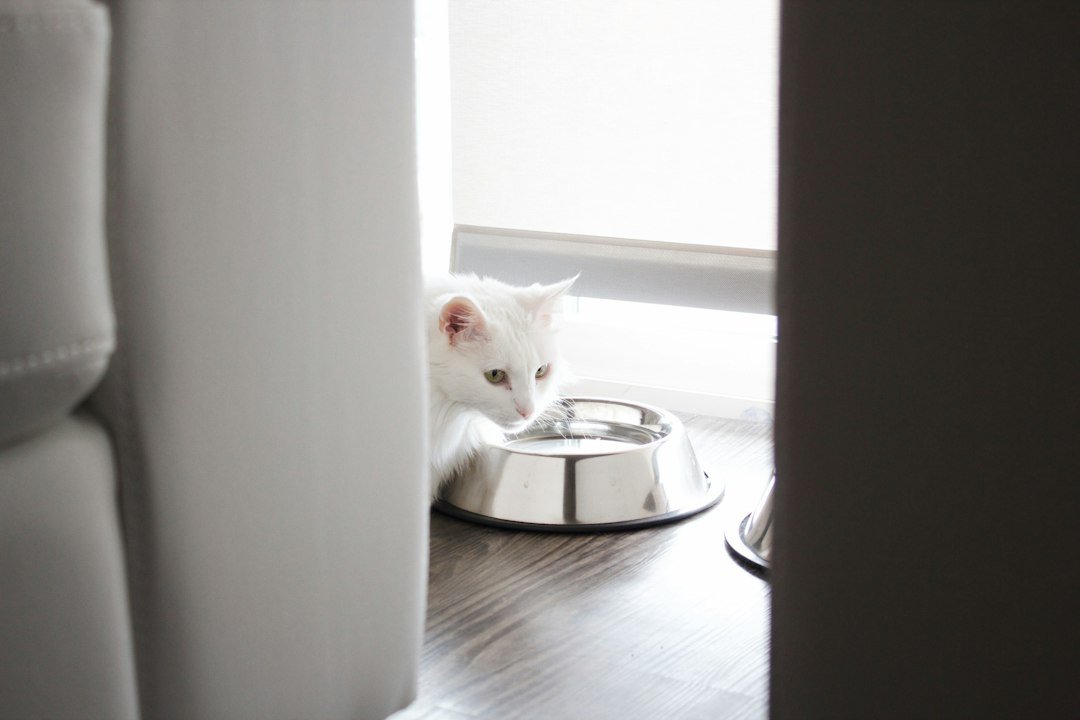
Choose a smooth, food-grade stainless steel bowl and wash it daily. For the stainless steel vs ceramic cat bowl decision, stainless steel is the safer choice for most homes because it does not chip, is easy to sanitize, and usually lasts for years with ordinary care.
Ceramic is not automatically unsafe. A good ceramic bowl with a durable, food-safe glaze can work very well, especially for cats that push lightweight bowls around or dislike the sound of metal, but it needs closer inspection because a chip or crack changes the picture.
Stainless steel vs ceramic cat bowl safety
Stainless steel wins the common-case comparison. It has a smooth nonporous surface, so food residue and moisture are less likely to settle into tiny damaged areas, and a quality bowl does not lose its safe surface coating through normal use because there is no glaze to crack.
Ceramic bowls depend more on manufacturing quality and ongoing condition. The clay itself is covered by glaze, and the glaze needs to be intended for food contact, evenly applied, and free of crazing, chips, or cracks; older, handmade, decorative, or poorly labeled bowls deserve extra caution when their intended use is unclear.
A bowl’s cleanliness matters as much as its material. Wet food left at room temperature can dry onto either surface, and a bowl that looks clean may still have residue around its rim, base, or rubber attachment, so daily washing is sensible.
| Factor | Stainless steel | Ceramic |
|---|---|---|
| Best choice for most cats | Often a good default when it is food-grade, smooth, and undamaged | Good when it is clearly food-safe, intact, and inspected regularly |
| Damage risk | May dent or scratch, but does not usually chip | Can chip, crack, or develop glaze damage |
| Cleaning | Usually simple to hand-wash or dishwasher-clean | Easy when intact, but inspect damaged glaze closely |
| Weight and stability | May slide unless it has a stable base or mat | Usually heavier and harder for cats to move |
| Noise | Can clink against tags or hard floors | Usually quieter |
| When to replace | Deep scratches, sharp dents, rust, or loose parts | Any chip, crack, crazing, or rough damaged area |
Why stainless steel is the default recommendation
A plain stainless steel bowl has fewer things to monitor. Look for a bowl sold for food use, with a smooth interior, rolled edges, and no flaky coating, then replace it if it becomes deeply scratched, develops rust, or has damage that leaves a sharp edge. Simple is useful.
Many stainless bowls can go in the dishwasher, although the maker’s care instructions should decide that. If the bowl has a bonded rubber ring, removable silicone base, painted exterior, or nonstick-style finish, check whether heat and detergent are suitable before putting it on a dishwasher rack.
Stainless is also a practical option for cats who eat wet food. You can scrub the bowl without worrying about wearing through a ceramic glaze, and you can see smears of food or grease easily on the reflective surface, which makes a missed wash less likely.
There are small drawbacks. Lightweight bowls can skid, some cats react to the clink of a collar tag against the rim, and a thin bowl may flex when handled. Choose a heavier gauge bowl, use a washable silicone mat under it, or pick a low, wide design with a broad base. Do not use a bowl with a loose rubber ring that traps food underneath.
When a ceramic bowl is the better pick
Choose ceramic when you have a clearly labeled food-safe bowl that is intact, heavy enough to stay put, and easy to inspect. Its weight can help a determined cat who shoves a steel bowl across tile, and its quiet surface may suit a cat that startles at metallic noises. That can be a real benefit.
Shape can make ceramic particularly appealing. Some ceramic dishes are broad and shallow, which may feel more comfortable for cats that dislike pressing their whiskers against a narrow, deep bowl, although bowl preference varies widely between individual cats.
The safest ceramic choice is a bowl made specifically for pet food or human food, sold by a seller that identifies it as food-safe and gives clear care directions. Avoid using decorative dishes, souvenir pottery, craft-market pieces without food-use information, or bowls with metallic decoration where the maker does not clearly say they are suitable for food contact.
Inspect ceramic under good light after each wash. Run a clean fingertip gently around the rim and interior, looking for rough spots, hairline cracks, dull lines in the glaze, or tiny chips near the edge and base; replace the bowl rather than trying to seal or repair a food bowl yourself.
How to choose the safer bowl today
If you need one straightforward purchase, buy a low-sided stainless steel cat bowl designed for food use, with a stable base and no decorative coating. Pick a size that lets your cat eat without burying its face in a deep container, because a very large bowl is not necessary for a normal meal.
- Check the interior. It should be smooth, with no sharp seam, peeling finish, or rough spot.
- Check the label. Choose a bowl identified for food or pet-food use, and follow the maker’s cleaning directions.
- Choose the right shape. A low, wide bowl often works better than a narrow, tall one for dry food or wet food.
- Set it on a clean surface. A washable mat can prevent sliding and catch spills without changing the bowl material.
- Wash after meals. Empty leftovers, wash with hot water and dish soap, rinse well, and dry before the next meal.
For water, use the same standard. A stainless or intact food-safe ceramic water bowl is fine, but fresh water and a cleaned bowl matter more than choosing one of these two materials, since saliva, dust, and food crumbs can collect quickly. Refresh it daily.
Cleaning and replacement habits
Wash food bowls after each meal when possible, particularly when serving wet food. If your schedule means food sits out for a while, remove what remains before washing, rather than topping up a partially dirty bowl with a fresh scoop, because old residue builds up.
Use ordinary dish soap, warm or hot water, and a clean sponge or brush reserved for pet dishes if that makes your routine easier. Rinse thoroughly, dry the bowl, and clean the feeding mat or floor beneath it because crumbs and splashes often collect around the bowl’s outer edge.
Do not rely on appearance alone with ceramic. Replace it at the first clear chip or crack, even if the damaged area seems small, since that rough opening is harder to clean and can worsen with repeated washing or a knock against the floor.
With stainless steel, replace bowls that rust, have deep gouges you cannot clean well, or have bent edges that could scrape a cat’s face. Light surface marks do not always mean a bowl is unusable, but a smooth, undamaged eating surface is the goal.
FAQ
Are stainless steel bowls safe for cats?
Generally, a food-grade stainless steel bowl in good condition is a safe everyday option for cat food and water. Choose one with a smooth interior and clean it regularly; if it rusts, cracks at a seam, or develops a sharp edge, replace it.
Can ceramic cat bowls contain unsafe materials?
Some ceramic items are not meant for food contact, especially decorative pottery or pieces with unclear labeling. Choose ceramic bowls specifically identified as food-safe or suitable for pet food, avoid damaged glaze, and skip any bowl when you cannot confirm what it was made for.
Do ceramic bowls cause cat acne?
Dirty bowls and trapped residue may contribute to irritation in a cat’s chin area, whatever the bowl material. Ceramic that is intact and cleaned well may be fine, but switching to stainless steel is a simple first bowl change if you notice recurring chin messiness or irritation and want an easier surface to keep clean. Ask a veterinarian about persistent skin changes.
Is a raised bowl safer for cats?
Raised bowls are not automatically safer. Most healthy cats can eat comfortably from a bowl placed on the floor, while a raised setup may be useful in specific situations based on a veterinarian’s guidance or a cat’s individual comfort. Bowl width and cleanliness usually matter more.
How often should I replace a cat bowl?
Replace ceramic immediately when it chips, cracks, or develops rough glaze damage. Replace stainless steel when it rusts, has deep damage, or no longer has a smooth safe edge; an intact bowl can otherwise last a long time with regular washing.
Related posts
This post is for general informational purposes only and is not veterinary advice. Every cat is different — if you have concerns about your cat’s health or behavior, please consult a qualified veterinarian.