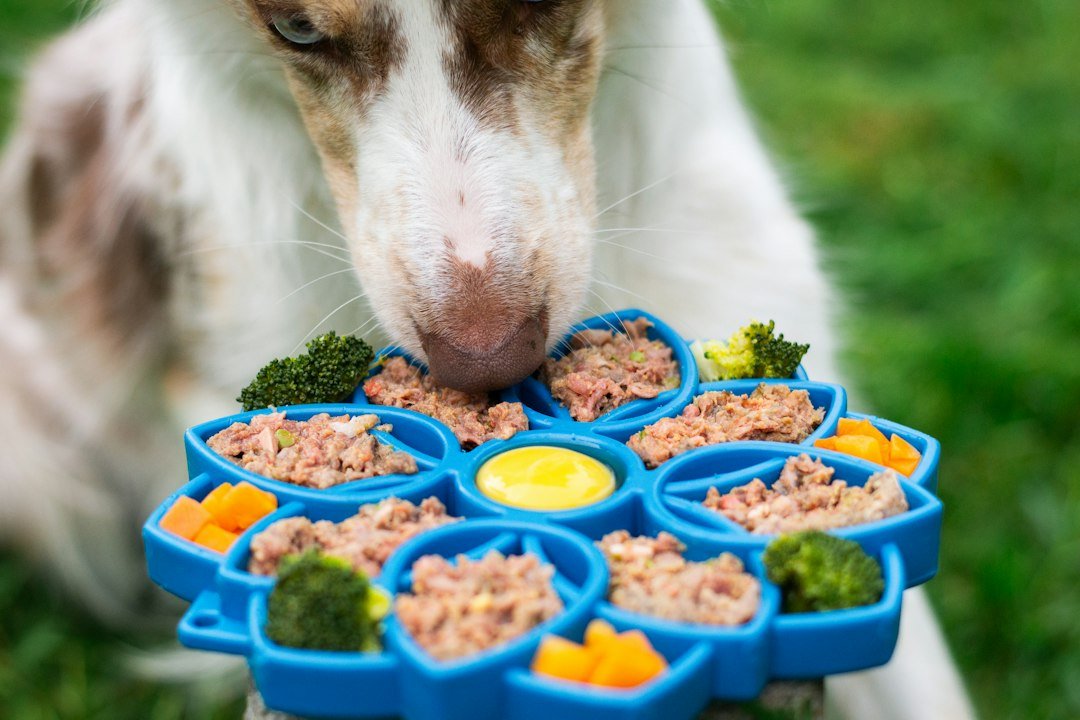
Put part of your cat’s usual dry-food meal into the easiest feeder you can find before buying a complicated one. That is the quickest way to find the best puzzle feeder for cats for your household, because your cat’s response matters more than clever-looking compartments or a high difficulty label. Start small. A feeder that releases food without frustration can add useful activity to an ordinary meal, while a puzzle that never pays out often ends up untouched in a cupboard.
A puzzle feeder for mental stimulation makes a cat interact with food through batting, rolling, pawing, or moving pieces aside. It is not a test. The practical goal is to slow down at least one meal and give the cat a manageable task, especially when indoor routines are quiet and meals otherwise arrive in a bowl within seconds.
Best puzzle feeder for cats starts with the right level
The best first feeder is usually easier than people expect. Choose something your cat can solve within a few minutes, then make it harder only after they approach it readily and finish most of the food. Easy wins build interest. A difficult board with deep wells may suit an experienced food-puzzle user, but it can be discouraging for a cat who has only eaten from a bowl.
Watch what your cat already does at mealtime. A cat who nudges toys across the floor may understand a rolling dispenser quickly, while a cat who reaches under furniture may enjoy shallow paw-access compartments. Their habits matter. A nervous cat, senior cat, or cat with limited vision may do better with a stable tray where the food stays in one place rather than a noisy object that skitters away.
| Feeder type | Usually suits | Main benefit | Trade-off to expect |
|---|---|---|---|
| Rolling treat ball | Beginners who like chasing | Simple movement and adjustable food release | May roll under furniture or make noise on hard floors |
| Open activity tray | Cats learning to use paws | Stable, visible food with low frustration | Some cats finish it quickly once they learn the pattern |
| Sliding-panel board | Confident cats with good paw control | More varied actions during one meal | Small channels can be harder to clean and may be too difficult initially |
| Slow-feeding mat or shallow maze | Food-motivated cats and short-faced cats | Slows access without requiring much chasing | Less active than a rolling or hunting-style feeder |
| Homemade scatter box | Cats that need a low-cost introduction | Easy to alter using safe household materials | Needs supervision and careful material choices |
Do not assume a higher difficulty setting means better mental stimulation. Cats gain more from a task they repeat calmly than from one they abandon after repeated failed attempts, and the right challenge can change over time as they learn. Keep it winnable. If your cat walks away and waits for you to provide a bowl meal, reduce the challenge at the next feeding.
Choose a feeder that works with your cat’s food
Dry kibble is the simplest food for most puzzle feeders because it rolls, drops, and stays tidy in small channels. Check the feeder opening against the size of your cat’s usual kibble. This is crucial. Large pieces can jam in narrow dispensers, while tiny pieces may spill out so quickly that the feeder no longer slows anything down.
Wet food needs a different design. Look for a washable shallow maze, lick mat, or broad tray with low channels rather than a ball or device with enclosed cavities. Keep portions modest. Wet food left in a puzzle for hours can dry out and becomes less appealing, so offer it when you can pick up and wash the feeder after the meal.
Some cats eat mixed diets, and one feeder does not need to handle every meal. You might use a dry-food rolling feeder for a measured morning portion and offer wet food in a regular dish later, or use a shallow wet-food maze during an evening meal when you are nearby. Match the tool to the food. That keeps setup simple and reduces cleaning problems.
Look closely at size, stability, and cleaning
A feeder should fit your cat, not merely fit on the shelf. Very small cups and narrow tunnels can be awkward for cats with broad faces, long whiskers, or large paws, while lightweight toys can slide too far for a timid cat to follow. Review the dimensions as well. Product photos rarely show how small a compartment feels once kibble is inside it.
Stable feeders work well for cats that prefer deliberate paw movements, especially on slick wood, tile, or laminate floors. A rolling feeder is better for cats that enjoy pursuit, but it may be loud at night and can disappear under sofas or cabinets. Put down a mat. A low-pile washable runner can limit rolling distance and reduce the clatter of hard plastic on hard flooring.
Cleaning is often the deciding factor after the first week. Select a design with accessible channels, smooth corners, and parts that can be rinsed without needing a brush for every tiny gap, particularly if you plan to use wet food or crushed treats. Complicated shapes look interesting. They can also hold food residue where you cannot easily see it.
Read the maker’s current cleaning directions before purchase, since dishwasher guidance and removable parts differ by model and can change. If a feeder has loose caps, sliders, or inserts, make sure they fit securely and inspect them regularly for wear. Loose pieces are a concern. Put damaged feeders aside rather than trying to repair cracked plastic with tape or glue.
Use material and design as safety checks
Food puzzles should be made for pet feeding and should not have sharp seams, easily chewed edges, or openings that can trap a paw. Choose a size that cannot be swallowed or carried away easily. Supervise first sessions. This is especially sensible for cats that chew plastic, bite toys apart, or try to swallow non-food items.
Hard plastic is common because it is light and easy to wipe, but it may make noise when rolled. Silicone mats are quieter and flexible, though determined chewers can damage soft materials. No material is perfect. Your cat’s chewing habits and your ability to supervise are more useful guides than marketing labels alone.
A homemade option can be useful for testing interest before you spend money. Scatter a measured dry-food portion in an empty cardboard egg carton, a shallow box filled with large paper balls, or a muffin tray with a few safe obstacles that cannot be eaten. Keep it simple. Avoid string, plastic film, staples, loose foam, and anything small enough to become a swallowing hazard.
Match the puzzle to your cat’s temperament
Confident, food-focused cats often adapt quickly to rolling dispensers and sliding puzzles. These cats may need a larger portion spread across two simple devices once they learn the first one, because a single easy toy can become routine. Change the pattern. Rotating feeders can make familiar food work feel less predictable without raising the difficulty too abruptly.
Cautious cats often need a gentler introduction. Place a few pieces of kibble around the feeder, leave several compartments uncovered, and let the cat investigate without moving the device toward them. Give them space. If they eat only the exposed food at first, that still tells you the setup is not frightening.
For a highly energetic cat, a feeder that travels across the floor may add movement to a meal, but it is not a replacement for interactive play. Food puzzles meet a different need. A short wand-toy session followed by a puzzle meal can mirror a useful sequence of chase, catch, and eat, provided the cat remains comfortable and interested.
Older cats and cats with reduced mobility may prefer low-sided trays, broad openings, and food placed near their usual resting area. Avoid asking them to chase food across a large room or reach deeply into narrow tubes. Make access easy. A puzzle can still be mentally engaging when it relies on gentle pawing rather than speed or jumping.
Set up the first week properly
Do not make a new puzzle feeder your cat’s only food source on day one. Use a small measured portion of the normal meal and provide the remainder in the usual bowl until you know your cat understands the device and is eating enough. Go slowly. This avoids turning a new enrichment item into an accidental missed meal.
- Days one and two: Leave food fully visible in an open tray or set a rolling feeder to its widest opening. As an example, use about 10 percent of one meal, adjusting for your cat’s size, usual food amount, and needs. Make it easy.
- Days three and four: If your cat approaches promptly and empties the feeder, you might use 20 to 30 percent of that meal, with the exact amount depending on your cat’s usual portion. Add only one small barrier or narrow the opening slightly.
- Days five through seven: Continue only if your cat finishes comfortably and returns willingly. You can spread more of the same measured meal through the feeder, but keep some food easy to access.
For example, if your cat normally receives 1/2 cup of dry food daily, do not add puzzle food on top of that amount. You might put 1 tablespoon into the feeder at first and subtract that tablespoon from the bowl portion, but these amounts are only an example and should vary with your cat’s size, normal ration, and dietary needs. Keep the total daily food measured. Puzzle feeding changes how food is delivered, not how much food your cat needs.
Observe the first few sessions without hovering too closely. Useful signs include sniffing, pawing, nudging, and returning to the feeder after a pause. Constant vocalizing, frantic biting, or giving up repeatedly are signs to simplify the setup. Instead, return to an easier version. A lower difficulty is not a failure, and many cats stay happiest with easy or moderate puzzles for life.
Compare products without getting distracted by labels
When comparing specific products, use the official product page to confirm dimensions, recommended food type, cleaning instructions, replacement-part availability, and any stated supervision guidance. Listings can be incomplete. Retailer reviews are useful for spotting practical issues such as lid fit, noise, or kibble jams, but one cat’s favorite design may not suit another cat’s paws or motivation.
Well-known product categories include adjustable rolling dispensers, stationary activity boards, and lick-style feeding mats. Several manufacturers sell products in these categories, though individual designs, materials, and availability change over time. Check current details. Focus on the actual mechanism rather than buying by brand name alone.
Price often reflects construction, adjustability, and included parts, but the most expensive feeder is not automatically the best match. A basic activity tray may be enough for a cat who needs only a slower breakfast, while a more complex board can make sense for a cat that has already mastered simple puzzles. Prices vary by region. Set a budget after you know which feeder style your cat will actually use.
Know when to pause and use the bowl
Stop using the puzzle for that meal if your cat seems unable to access food, becomes distressed, or refuses a meaningful part of their normal intake. Offer the usual dish. Puzzle feeding should add interest, not create pressure around eating. If appetite, weight, mobility, dental comfort, or behavior changes concern you, contact a veterinarian before pushing a food puzzle further.
The best puzzle feeder for cats is usually the one your cat solves with calm persistence and that you can clean, refill, and use consistently. Begin with an easy format, measure the food you put inside, and make the challenge fit the cat in front of you. Start tonight. A simple successful session gives you far better buying information than any difficulty rating on a package.
Related posts
This post is for general informational purposes only and is not veterinary advice. Every cat is different — if you have concerns about your cat’s health or behavior, please consult a qualified veterinarian.