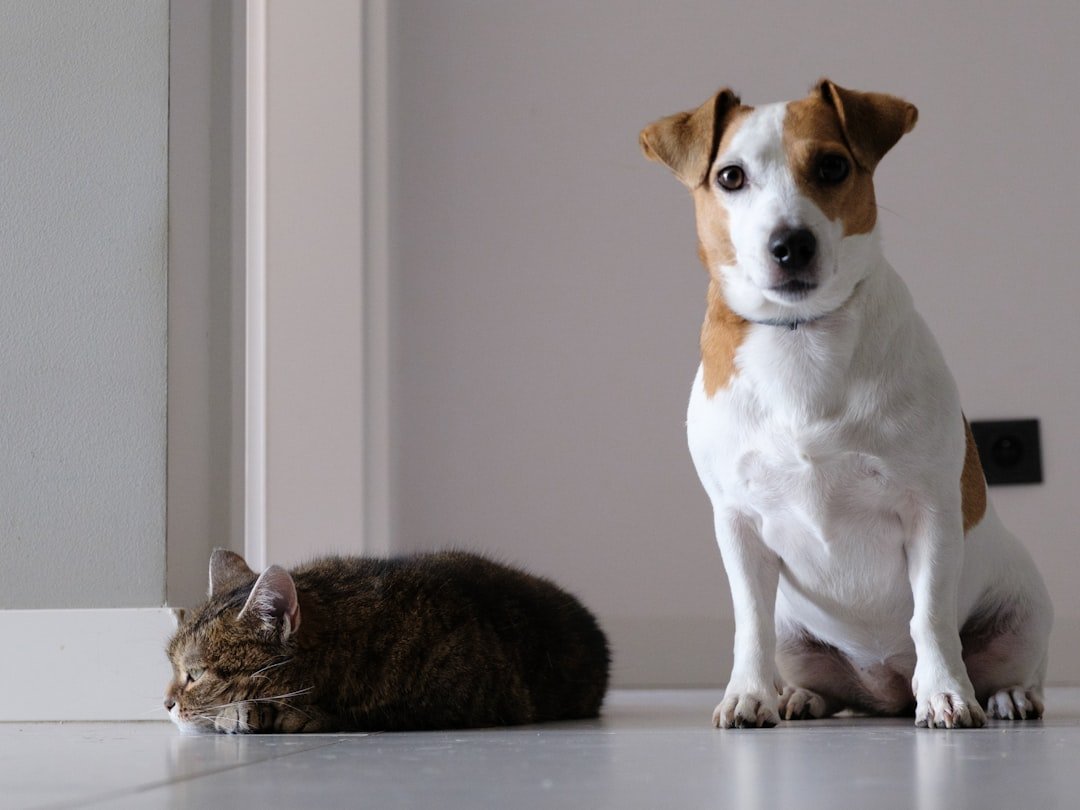
How to introduce a cat to a dog safely starts with separation, scent exchange, and calm, brief meetings rather than putting them together and hoping for the best. The goal when learning how to introduce a cat to a dog is peaceful coexistence, not instant friendship. Go slowly. A careful introduction lets each animal learn that the other is a normal part of the home without feeling trapped, chased, or forced to defend food, beds, or people.
How to introduce a cat to a dog step by step
Give the cat a private room before any face-to-face contact. This room needs food, water, a litter box, a scratching surface, a hiding place, and a comfortable resting spot, with the litter box placed away from food and water. Keep the door closed. The dog should continue with its usual walks, meals, and attention as much as possible, because a sudden disruption can make an excitable dog even harder to manage around a newcomer.
Start by letting both pets notice each other through scent. Swap bedding, gently rub each animal with a clean cloth and place that cloth near the other pet’s resting area, or allow them to investigate opposite sides of the closed door. Keep it easy. Pair the new smell with something pleasant, such as a meal placed several feet from the door or a small treat when the animal stays relaxed. Do not push a blanket directly under either pet’s nose if they turn away.
Watch their response before moving forward. A dog that sniffs, then walks away or settles is usually handling the scent well. A cat that investigates briefly, eats nearby, or rests normally is also coping. Tension looks different: repeated barking at the door, growling, scratching, pacing, hiding all day, refusing meals, or spraying can mean you need more time at this stage. Slow down. There is no useful prize for finishing an introduction in two days.
Set up the home for safe choices
Before visual meetings, make sure the cat has routes the dog cannot easily block. Tall cat trees, shelves designed for cats, a gated room, and furniture arrangements that allow the cat to leave are useful, provided the cat can reach them safely. Height helps. A cat often feels more secure when it can observe the dog without being at floor level, where a playful or curious dog may loom overhead.
Protect essential resources as well. The cat needs a litter box the dog cannot access, since dogs may disturb a cat while it uses the box or eat litter and waste. Keep cat food separate, especially if the dog tends to rush meals or guard food. Water should be easy to reach. In a multi-pet home, cats commonly do better when they have more than one safe resting place, so they do not have to cross the dog’s path every time they want to nap.
Plan for the dog’s side of the setup too. Practice a few simple cues away from the cat, such as coming when called, going to a bed or mat, and turning attention back to you. Keep sessions short. A dog does not need flawless obedience, but you need a reliable way to interrupt staring, rushing, or excited bouncing before the cat feels threatened. Use a leash during early sessions, even with a generally gentle dog.
Begin visual meetings through a barrier
Once both pets are reasonably calm around the closed door, let them see each other through a secure barrier. A tall baby gate, a screen barrier, or a door opened only a few inches can work, as long as the dog cannot push through and the cat cannot be cornered. Safety first. If the cat is new, use a barrier that lets the cat retreat into its private room rather than trapping it in a small shared area.
Bring the dog to the barrier on a leash after a walk or another calm activity, not when it is bursting with energy. Let the cat choose whether to approach. Reward the dog quietly for looking away from the cat, sitting calmly, or checking in with you. The cat may watch from across the room. That is fine. Do not carry the cat up to the gate, because being held removes its ability to leave when it feels uncomfortable.
Keep the first visual sessions very brief, perhaps one or two minutes if both animals are calm. End while things are still uneventful. A relaxed dog may have a loose body, soft eyes, and an ability to disengage; a relaxed cat may blink, sit normally, groom, or walk away without fleeing. Body language matters. A fixed stare, stiff posture, lunging, whining that escalates, crouching, flattened ears, puffed fur, or repeated hissing means the session should end and the barrier stage should continue.
Move to supervised time in the same room
After several calm barrier sessions, try short shared-room visits with the dog on leash and the cat free to leave. Do this in a room with open escape routes, not a narrow hallway or a place where the cat can be trapped behind furniture. Keep distance. Start with the dog far enough away that the cat can observe without freezing, hissing repeatedly, or trying to bolt. For some homes, that may be across a large room.
Ask the dog to settle on a mat or stay beside you, then allow the cat to enter on its own terms. Reward calm behavior from the dog with small treats placed near the dog, not tossed toward the cat. Avoid building excitement. If the dog becomes intensely focused, quietly lead it away, increase the distance, and try again later. If the cat approaches, do not encourage the dog to sniff immediately. Let the cat set the pace and leave whenever it chooses.
Use a simple decision rule during these sessions: if either animal cannot return to normal behavior within a few seconds after noticing the other, make the next session easier. That might mean more distance, a shorter visit, or returning to a barrier. Stop early. Waiting until one pet erupts teaches both animals that the other predicts stress. Calm repetitions build a more useful association over time.
Read the dog and cat honestly
Some dog behavior needs extra caution around cats, even when the dog is friendly with people or other dogs. Chasing, hard staring, silent stalking, sudden lunges, or becoming unable to respond to familiar cues can signal that the dog is too aroused for direct access. Do not test it. Keep the physical barrier in place and seek guidance from a qualified trainer or behavior professional who has experience with cat-dog households before attempting more freedom together.
Cats can show stress in quieter ways. A cat may stay hidden, avoid the litter box, eat less, overgroom, become unusually irritable, or wait until the dog sleeps before moving around the house. Small changes count. Some cats simply prefer distance, and that is a reasonable outcome. Your cat does not need to cuddle the dog to have a safe, workable home life.
Dogs vary too. A calm older dog may ignore a cat after a few meetings, while a young dog with lots of energy may need much more practice before it can settle. Breed labels alone do not tell you what will happen. Look at the dog in front of you. Its response to movement, its ability to disengage, and its history around small animals are more useful details when you decide how much management the home needs.
Build routines for a multi-pet household
Reliable routines reduce friction. Feed pets separately, give the dog regular exercise before planned introductions, and make sure the cat has predictable quiet periods without the dog following it. Keep greetings calm. When visitors arrive or the doorbell rings, manage the dog first if that is when its excitement peaks, because a frightened cat can associate that chaos with sharing the home.
Do not leave the pets alone together until supervised interactions have been consistently calm for a meaningful period, and even then, use your judgment about the individual animals. Some households keep a gate, closed room, or separate zones permanently. That is normal. A barrier is not a failure when it allows both pets to rest, eat, and move around without constant vigilance.
Avoid punishment for hissing, growling, barking, or warning signals. These behaviors tell you that an animal is uncomfortable. Punishing the warning can suppress the sound without removing the fear or excitement behind it, which makes future interactions harder to read. Instead, separate the pets calmly and change the setup. Give them more space next time.
Common mistakes that slow introductions
The biggest mistake is letting the dog chase the cat, even once, because chasing can become exciting for the dog and frightening for the cat very quickly. Prevent rehearsals. Keep the leash on during early shared sessions and use doors or gates whenever you cannot actively watch. A cat that runs may trigger pursuit in a dog that looked calm a moment earlier.
Another mistake is forcing contact for a photo, holding the cat while the dog sniffs, or assuming a wagging tail always means the dog is safe to approach. Tail movement can reflect excitement, tension, or anticipation. Watch the whole body. A loose dog that can turn away is different from a dog that is stiff, forward-leaning, and locked onto the cat.
Do not rush because one meeting looked good. A quiet five-minute visit is useful, but it does not prove that the pets are ready for hours together. Increase time gradually. If you have a busy household, plan introductions around calm parts of the day rather than trying to fit them into noisy meal times, school runs, or visitor arrivals.
When to get extra help
Contact a veterinarian if either pet suddenly stops eating, has a major change in litter box habits, seems physically unwell, or has a sharp behavior change during the transition. Health discomfort can affect behavior. For persistent fear, repeated chasing, attempts to bite, or escalating conflict, ask your veterinarian about appropriate behavior support or find a qualified behavior professional who can assess the home setup and observe the pets safely.
The best outcome may be friendship, polite indifference, or a household where the cat uses high spaces and the dog learns to leave it alone. All can work. Give the process the time it needs, protect the cat’s ability to escape, and reward the dog for calm choices every time you can. That steady approach is usually far more useful than trying to create a fast bond.
Related posts
This post is for general informational purposes only and is not veterinary advice. Every cat is different — if you have concerns about your cat’s health or behavior, please consult a qualified veterinarian.