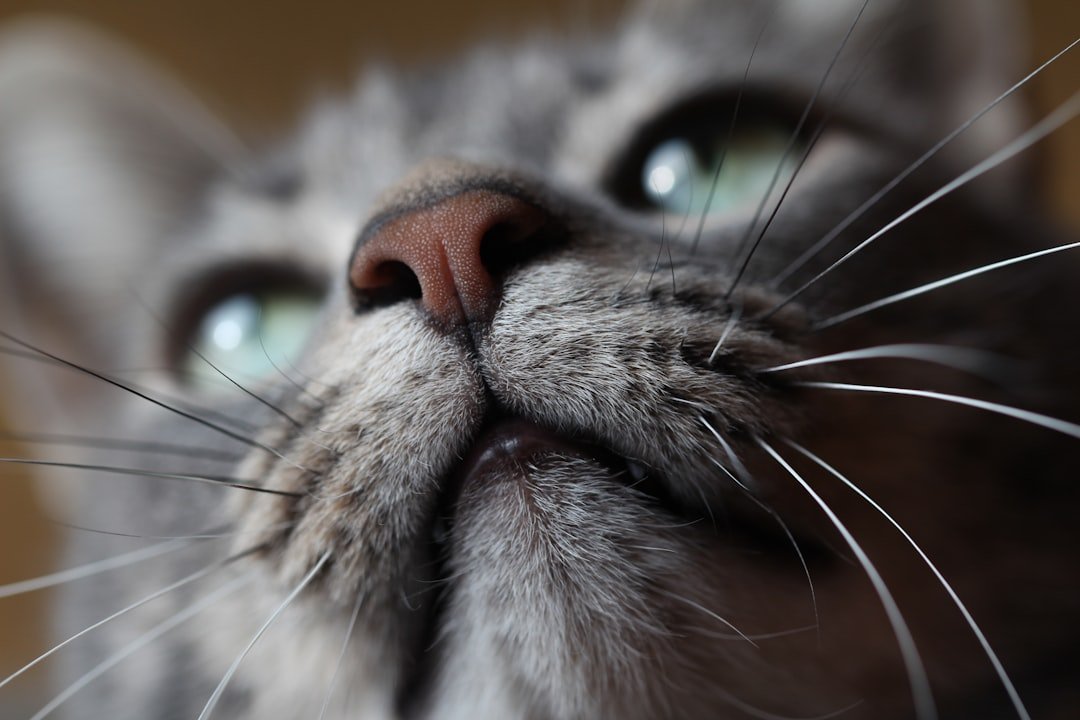
You find a long whisker on the sofa, then notice another near the food bowl. Cat losing whiskers is it normal? Usually, yes: an occasional whisker can shed as part of the normal hair-growth cycle and later be replaced. Watch the pattern. Whiskers should not all disappear at once, and their loss should not come with irritated skin, bald patches, or a cat that seems unwell.
When cat losing whiskers is it normal?
Whiskers are specialized, thick hairs called vibrissae, and they are rooted more deeply than the ordinary fur on a cat’s coat. They eventually shed. A single whisker, or a few found over several weeks, is generally less concerning when your cat has a normal-looking face, eats and behaves as usual, and new whiskers seem to be coming in over time.
Most cats have prominent whiskers on each side of the muzzle, plus shorter ones above the eyes, on the chin, and on the backs of the front legs. They are sensitive. A whisker helps a cat judge nearby surfaces and air movement because its root is connected to many nerve endings, so the shaft itself may look like hair but it has a very different job.
A shed whisker often looks intact, with a naturally tapered end. That is typical. It may be white, black, or mixed in color, depending on the cat, and it can turn up anywhere a cat sleeps, rubs its face, or grooms. Finding one does not mean your cat is losing its sense of direction.
Replacement takes time. New whiskers grow gradually, so you may notice a short, blunt-looking whisker emerging while an older full-length one is gone. Growth speed varies between cats, and it is more useful to watch whether the face and skin look healthy than to count every whisker you find on the floor.
What causes whiskers to fall out or break?
Normal shedding is one possibility, but a missing whisker is not always a clean shed. It may have snapped. Whiskers can break during energetic play, close contact with another pet, rough rubbing against furniture, or enthusiastic grooming. A broken whisker usually has a blunt or uneven tip instead of the fine tapered point of a naturally shed one.
Young cats can be especially active around their faces. Accidents happen. Older cats may also have more brittle-looking whiskers if their coat condition has changed, although whisker breakage alone does not tell you why. Look at the whole picture, including the coat, skin, appetite, energy, and normal habits.
Some cats live with another cat that chews or overgrooms their whiskers. This can happen during mutual grooming or social tension, and the affected cat may have short, uneven whiskers rather than cleanly shed ones. Observe calmly. Do not punish either cat, since punishment can increase stress and make it harder to see what is actually happening.
Skin irritation around the muzzle can also be associated with whisker loss or breakage. Redness, crusts, flakes, swelling, sores, itching, or hair loss on the face give a veterinarian useful clues, but those signs can have many different causes and cannot be identified reliably by appearance alone at home.
Nutrition and general health can affect coat quality. This matters. A cat that is eating poorly, losing weight, vomiting repeatedly, drinking much more than usual, or acting withdrawn needs more attention than a cat with one whisker on the rug. Whisker loss is rarely the only meaningful sign when there is an underlying health problem.
| What you notice | What it may fit with | Practical next step |
|---|---|---|
| One intact whisker found occasionally | Normal shedding | Keep an eye on new growth and normal behavior. |
| Several whiskers with blunt, snapped ends | Breakage from grooming, play, rubbing, or another pet | Check the home routine and observe interactions without intervening harshly. |
| Missing whiskers plus red, flaky, sore, or bald skin | A skin or grooming issue that needs assessment | Arrange a veterinary appointment promptly. |
| Rapid loss on both sides with appetite or behavior changes | A broader health concern may be present | Contact a veterinarian soon and describe all changes. |
| Facial swelling, severe pain, or trouble breathing | An urgent problem, whatever the cause | Seek urgent veterinary care. |
When to worry about whisker loss
Call your regular veterinarian if whiskers are falling out in clusters, if both sides of the face look suddenly sparse, or if you cannot see any replacement whiskers after a reasonable period. Take notes. A photo taken in good light every week can show whether the change is progressing, stable, or improving better than memory can.
Skin changes move this higher on the priority list. Contact the clinic promptly if you see persistent scratching, rubbing the face on objects, scabs, oily fur, unusual odor, bleeding, or a raw area near the whisker pads. Avoid putting human creams, essential oils, antiseptics, or flea products meant for another species on the area unless your veterinarian has specifically told you to use them.
Behavior matters as much as appearance. A cat that suddenly avoids being touched around the face, drops food, chews strangely, hides more, or seems less interested in meals may be uncomfortable. These signs do not point to one specific cause, but they are useful reasons to arrange an examination rather than waiting to see whether whiskers return.
One-sided changes deserve a closer look too. A single missing whisker can be ordinary, especially if it is intact and your cat is fine, but a whole patch of shortened whiskers on one side may suggest repeated rubbing, an interaction with another pet, or a local skin problem. Photos help. Include a clear view of both sides of the muzzle if you contact the clinic.
What to do at home
Start by looking, not pulling. Never trim whiskers, pluck loose-looking ones, or test whether they will come out. Cutting whiskers does not hurt the shaft itself, but it removes a sensory tool your cat uses and can make close-up navigation less comfortable until the whiskers grow back.
Use this simple check over the next several days:
- Look at both sides of the muzzle in daylight and note whether the whiskers are intact, missing, or snapped. Keep it simple.
- Check the skin around the whisker pads, eyes, chin, and lips for redness, flakes, scabs, swelling, or hair loss. Do not scrub.
- Notice eating, drinking, litter-box use, grooming, play, and willingness to have the face touched. Write down changes.
- Watch pet interactions if you have more than one animal, especially grooming, chasing, or repeated face contact. Give them space.
- Take a dated photo if the loss looks unusual, then contact your veterinarian if the change is rapid, persistent, or paired with other symptoms. A clear timeline helps.
Keep food and water in familiar, easy-to-reach places while you monitor the situation. This is sensible. A cat with a few naturally shed whiskers does not need a redesigned home, but predictable surroundings reduce frustration if the face is tender or if whiskers have been damaged.
Do not try to speed regrowth with supplements unless a veterinarian recommends one for your cat. Many cats already eating a complete commercial diet do not need extra vitamins, and unnecessary supplements can create new problems. Offer the usual balanced food, fresh water, and routine care instead.
Whisker care that prevents avoidable breakage
Choose food and water dishes that give your cat room around the whiskers. Wide, shallow bowls work well for many cats because the sides are less likely to press against the whisker pads. Preference differs. If your cat eats normally from a deeper bowl and shows no reluctance, there is no need to replace it solely because of a stray whisker.
Keep grooming gentle around the face. A soft brush can be useful for loose fur on the cheeks, but do not tug at whiskers or scrape the muzzle with a comb. If your cat dislikes face grooming, stop. Forcing it can cause stress and makes it harder to notice whether they are reacting to discomfort.
For multi-cat homes, give each cat enough resting spots, food access, and quiet space to avoid constant close contact. This reduces opportunities for unwanted grooming or conflict. It also makes observation easier because you can see whether one cat repeatedly mouths or licks another cat’s face.
The practical takeaway is straightforward: an isolated shed whisker is usually part of life with a cat, while sudden, widespread, broken, or skin-related whisker loss deserves attention. Trust the pattern. Your veterinarian can assess the face, skin, teeth, diet history, and overall condition in context if anything about that pattern seems off.
Related posts
This post is for general informational purposes only and is not veterinary advice. Every cat is different — if you have concerns about your cat’s health or behavior, please consult a qualified veterinarian.