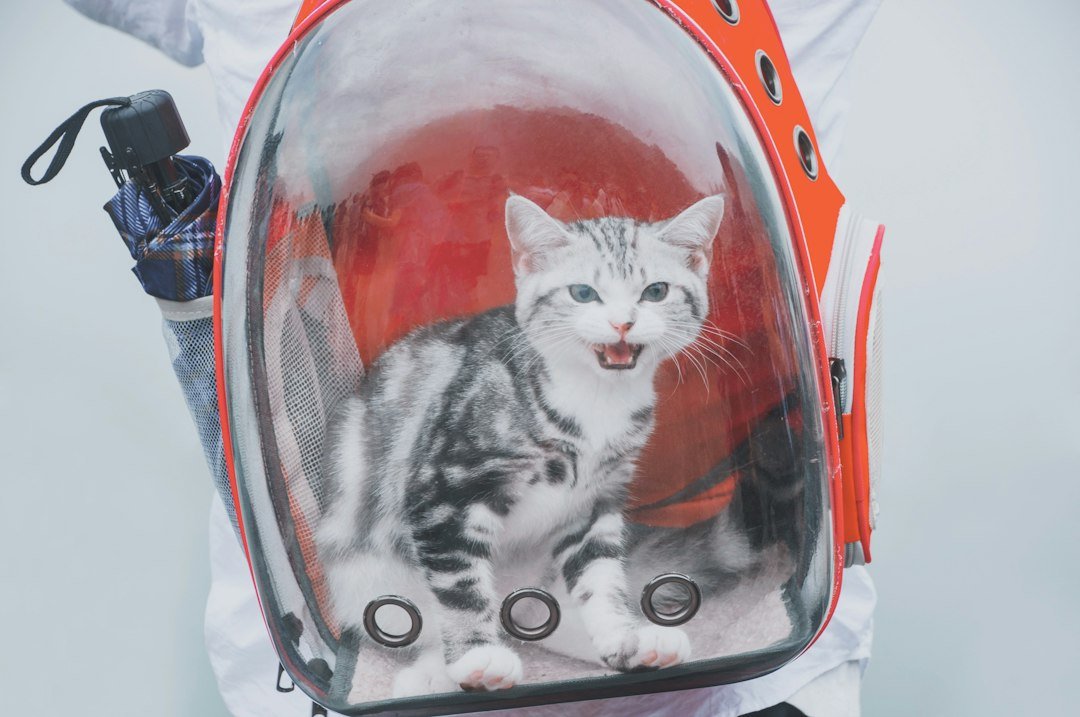
At airport check-in, the soft-sided vs hard-sided cat carrier choice becomes very practical when you are trying to slide your cat safely under the seat in front of you. For most cats travelling in the cabin, a soft-sided vs hard-sided cat carrier comparison has a clear winner: choose a well-made soft carrier that meets your airline’s current under-seat dimensions. It is usually easier to carry. It also has a little give when the space beneath the seat is lower or narrower than expected.
A hard-sided carrier wins in a different situation. Pick one when your cat is travelling in an approved cargo area, when an airline specifically requires rigid construction, or when your cat needs the extra protection of a solid shell during a car journey with luggage shifting nearby. Rules differ. Check the airline’s pet page and confirm by phone before buying anything, because accepted carrier dimensions, ventilation rules, weight limits, and cabin-pet policies can change.
Soft-sided vs hard-sided cat carrier for air travel
For the common case of one cat flying with you in the passenger cabin, a soft-sided carrier is generally the sensible purchase. Cabin spaces are tight. Airlines usually require the carrier to fit fully under the seat, and a soft carrier can compress slightly at the top or sides without pressing hard against the seat frame.
That flexibility matters more than people expect, especially on smaller aircraft where the under-seat area may be reduced by seat supports, entertainment equipment, or a life-jacket box. A rigid carrier that matches the published measurement exactly can still be awkward if the usable space is irregular. Soft fabric handles this better. Your cat still needs enough room to stand, turn around, and lie down naturally.
Soft carriers are also usually lighter before the cat gets inside. That can make a real difference when you are carrying a boarding pass, a small bag, and a carrier through a busy terminal without setting it down repeatedly. Many have a shoulder strap. Some have a trolley sleeve that slips over a suitcase handle, although you should keep one hand on the carrier and avoid letting it swing.
The biggest reason to choose soft-sided for cabin travel is fit. A carrier that looks roomy at home can be refused at the gate if it cannot go under the seat completely. Measure the base, height, and width at its widest points. Then compare those numbers with the airline’s stated maximum, leaving a little margin rather than shopping right up to the limit.
Why soft-sided carriers suit most cabin flights
A good soft carrier creates a den-like space, which many cats find less exposed than a hard plastic box with wide open vents. That does not mean every cat prefers one. Some cats paw at mesh, chew fabric, or become more unsettled when the sides move.
Look for a carrier with structured panels instead of one that collapses around the cat. The best models usually have a firm base insert, sturdy zips, multiple mesh ventilation panels, and a secure top or side opening. Top access helps. It lets you lower a cat in calmly instead of trying to push them through a front door while they brace their paws.
Mesh needs close inspection. Press it gently and look at how it joins the fabric, because weak stitching or thin mesh can fail when a frightened cat claws repeatedly at one spot. Check the zipper pulls too. A carrier should zip fully closed without a gap your cat can widen with a nose or paw.
For a cat that gets carsick or has occasional litter-box accidents under stress, line the base with a washable absorbent pad and bring a spare in a sealed bag. Skip a thick fluffy bed that takes up needed space. A familiar towel or thin fleece layer is often enough.
Soft carriers have drawbacks. They do less to protect a cat from bumps, they can be harder to clean after a major accident, and they may be unsuitable for a powerful escape artist. If your cat can damage mesh or force open zips, do not assume a fabric carrier will contain them during a long travel day.
When a hard-sided carrier is the better pick
A hard-sided carrier gives a cat a rigid protective shell. That matters when the carrier could be stacked near bags, handled by someone else, or placed in a moving vehicle where it might slide against another object. The shell stays put. So does the interior space.
For cargo travel, rigid carriers are often the expected option, although airline requirements vary and some routes do not accept pets in cargo at all. Cargo travel has more variables than cabin travel. Ask the airline exactly which kennel standards apply to your flight, including door construction, ventilation, food and water dish requirements, absorbent bedding, identification, and any limits related to weather or connecting flights.
A hard carrier can also suit a cat that becomes more upset in a flexible bag. Some cats push against soft walls, and that movement can make them more frantic. A secure plastic carrier may feel more predictable. Covering part of it with a light breathable cloth during a car ride can reduce visual stimulation, but never block ventilation.
Cleaning is another advantage. Plastic can usually be wiped and disinfected more thoroughly than fabric after urine, vomit, or diarrhoea. That is useful for long-distance car trips and for cats with a known tendency to soil the carrier when stressed. Use a pad anyway. A wet plastic base is uncomfortable and slippery.
The problem for cabin flyers is size. Hard carriers do not flex, so a few centimetres of extra height can be enough for an airline employee to refuse it for under-seat use. They are also bulkier to carry through an airport, and their door position can make it harder to settle a reluctant cat inside without a struggle.
Choose the size before choosing the material
Carrier size is the first decision. Material comes second. Your cat should be able to stand without crouching, turn around, and lie down in a normal resting position, but a carrier should not be so oversized that the cat slides around when it is lifted or the vehicle stops.
For an adult cat, measure from the nose to the base of the tail while the cat is standing, then measure floor to the top of the head or ears. Add a modest allowance for comfortable movement, then compare that result against the airline’s under-seat limit. Do this at home. Trying to estimate in a shop is how people end up with a carrier that is comfortable but unusable for their specific flight.
Here is a simple example. If an airline allows a carrier up to 45 cm long, 28 cm wide, and 25 cm high, buying one that measures 45 cm by 28 cm by 25 cm leaves no room for real-world variation. A soft carrier closer to 42 cm by 26 cm by 23 cm may be less stressful at boarding, provided your cat can still move normally inside it.
Do not rely on labels such as airline approved. That phrase is not a guarantee that the carrier suits every airline, aircraft, or ticket type. Confirm the exterior dimensions yourself. Also ask whether the airline counts the pet carrier as your cabin bag, because that affects what else you can bring onboard.
Details that matter on travel day
Whichever style you choose, practise well before the flight. Leave the carrier open at home with familiar bedding inside and place treats near the entrance, then gradually place them farther in once your cat is comfortable. Go slowly. The aim is for the carrier to feel ordinary rather than appearing only before a stressful journey.
Once your cat will rest inside voluntarily, close the door for a few seconds while you stay nearby. Build up in small steps. Then lift the carrier, carry it around the home, and take a short car ride if that is realistic for your travel plan.
Use a secure collar only if your cat is already comfortable wearing one, and make sure the identification is current. During airport security, procedures vary, but you may need to remove your cat from the carrier while the empty carrier goes through screening. A harness trained well in advance can add control. Never test a new harness at the airport.
Pack a small travel kit with spare absorbent pads, wipes, a sealable bag for soiled items, a collapsible water dish, and a small amount of food for after arrival. Offer water when practical. Avoid opening the carrier in public areas unless an airline worker directs you to do so in a secure space.
Do not give sedatives unless a veterinarian who knows your cat has advised you to do so. Sedation can affect balance and breathing, and airline policies may restrict sedated animals. If you are worried about travel stress, speak with your veterinarian well ahead of the flight rather than making a last-minute decision.
The practical recommendation
Buy a structured soft-sided carrier if your cat will fly in the cabin and you need one carrier for airport use, short car rides, and vet visits. Choose one with a rigid base, strong mesh, reliable zips, a top opening, and dimensions slightly below your airline’s stated under-seat maximum. This is the best fit for most owners. It is lighter and more forgiving in tight aircraft spaces.
Choose a hard-sided carrier if your cat must travel under an airline’s cargo rules, if rigid containment is required, or if your cat is likely to tear mesh or push against flexible sides. In that case, follow the carrier specifications supplied by the airline rather than picking a general pet-store model. The right carrier is the one accepted for that exact trip.
If you are buying only one carrier and flights are occasional, a quality soft carrier is usually the more useful everyday option. Keep the receipt. Test the fit with your cat inside at home, check every seam and zip, and verify the airline policy again a few days before departure.
Related posts
This post is for general informational purposes only and is not veterinary advice. Every cat is different — if you have concerns about your cat’s health or behavior, please consult a qualified veterinarian.